

 Explore Worlds
 Find Life
 Defend Earth

All
All
 Sun
 Mercury
 Venus
 Earth
 Mars
 Jupiter
 Saturn
 Uranus
 Neptune
 Small Bodies
Stories, updates, insights, and original analysis from The Planetary Society.

The story behind Curiosity's self-portraits on Mars
How and why does Curiosity take self-portraits? A look at some of the people and stories behind Curiosity's

Curiosity update, sols 1012-1072: Sciencing back and forth below Marias Pass
Since my last update, Curiosity has driven back and forth repeatedly across a section of rocks below Marias pass. The rover finally drilled at a spot named Buckskin on sol 1060, marking the drill's return to operations after suffering a short on sol 911. Now the rover is driving up into Marias Pass and onto the Washboard or Stimson unit.

ESA's cool new interactive comet visualization tool based on amateur imaging work with open data
A terrific new visualization tool for comet 67/P Churyumov-Gerasimenko demonstrates the value of sharing mission image data with the public. The browser-based tool lets you spin a simulated 3D view of the comet. It began with a 3D model of the comet created not by ESA, but by a space enthusiast, Mattias Malmer.

New Curiosity Self-Portrait
Amateur image processor Damia Bouic shares new stunning images from Curiosity—including a

What's up in solar system exploration: August 2015 edition
I'm back from two weeks' vacation, so it's time to catch up on the status of all our intrepid planetary missions, from Akatsuki to the Voyagers and hitting the Moon, Mars, asteroids, comets, and Saturn in between.

New Robotic Spacecraft Posters
Another round of posters to celebrate historic planetary missions.

Update on NASA Mars Rover Plans
The second in a series of meetings to select the landing site for the Mars 2020 rover is in progress. Van Kane gives us an update.

Mars Exploration Rovers Update: Opportunity Enters Marathon Valley, Begins Walkabout
Nearly seven Earth years after Opportunity set its sites on Endeavour Crater, the rover cruised into Marathon Valley, the once-but-a-dream destination.

Dawn Journal: Descent to HAMO
With a wonderfully rich bounty of pictures and other observations already secured, Dawn is now on its way to an even better vantage point around dwarf planet Ceres.
Field Report from Mars: Sol 4060 - June 26, 2015
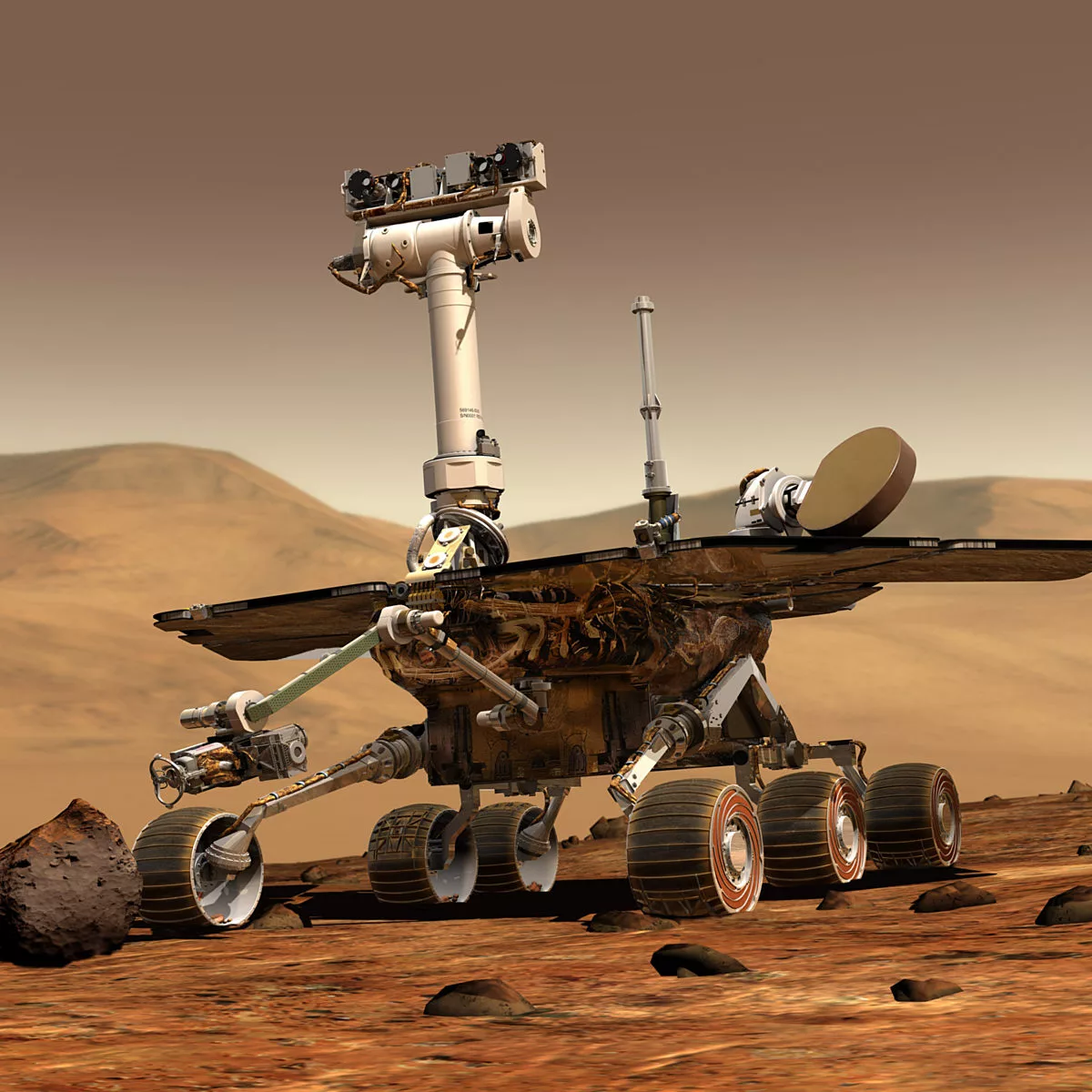
Larry Crumpler gives an update on the Opportunity rover's activities in Spirit of St. Louis crater.

DSCOVR's Halo
The Deep Space Climate Observatory (DSCOVR) has begun sending us fresh, whole-hemisphere images of our own fragile planet. Some sources say that the spacecraft is

Proposals to Explore the Solar System’s Smallest Worlds
Van Kane rounds up some of the latest NASA Discovery mission proposals aiming to explore our solar system's smallest bodies.

Jupiter's changing face, 2009-2015
Damian Peach's photo-documentation of Jupiter helps us monitor the giant planet's ever-changing patterns of belts, zones, storms, and barges, during a time when no orbiting missions are there to take pictures.

Looking back at Pluto
I don't think anyone was prepared for the beauty -- or the instant scientific discoveries -- in this

Help map Mars' south polar region!
The science team of NASA's Mars Reconnaissance Orbiter wants your help in mapping out the weird and wonderful features of Mars' south polar region!

Name Hayabusa2's asteroid target!
Have you ever wanted to name an asteroid? JAXA is offering the opportunity to name Hayabusa2's target asteroid, 1999 JU3 to the public through a contest that runs through August 31.

What in the world(s) are tholins?
The question “why is Pluto red” has been answered with a word that most people have never heard of and perhaps even fewer people can actually define—“tholins”.

New Horizons encounter plus one week: Weird and wonderful images from the Pluto system
So many new image goodies from the Pluto system!

Dawn at Ceres: A haze in Occator crater?
While Pluto deservedly stole the headlines last week, Chris Russell’s Dawn update at the Exploration Science Forum at NASA Ames reminded us that the other dwarf planets are also sharing their secrets with eager scientists.
DSCOVR mission releases first EPIC global view of Earth, more to come in September
Five months after its launch, the Deep Space Climate Observatory (DSCOVR) mission has successfully journeyed to the region of space where Sun and Earth gravitational attraction offset each other. From the vantage point of L1, DSCOVR's EPIC camera has captured its first full-globe view of Earth, and it's well, epic.