

 Explore Worlds
 Find Life
 Defend Earth


All
All
 Sun
Sun Mercury
 Venus
Venus Earth
Earth Mars
Mars Jupiter
 Saturn
 Uranus
 Neptune
 Small Bodies
Stories, updates, insights, and original analysis from The Planetary Society.

April 12, 2013: Yuri’s Night Rocks the Planet!!!
On April 12, 2013, the world’s biggest space party will take place across the globe. So far there are 190 parties in 32 countries on 6 continents registered and counting!!

Robot Shaming
Some silly fun to brighten your Wednesday.

LPSC 2013: Seeing in Permanent Shadow
The case for water ice hidden in permanently shadowed regions at the north pole of the planet Mercury received another boost recently. On Wednesday March 20, 2013 at the Lunar and Planetary Science Conference, Nancy Chabot presented the very first visible-light images of what is in the shadows of these polar craters.

Bringing an Asteroid Home
Aviation Week and Space Technology reports that the President’s next budget request for NASA will include funds to begin developing a mission to bring an asteroid to the Earth-moon system.

Book Review: Cosmochemistry, by Harry McSween and Gary Huss
This very accessible textbook begins at the beginning, explaining how all the things in the solar system were made from star stuff.

Ice Cap to Ice Cap with Mars Odyssey
Explore the mysterious Martian landscape with the workhorse of the Solar System, Mars Odyssey.
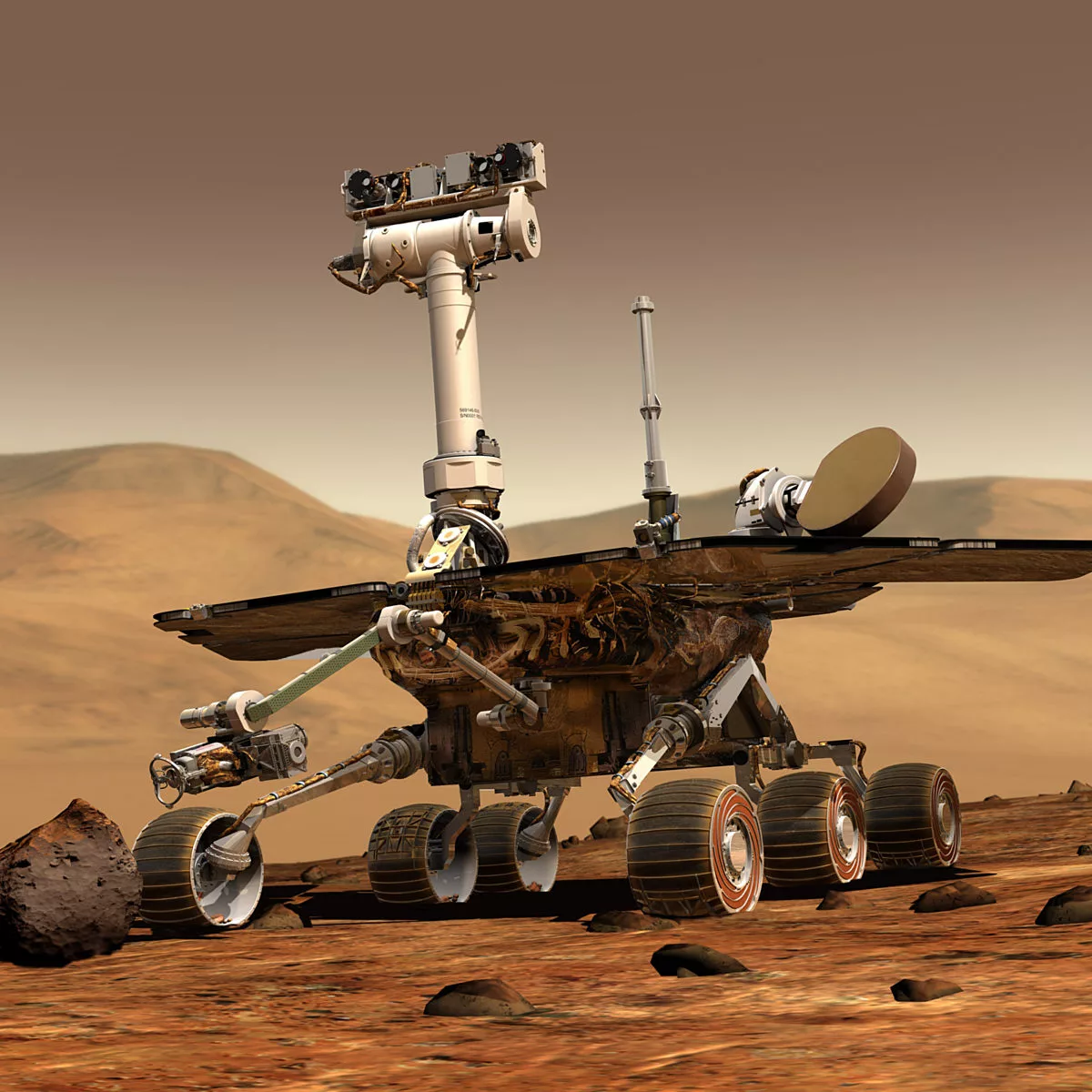
Mars Exploration Rovers Update: Opportunity Hunkers Down for Solar Conjunction, Final Science on Matijevic Hill
As the Mars Exploration Rover (MER) mission trekked further into its tenth year of exploring the Red Planet, Opportunity spent the month of March finishing up its science investigations on Matijevic Hill.

ISRO's Mars mission now undergoing assembly and testing; NASA, ISRO agree to future space science cooperation
India's Mars Orbiter Mission has been much in the news in Asian media over the last week as a result of the release of ISRO's Annual Report 2012-2013. Also, ISRO and NASA issued a joint statement from Washington a week ago endorsing interagency cooperation in the space sciences

Dawn Journal: Staying warm en route to Ceres
Marc Rayman's latest Dawn journal explains the temperature adjustments engineers make to save power and keep the spacecraft warm.

Curiosity update, sol 227: Some sharpshooting and a dusty deck
Curiosity is back to science operations, though the activities are limited in scope by the fact that conjunction is fast approaching. Here's a couple of neat images from sol 227.
Field Report From Mars: Sols 3237-3262 - March 4–29, 2013
Flash memory or computer problems oddly occurred on both Curiosity and Opportunity around Feb 27. One possibility is that a large solar flare resulted in radiation at Mars sufficient to temporarily corrupt the memory on both rovers.

A Major Political Victory for The Planetary Society
The Planetary Society just achieved a major victory in our efforts to ensure strong funding for NASA’s planetary exploration.

What's Going On with NASA Education and Public Outreach?
Sequestration claims its next victim at NASA, as all Education and Public Outreach activities are suspended until further review.

Planetary Society Weekly Hangout: Reports from the Lunar and Planetary Science Conference
On Thursday at noon PDT / 1900 UTC I'll report on some of my favorite findings from LPSC, and answer your questions about the latest planetary science.

An editorial on the LPSC 2013 oral sessions
In which I complain just a little bit about talks at the Lunar and Planetary Science Conference.

LPSC 2013: watery Martian minerals
Some interesting results from the Lunar and Planetary Science Conference on clay minerals on Mars and what they might mean about ancient water.
[Updated] Senate Bill Restores $223 million to NASA's Planetary Science Division
The President signed the Senate's bill to fund the government for the remainder of 2013, and it includes some positive news for NASA's Planetary Science division, which is facing a 21% cut.

LPSC 2013: License to Chill (or, the solar system's icy moons)
Reports from the March 19 session at the Lunar and Planetary Science Conference covering eight icy moons in the outer solar system: Ganymede, Europa, Dione, Rhea, Mimas, Tethys, Enceladus, and Miranda.

LPSC 2013: Future Planetary Exploration
Last week, planetary scientists gathered for the 44th Lunar and Planetary Science Conference. Van Kane rounds up some of the future mission concepts presented.
ALMA Adventure--Complete Interviews With Planetary Radio Guests
The extended, mostly unedited recordings of my conversations with many of the people I spoke to at the ALMA Observatory in Chile. Also, the full English translation of Chilean President Sebastian Pinera's speech.