

 Explore Worlds
 Find Life
 Defend Earth


A STEP Grant update: Growing our understanding of deep-space agriculture

Written by
Kate Howells
Public Education Specialist, The Planetary Society
June 10, 2026
The Planetary Society’s Science and Technology Empowered by the Public (STEP) Grants provide funding to innovation projects that advance space science and exploration. The 2023 round of STEP Grants awarded $50,000 USD to a team led by Dr. Andrew Palmer of the Florida Institute of Technology to study deep-space agriculture to address the challenge of feeding astronauts on long-duration missions.
“The Planetary Society’s funding has been transformative in a variety of ways,” said Palmer. “It has fueled science, created new projects, and helped strengthen the space agriculture network.” The team has published three scientific papers based on the research enabled by the grant, with another two to three expected this year.
The main goal of the CHRGE (Comparing Hydroponics and Regolith Growth and Evolution) project was to compare plant growth in lunar regolith simulant versus hydroponic systems. Measuring growth across multiple generations of plants, the team has collected comprehensive data on metrics like edible biomass yields as well as practical considerations like water usage, power requirements, and crew time. They are also working to improve the development of Martian regolith simulants, testing various factors that might affect plant growth.

Palmer and his research team also did background research to contextualize their project and better document the field in which it is situated. This included a thorough study of the current state of research on using regolith simulants, including the history to date of regolith-based agriculture. They also collected and analyzed data about the lunar and Martian regolith simulants they were using, including their organic content, existing microbiome, and how different sterilization and preparation methods impacted the mineralogical composition of the material. The insights yielded by this research will benefit any future researchers who want to study regolith-based agriculture.
“The support of The Planetary Society helped us acquire the data we needed to actually convince NASA to fund a space agriculture project that brings elements of regolith-based agriculture and hydroponics together for an additional pilot study. While this is a small grant, it will allow us to bridge work begun by CHRGE with other projects.”
Planetary Society members like you directly support projects like this that are advancing humanity’s efforts to extend exploration into deep space.
Information about our STEP Grant program can be found at planetary.org/sci-tech/step-grants.
Protect Our Shared Future
You help us defend humanity and prevent asteroid impacts. Donate now to become a Planetary Defender!
Donate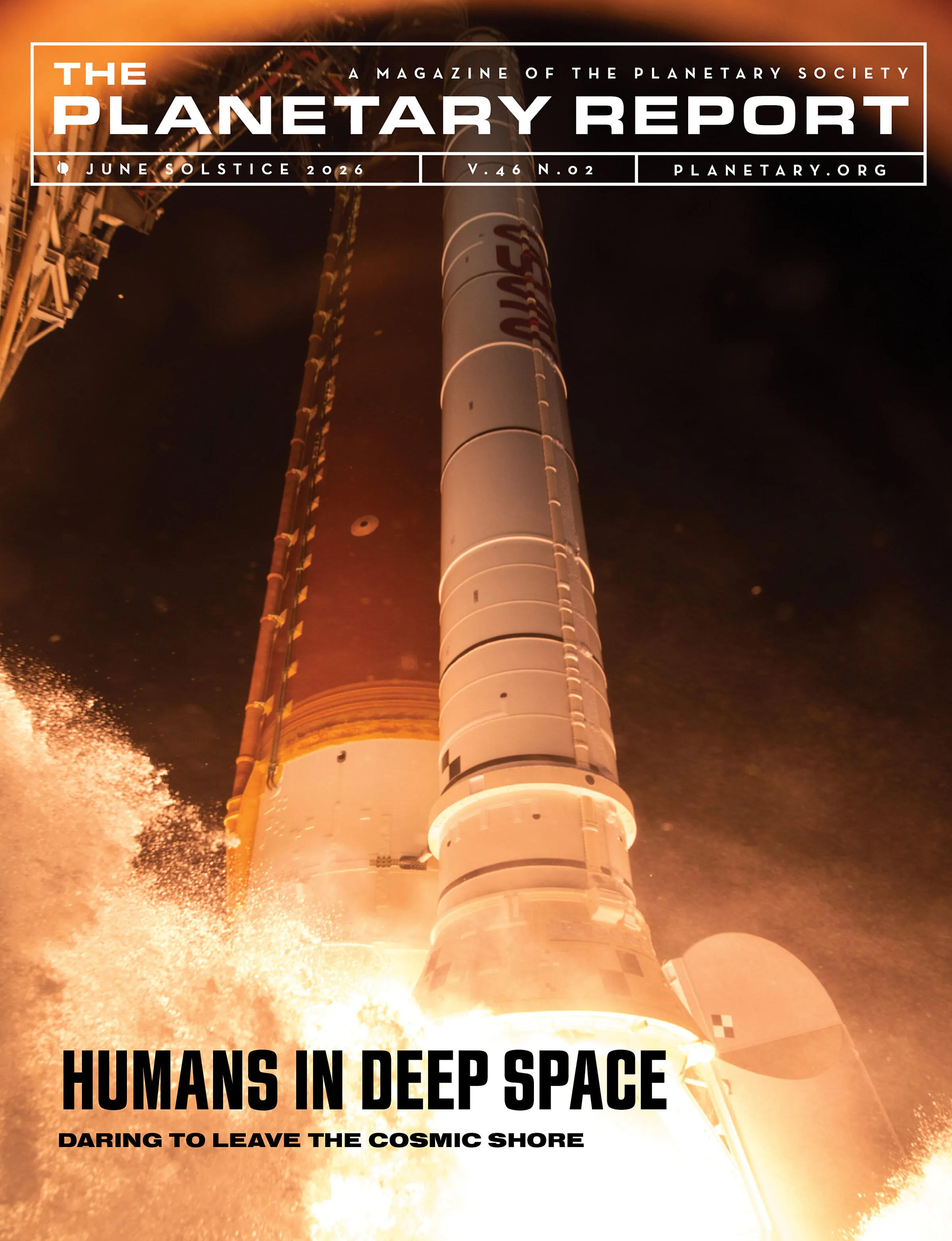
The Planetary Report • June Solstice
Help advance space science and exploration! Become a member of The Planetary Society and you'll receive the full PDF and print versions of The Planetary Report.