

 Explore Worlds
 Find Life
 Defend Earth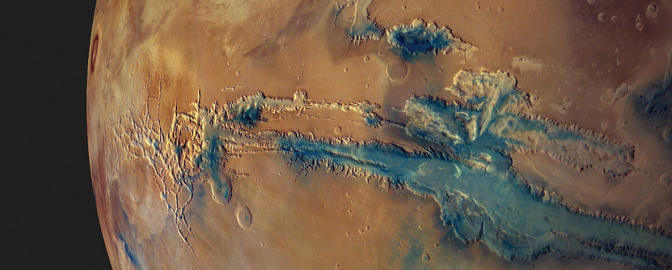

All
All
 Sun
Sun Mercury
 Venus
Venus Earth
Earth Mars
Mars Jupiter
 Saturn
 Uranus
 Neptune
 Small Bodies
Stories, updates, insights, and original analysis from The Planetary Society.

Announcing our new STEP Grant winners: A Solar System shadow-tracker, a new telescope tool, and an asteroid database
Three groups of scientists will receive crowdfunded support to further the scientific exploration of space.

Newborns and old-timers
While Roman doubles its lifetime and Artemis astronauts retire, a new discovery may be the youngest exoplanet ever.

SWAP, PEPSSI, and the secrets of the Solar System
NASA's New Horizons is poised to make discoveries about the farthest reaches of our Solar System, but two of its key instruments are in danger of being shut down prematurely.

The next generation
A new shape on Saturn, new Artemis spacesuits, and a new look at Star Trek.

Meet the next generation of Mars exploration
Countries around the world are planning missions to Mars, including rovers and a sample return from the moon Phobos.

An insider's look at the Nancy Grace Roman Space Telescope
Dr. Jason Rhodes, Jet Propulsion Laboratory project scientist for the Nancy Grace Roman Space Telescope, shares what to expect from NASA’s next great observatory.

Who knew there were so many more moons?
Roman is on its way to make discoveries, including more Solar System moons than you might expect.

The Nancy Grace Roman Space Telescope has launched
NASA’s next flagship orbital observatory will reshape what we know about planets throughout the galaxy.

Size is in the eye of the beholder
From Mars’ tiny Phobos to NASA’s mammoth Vehicle Assembly Building, apparent size depends on where you’re looking from.

What could the Artemis IV astronauts discover on the Moon?
NASA is already planning what the crew will do on their lunar landing mission.

The Space Advocate Newsletter, August 2026
The Sun shines brightly until it doesn't.

Cosmic neighborhood watch
Observing our celestial neighbor (and something much farther away).

Total solar eclipse edition
Europe’s stunning eclipse, plus a political victory for science.

The best images from the 2026 solar eclipse
Our favorite images from the total solar eclipse that passed through Europe on Aug. 12, 2026.

Shakeups and smash-ups
While a SpaceX rocket smashes into the Moon and a rescue mission runs into trouble, a new bill may provide hope for science research.

Little moons, megarocket, tiny CubeSat
When it comes to cool things happening in space, size doesn’t matter.

The Cost of a PROMISE
NASA may send an engineering copy of a Mars rover to the Moon, but at what price?

Momentum July 2026
The people who support this organization are not just donors or members. They are participants. You and your support are, in fact, part of the mission.

Portraits of the red planet
See Mars from Viking 1 and Psyche, or with your own two eyes.

The Space Advocate Newsletter, July 2026
Viking made Mars real