

 Explore Worlds
 Find Life
 Defend Earth

Planetary Radio • Oct 16, 2026
Book Club Edition: Dinner With an Astronaut by Leroy Chiao
On This Episode

Leroy Chiao
Retired NASA Astronaut, Chemical Engineer, Speaker, and Consultant
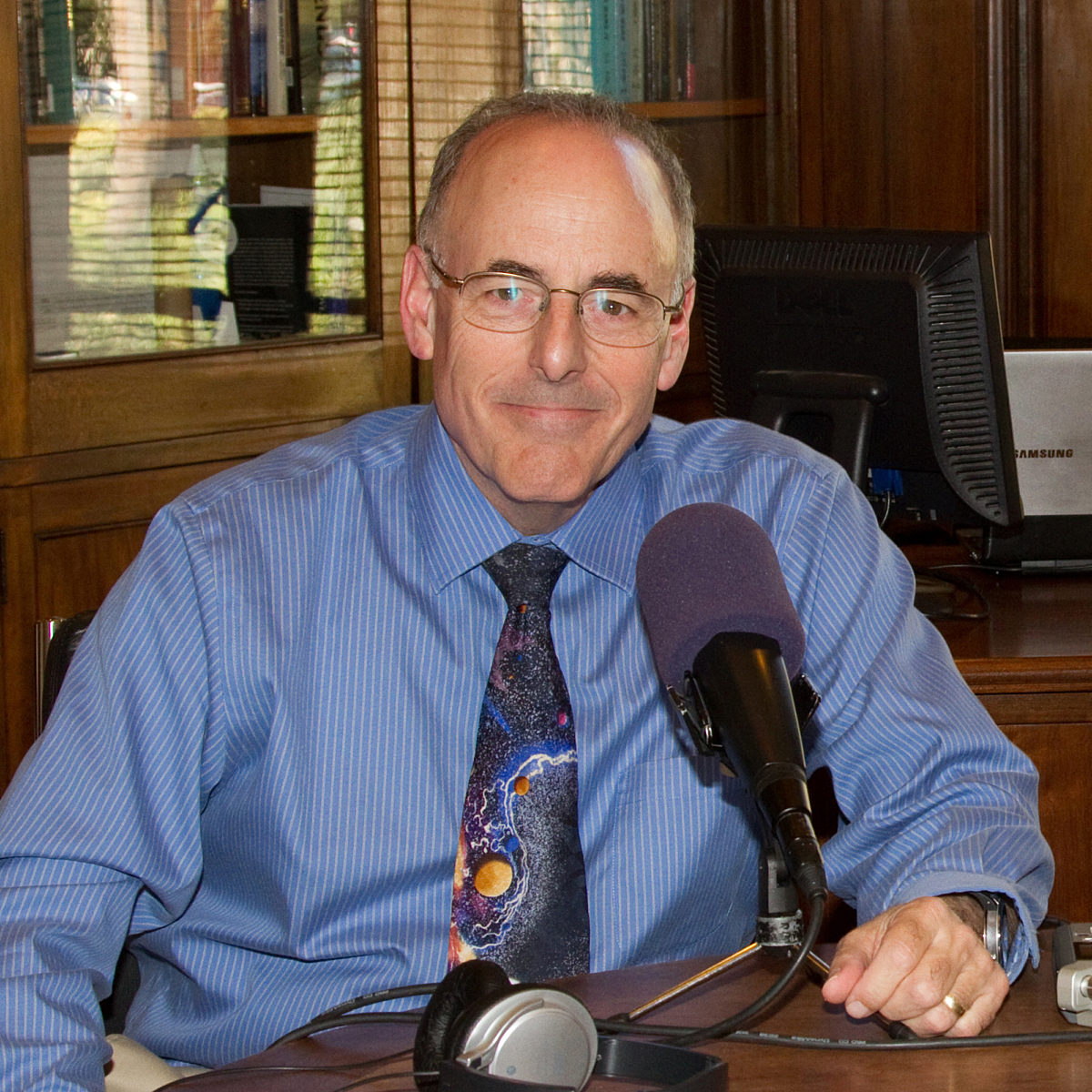
Mat Kaplan
Senior Communications Adviser and former Host of Planetary Radio for The Planetary Society
Leroy Chiao was one of the youngest astronauts ever selected. He would spend 229 days in low-Earth orbit, command the International Space Station, and perform three spacewalks. His book, “Dinner with an Astronaut,” chronicles his journey from Chinese American kid born in Milwaukee, Wisconsin to the literal heights of space achievement. Leroy also shares his thoughts about topics as diverse as engineering, Chinese food, and why space exploration is worth every penny in this entertaining conversation with The Planetary Society’s Mat Kaplan.


The Planetary Society Book Club: Dinner With an Astronaut by Leroy Chiao He'd loved space and engineering from his earliest days. At 29 he was chosen by NASA to become an astronaut. Leroy would spend 229 days living in space, with most of those spent as commander of the International Space Station. His book is the story of the making of that astronaut, his adventures in low-Earth orbit and on the ground, and musings on how we got here and where we're headed. All of these topics and more lift off in a fascinating, fun and informative conversation with the Society's Mat Kaplan.
Transcript
Mat Kaplan:
Pull up a chair for dinner with an astronaut, as we welcome Leroy Chiao to this month's Planetary Radio: Book Club Edition.
I'm Mat Kaplan of The Planetary Society with more of the human adventure across our Solar System and beyond. Dinner with an Astronaut? That's the title of Leroy Chiao's great book that takes us course by course through his remarkable life, a life that has taken him from eating peanut butter and spam sandwiches as he watched Aldrin and Armstrong walk on the moon, to commanding the International Space Station. His warm and very personal book was just published in June by HarperCollins. After 15 years at NASA and four space missions, Leroy founded OneOrbit, providing keynote presentations and training for companies and schools. He also holds an appointment at the Baylor College of Medicine, and is an advisor to the Houston Association for Space and Science Education.
He was LSU's first Raborn Distinguished Chair Professor, and was on the faculty at Rice University as well. Dr. Chiao is a fellow of the Explorers Club and a member of the International Academy of Astronautics. First and foremost, he is an engineer and loves engineering just about as much as he did orbiting the earth.
Please welcome Leroy Chiao, ACE astronaut, 15 years with NASA, 229 days in space, an entire day and a half of that time outside in his own little personal spaceship doing extra vehicular activity. Leroy, thank you so much for joining us.
Leroy Chiao: Oh, it's my pleasure, and hello everyone. Glad to be here.
Mat Kaplan: Great pleasure to welcome you to the Book Club, and also a great pleasure to have enjoyed this book as a lot of people, a lot of our members have been telling us they did. You're the CEO of your own group that you call OneOrbit. And we can talk a little bit more about it later, but it's really very closely tied to the work that you do nowadays, isn't it?
Leroy Chiao: Yes, absolutely. So Jami Sunkel and I, my fiance now, we started OneOrbit about 11 years ago, and we do both corporate events of course, keynotes for, astronaut keynotes for corporate events and workshops. But our passion really is education. So we've been doing educational, sponsored educational programs for this whole time, and that's our real passion with Jami and I both have kids. Well, they're not so little anymore. They're all in college, but it's been a rewarding and really great thing to do.
Mat Kaplan: There's so much more that you've got going on. You told me a little bit earlier that you are still affiliated with Baylor College, the College of Medicine at the Center for Space Medicine, which is we've talked to people from there on Planetary Radio. You're the first person affiliated with the center that we've had on, but they do some amazing work with preparing humans, particularly for long duration space flight, right?
Leroy Chiao: Oh, that's correct. And previously I was also part of the National Space Biomedical Research Institute. I was the chairman of what was called the User Panel. And so we had former and current astronauts weighing in on different research proposals on their relevancy to space flight and solving the problems that we have to solve before we can send astronauts on longer duration flights, for example, to Mars. So we worked on something called biomedical countermeasures, which we test on the space station for different ways to keep astronauts healthy on a long duration flight, like for example, to Mars during the surface day and on the way back. And so NSBRI ended in 2017, but I continue on as a member of the Center for Space Medicine, and they're all headquartered at the Baylor College of Medicine.
Mat Kaplan: And just last month, the book, our book selection, was by somebody that you and I saw at the Humans to the Moon and Mars Summit at Rice University. And that's Scott Solomon, who wrote about that exact topic, getting humans ready for really long duration space flight, like going to Mars and back, which is people who are members of The Planetary Society and listening tonight, they know that's probably going to be a two or a three-year trip. Great to have somebody on who has actually spent as much time out there in low earth orbit in microgravity and in that environment as you have. And we should say that you had an affiliation with Rice University yourself before. In addition to being the first LSU, what is it? Raborn Distinguished Chair Professor?
Leroy Chiao: Yes, that's right. Not long after I left NASA, very soon after I left NASA, former NASA administrator, Sean O'Keefe, who became the chancellor of LSU, invited me to become that professor, the Chair Professor at LSU where I started my academic career, if you will. I was there for about a year, year and a half, and then transitioned to Baylor College of Medicine and Rice University, where I still teach a course at Rice, and I'm still a member of the Center for Space Medicine. But yes, absolutely.
Mat Kaplan: We should start talking about the book because I've got lots of notes here and I'll bet that-
Leroy Chiao: Sure.
Mat Kaplan: ... Members also have stuff. We've already heard some of them. Yvette says, "Hi all. I love the book." Thank you, Yvette. So did I.
Leroy Chiao: Oh, thank you, Yvette.
Mat Kaplan: Here's a line which I should have you read, but I didn't prepare you for that, so I'll read it. This is right from the beginning of the book. "I'm not Leroy Chiao, superhero donning a spacesuit with a patch of the American flag. Instead, the story of how I got to space runs the course of history like a well-seasoned meal. My friends and family and colleagues sat at the dinner table with me, all of us telling tales of ingenuity, brilliant, intrigue, and wonder," which seems like the perfect introduction to what you were hoping to achieve with this book. And I think you succeeded.
Leroy Chiao: Oh, thank you. Thank you very much.
Mat Kaplan: It does. It's a great structure for the book, taking us sort of across the structure of a meal and the different courses. And if we start at the beginning, back when you were a kid, you were into this stuff, man, especially engineering, almost right from the start, weren't you?
Leroy Chiao: Oh, absolutely. I started at a young age interested in technical things. I always loved the airplanes. And when the space program started, I loved rockets. And so it was natural for me to pursue a course of engineering, which I did. I earned three degrees in chemical engineering, but I never forgot my passion about space flight. I was an eight-year-old kid when Apollo 11 landed on the moon, and that was it for me. I looked out at the sky and saw the moon and I realized that there almost a quarter of a million miles away, these two astronauts were getting ready to take those first steps. And when Neil Armstrong and Buzz Aldrin did take those first steps, that was it for me. I knew I was at least going to try to become an astronaut.
Mat Kaplan: I love the story of you guys gathered, what, in the backyard, I think, to watch Neil and Buzz land and step out on the lunar surface.
Leroy Chiao: Well, that's right. I lived in California back then. I grew up in California. I was actually born in Milwaukee of all places, but since the age of seven, I grew up in California. And my dad, some friends of mine were invited over and my dad moved the black and white TV with the rabbit ear antennas out to the backyard because it was so warm. It was the summertime there in Northern California. And yeah, we actually watched the landing and it was just amazing. I can remember like it was yesterday.
Mat Kaplan: And by the way, peanut butter and spam sounds really good. I like peanut butter and bacon a lot.
Leroy Chiao: Yeah. My dad was pretty innovative about meals. My mom had gone back to graduate school. She had worked for a long time for a consulting company, an engineering company. They folded, and she decided to go back to get her PhD in material science. She went ahead and did that in material science and engineering at University of California at Berkeley. And so my dad was kind of in charge of all the domestic stuff while she was studying. One of his specialty was spam and peanut butter, which may not sound that good, but it's actually pretty good. And we, my friends and I, we enjoyed that lunch of spam and peanut butter and watermelon while we waited for the Lunar Lander, Eagle, to land on the surface of the moon.
Mat Kaplan: Like I said, sounds delicious to me. I did not know that your mom was also a Berkeley grad. I know you got your undergraduate degree there, but then went to Berkeley, right? No, I got it backwards. Went to Santa Barbara, UCS Santa Barbara, for your master's and your PhD. I'm a UC [inaudible 00:09:14]-
Leroy Chiao: That's correct.
Mat Kaplan: ... As well, so I'm proud.
Leroy Chiao: Right.
Mat Kaplan: It's safe to say that your parents had high expectations. I love this bit. You said that your dad always said he's against tradition, but there were a few things that tied him to the old country. Education is king. Never spend-
Leroy Chiao: Yes.
Mat Kaplan: ... Money when you don't have to.
Leroy Chiao: Right.
Mat Kaplan: Three, the individual's needs are not important, especially children's. And the fourth one, which I think is the one that I can most take to heart, Chinese food is the best.
Leroy Chiao: Yes, absolutely. I was fortunate to grow up in two cultures. My parents were originally from China. I was born in the US, but we very much observed Chinese culture at home, and then of course at school and out with my friends out in the neighborhood, it was very much an American upbringing. And so I reaped the benefits, if you will, of living in two cultures. And I think I took the best from both, as you said, the Chinese culture, emphasis on education and working hard, and then the American culture of innovation and free thinking and trying different things and taking risks and being innovative. So I think that really helped me a lot through my entire life.
Mat Kaplan: No doubt. I think we can see the evidence of that. I'm going to cut away to the chat. Angela. "Hello, I love your book." Laura, and I heard this from a couple of people leading up to tonight's discussion. She said, "Thank you for recording the audiobook, Dr. Chiao. It was so fun hearing you read your own story." It's nice that you got to voice that yourself.
Leroy Chiao: Yeah, that was interesting because Harper Collins, the publisher, originally said, "Hey, we wanted you to check out these people that we found that would be good to voice over your audiobook." And my manager said, "Well, wait, shouldn't you do your own?" I said, "Yeah, shouldn't I do my own?" And so they let me do a few samples and they decided, "Okay, you're pretty good. So we'll let you voice over your own book," which I did. And I'm glad I did because I've heard from several people that it was really great hearing me talk about my own book or narrate my own book.
Mat Kaplan: Well, now you've heard from several more, and it made me sorry that I didn't pick up the Audible version as well, just to be able to catch that, because obviously there was some good value in it. Mackenzie. "I absolutely love the book." Here's the one I was looking for. It's from Eric. "Trying to get your baby sister to test out your new stuff that didn't go too well." Great story. I'm glad she lived to tell the tale and she still makes fun of you. Just for anybody who doesn't remember that story or maybe God forbid didn't read the book yet, could you tell that story?
Leroy Chiao:
Oh yeah, you bet. So when I was young, of course I was interested in everything space and I read about the Rogallo wing, which was the Rogallos were a couple that worked at Langley Research Center at NASA, and they came up with this idea of the Rogallo wing, which was a novel, kind of a shape of a wing, and actually became like the forerunner to modern hang gliding. But the original idea was, hey, we're going to build this wing and we're going to have the Gemini capsule deploy it and actually land using that Rogallo wing. That didn't happen, didn't work out, but I was fascinated with that idea. And so I went and in my neighborhood at the time, they were still building out the neighborhood, so there's plenty of construction going on. So I went and would get scrap wood from the construction sites and build model airplanes, model boats, model cars, things like that.
And I said, "Hey, I'm going to build a Rogallo wing." So I found a long piece of wood and I spent a long time cutting it lengthwise and then using some of the plastic that my mom had used in her garden and small brads, little nails to secure the tarp, plastic tarp to the frame. And I built my own Rogallo wing, and I went and tried to fly it. It was kind of like a little hang glider. And I went and like I said, they were still building up the neighborhood, so there was a lot of graded areas that were still kind of little drop-offs. And so I would run and try to fly, but I was too heavy. And I was probably, I would guess around maybe nine or 10 at the time. And so I recruited my younger sister who was five years younger than me and quite a bit lighter to go ahead and be the test pilot for this Rogallo wing.
And I got her to run and jump. And she was too heavy too. She flew a little farther than I did, but skinned up a knee and went crying back to my mom who said, "What are you doing?" And my sister still doesn't let me forget that. Interestingly, there was an engineer, a friend of mine down the street was an engineer, his father, and he said, "Hey, that's really cool that you built this thing." He says, "Well, it's not big enough to support a human, but probably make a great kite." So he had some heavy string and he tied it up and we went and ran down the street with it. And it made a great kite. It really did. It really was great. It wasn't quite big enough to support a human, but it was my first foray into aeronautical engineering, if you will.
Mat Kaplan: Very cool. I'm thinking also of, it's actually what Diane talked about as well. She said, "I loved when you referenced the eight-year-old kid that made the trip with you." You made a reference to that, at least on your first shuttle flight, your first shuttle mission, that you really were thinking back to those days when you were already so excited about doing this kind of stuff.
Leroy Chiao: Oh, you bet. Everybody remembers their first mission into space. People often ask me, "What was your favorite mission?" Well, how can you top the first one, right? Probably the most rewarding one was my last one when I was the commander of the International Space Station because I had ultimate responsibility for the success of the flight. But nobody forgets their first mission, and being up there the first time brought back a flood of memories, including the one of making my sister a test pilot on my Rogallo wing. But yeah, that was something that I'll never forget, of course.
Mat Kaplan: So you said that as you got older, you still, of course, admired, respected the astronauts, but it was really the engineers who I guess made you the most excited or inspired you the most and probably headed you in the direction you went.
Leroy Chiao: Right. Well, as I mentioned earlier, I was always interested in airplanes and rockets since I was very young. I built a ton of models, model airplanes, model rockets, flew them. Back then we had little gas engines that would run the airplanes, and I launched a bunch of these Estes rockets with the rocket motors. But yeah, it was engineering that really fascinated me. And at the time I thought I wanted to be an electrical engineer and I started school at Berkeley with that focus, but as I got more into it, I found myself more interested in chemistry, interestingly, even though I loved the mechanical and the aerospace part. But my parents were both originally chemical engineers and I decided to go that route and I did, but I never forgot that passion for flight. And so even though I didn't major in that or go into that industry as an engineer, it was always something that was very interesting to me.
Mat Kaplan: It's a little bit of a sideline in the book, but I think it's a really important one and it's a bit of history, and it's about the pioneering engineer, engineer and scientist I suppose, who I had heard of, but didn't realize that he was one of the founders of the Jet Propulsion Laboratory in Pasadena, because he was part of that amazing group called the Suicide Squad, which is a topic for another book. But it's really, in many ways, a tragic story and a loss, not just for him, but for the United States.
Leroy Chiao: Yes, yes.
Mat Kaplan: Your thoughts about, and I'm not even going to try and say his name, but I hope you will.
Leroy Chiao:
Tsien Hsue-shen, he was an immigrant from China. He went to America to pursue his graduate studies. He ended up getting his PhD from MIT and then got a position at Caltech, and he became a protege of Theodore von Kármán, the famous Hungarian aerodynamicist. And together they founded the Jet Propulsion Laboratory, and he was instrumental. Theodore von Kármán was very impressed with him, and he became instrumental in the founding of the JPL. And after World War II, the US government put him in a captain's uniform, army captain uniform, along with von Kármán, and they went to postwar Germany right after the end of the war to find the German scientists that we wanted to bring back to the US and to bring back as much V2 hardware as they could, which they did. And so it was really something I didn't really know about until later when I was already an astronaut.
I had worked at the Lawrence Livermore National Laboratory just before my selection, and it was after I'd gone back after I was selected that an engineer, a Chinese engineer at Lawrence Livermore, handed me the book and said, "Hey, I want you to read this." And I'd never heard of him, American history never really mentioned it, but I was fascinated by the story. He was a brilliant engineer, very talented, very smart, founded the JPL with Theodore von Kármán and was instrumental in the early days of the US space program, the missiles that they built based on the V2 and then beyond into the Titan missile and things like that. But unfortunately, he was there during the time of McCarthyism and the Red Scare. He came under suspicion by the FBI. And he wanted to stay in the US. He was very much dedicated to the US effort, but they placed him under house arrest for two years and then eventually deported him back to China.
And the book I'm talking about is called Threat of the Silkworm by Iris Chang. And so if you look that up, it's a fascinating story about how he was placed under house arrest and then sent back, deported back to China against his will, against his wishes. But he was embraced with open arms by Chairman Mao and the government there. And he went on to found their space and missile program. In fact, all the modern Chinese rockets are based on his original designs. And you would recognize things like the Silkworm missile, which had been used by a lot of people, a lot of states that were foes to the United States. So in a way, we kind of screwed ourselves, the US that is, by sending him back, because they didn't let him take any of his papers, but he just went back with what he remembered and he started their entire missile and space program to what it is today.
So we did ourselves a disservice by deporting him, but a very, very notable person of history of our own space program, and just think what would have happened if we had kept him here helping us continue our program.
Mat Kaplan: So it's probably not too far out of line to say that some good part of the enormous success of the Chinese space program now is thanks to his work.
Leroy Chiao: Oh, very much so. Yes, absolutely. He developed their first rockets, their first rockets looked exactly like the V2. Of course, he remembered all the engineering specifications and all the parts that went into it, and then evolved into the Long March series of rockets. In fact, the Long March 2F that launches Chinese astronauts to space and beyond, Long March 4, Long March... I think we're up to Long March 10 or 11 by now, but all of those were based on his original designs.
Mat Kaplan: Let's go to the space shuttle, the space transportation system, which was a system, of course, what we mostly think of, a lot of us as the shuttle was just the orbiter, right?
Leroy Chiao: Sure. Yeah.
Mat Kaplan: I am really proud to say that I was on the dry lake bed when Columbia first returned from orbit. And not too long ago, Bob Crippen was my guest.
Leroy Chiao: Oh, cool. Yeah.
Mat Kaplan: [inaudible 00:21:45]. It was so cool. And by the way, he totally agrees with you about John Young. If not the greatest, one of the greatest astronauts of all time. You could tell that he had tremendous admiration for John Young, the commander of STS-1. I just wonder, as somebody who depended on that amazing vehicle, your feelings about it today, and now years after we saw the last mission of the space transportation system.
Leroy Chiao:
Oh yeah, shuttle was incredible. Think about it. This vehicle was designed in the 1970s by the legendary Max Faget and his cohorts, and first flew in 1981, had a 30-year service life, and it was the most incredible vehicle ever. It was capable of launching into space with seven astronauts and a payload of nearly 60,000 pounds, which is pretty incredible. Serve up to two weeks in space as either a deployment, satellite deployment, or an orbital construction platform, come back down into earth's atmosphere, land, be refurbished and launch again in the span of a little over a hundred days. This program spanned 30 years and we've never had a vehicle as capable of that. And the only thing that's going to surpass it right now is SpaceX's Starship, which is, you can think of as like a shuttle on steroids. It's an incredible vehicle and it's really going to be a disruptor.
But think about it, this vehicle was designed in the 1970s, first flew in 1981, and nobody, no country, no organization has ever come up with anything as capable as the space shuttle. The only thing the space shuttle didn't live up to was it was promised to be inexpensive in its reusability when in fact it was relatively expensive to refurbish and reuse. But we learned a lot from that experience. And to me, it's still the greatest vehicle ever up until Starship becomes operational, but really holds a special place in my heart getting to fly on three shuttle missions.
Mat Kaplan: I can't resist bringing up something I mentioned to you before we got started today. And that was somebody claimed, oh boy, Starship, which is basically the second stage above the super heavy booster of SpaceX.
Leroy Chiao: Right. Yes.
Mat Kaplan: Someone said, because it almost made a soft landing, as you pointed out, it hovered over the ocean, and said, "First time a second stage of a rocket has ever almost made a soft landing back on earth." And then somebody, one of my colleagues pointed out, "Maybe not. If you consider that the space shuttle orbiter was kind of a second stage, right?"
Leroy Chiao: Sure. Yeah. No, shuttle, and did it on a routine basis, and it was definitely the forerunner and the prototype, if you will. Starship, it had hovered before over the ocean, but this time on flight 13, the most recent flight test, it came back and SpaceX appears to have figured out their heat shield problems. It came back intact with no burn throughs, and it hovered over the ocean demonstrating there had been a drone ship there with chopsticks that it could have been caught before belly flopping into the sea. In fact, it stayed in one piece. It didn't explode and floated around for quite a while in the ocean, and SpaceX was trying to figure out if they could recover it. But that was a huge step and really look forward to that. Like I said, it's going to be a disruptor because the system has been designed to be fully reusable. It's going to dramatically, dramatically bring down the cost of launch to space.
Mat Kaplan: And besides, it just looks like something out of a 1950s or 1960s science fiction film. Let's get to your own experiences, and we have to skip around because there's way too much in this book for us to cover in the time that we have left. But here's a line from the book. And it was when you had applied to become an astronaut, here you are already a working engineer doing all kinds of cool stuff. And you get the call, here's the line, "Maybe it was cobwebs in my head or my subconscious not knowing that this was the most important phone call in my life to date, but without thinking, I said, "Well, I have tickets to the Reno Air Races next week. Could we do it the following week?" That is go to Houston and start the process of being evaluated." Really?
Leroy Chiao: Right. No, it was 8:00 in the morning here in Houston. And of course, I lived in California at the time. I was a new engineer having finished my degrees and I was working at the Lawrence Livermore National Lab, and I'd applied to NASA, and 6:00 in the morning my phone rings and it wakes me up. And I pick it up and it's Duane Ross, who at the time was the Head of the Astronaut Selection Office. And he identified himself and I kind of woke up and he said, "Hey, we'd like to invite you to come to Houston to interview to be an astronaut." And I said, "Oh, great. Wow, that's fantastic. When do you want me to come?" He said, "Well, we want you to come next week." And without thinking, I said, "Oh shoot, I've got tickets to the Reno Air Races next week. Does it have to be next week?" And he paused and he said, "Well, we can defer it." And I was like, "What the hell are you thinking? What is wrong with you?" And I was like, "No, no, no, no, no. I can make it. I can make it next week. I can." He goes, "No, no, we can defer it." I'm like, "No, no, no. I can for sure make it. I will be there. When do you want me to come?"
Mat Kaplan: Great story. And of course it went well. You describe in detail the evaluation process, the training, and you got to meet John Young because he was there [inaudible 00:27:34] right?
Leroy Chiao: Oh yes. Yeah. That was one of the highlights. John Young was on the selection committee. He was still an active astronaut back then in 1989. And I got to meet John Young and he was just so humble and such a regular guy, if you will. And here's a guy who flew on Gemini with Gus Grissom. He flew on Apollo, landed on the moon and walked on the moon, and then he flew the very first space shuttle. And I was just in awe in his presence. He was just such a humble guy, Navy fighter pilot, and just wow, just the opportunity to meet someone like him.
Mat Kaplan: And you were how old when they told you you're an astronaut?
Leroy Chiao: Well, I was 29 when I interviewed, and actually I was 29 when I got selected. So I was one of the younger astronauts to be selected, not the youngest, but I was among the younger ones, yeah.
Mat Kaplan: That's pretty good. All right, so we jump forward. You're on your back in the shuttle waiting for lunch, and you take a nap.
Leroy Chiao: Right.
Mat Kaplan: That's got to be the right stuff. I can't believe that you were relaxed enough to... I know that because you were behind, you weren't flying things at that point, you didn't have too much to do, so you dozed off.
Leroy Chiao: Right. So training for a mission is very intense. You're constantly in simulators, you're in class, you're studying on your spare time or your after hours time. And frankly, when you go into quarantine for lunch, that's the first chance you get to kind of relax a little bit. On lunch morning, we went out and strapped in. And we strap in about two and a half hours before launch. And there's not a lot to do before you get close to lunch. And so I'm not the only one, but you're laying there on your back. It's pretty comfortable. It's a very familiar place because even though you've never flown before, you've spent hundreds of hours in the simulator, so it's a familiar place. And I kind of dozed off for a little while, just a few minutes, and woke up in time, of course, to start doing the things I needed to do and respond to the things I needed to respond to once we got close.
Mat Kaplan: I love hearing from people who've been up there about their first experience launch, suddenly becoming weightless, microgravity. But most of all, their first look out of the window looking down at Earth. And your description of this was really great. You probably, you know about the overview effect, right? From our friend,-
Leroy Chiao: Yes. Right.
Mat Kaplan: ... Frank White. Did that view, do you think that it changed you in any kind of lasting way? Just talk about the experience.
Leroy Chiao:
Oh, very much so. I hadn't heard about the overview effect before. I guess it had been, the term had been coined years ago, but I didn't know about it. And when I got into orbit and the main engines cut off and were suddenly weightless and I took my first look out the window after unstrapping, it was just, looking back at the earth, the beautiful colors. The colors are much brighter and bright and deep than I had imagined even though I'd seen the photographs and seen the IMAX movies, but there's nothing like being there yourself. And over the course of my first mission, I definitely felt what has been described as the overview effect. And we just flew over the earth. And every part of the earth is beautiful in its own way. Even though intellectually I knew that places we were flying over, there was a lot of human suffering going on, frankly.
People were likely dying in wars and famine even as we flew over at those moments. And it was hard to kind of reconcile that dichotomy of, wow, the earth looks so beautiful and peaceful, but I know there's a lot of human suffering going on. And it just gave me perspective. It made me forget about the small stuff. And I got that perspective and I thought, well, when I came back to earth... I used to be the kind of guy that would be really irritated for a good part of the day if I felt like I'd been overcharged for something or my sports team didn't win. I'd be, gosh, I just learned to let all that go because it's not important. What's important is what's going on on the earth, the bigger picture. And so I definitely felt that what's now called the overview effect for sure.
Mat Kaplan: Frank White would be not surprised, but happy to hear your testimony regarding that. A couple of things from the chat. John Ray, "Real Chinese food is the best." Yeah. No argument here, John. Andrea or Andrea, "You already partially answered this. What was it like being in space, but particularly your experience of microgravity, which I got like 30 seconds at a time on my zero G flight. You lived in it for months."
Leroy Chiao: Yeah, it's weird. You get up and main engine cutoff, no matter what vehicle you're on, you're instantly weightless. To me, it felt like my gyros had tumbled, because your inner ear and all the stones in your otolith are tumbling around telling your brain that you're tumbling in three axes, but your eyes tell you that you're not. So you get super dizzy, you get very dizzy, and in fact it can induce nausea. Fortunately, it didn't for me, but I had a job to do. My first job was to unstrap and put together a camcorder and film the external tank as it floated away from us after having done its job. But in between doing all that, I was catching glimpses of the earth through the overhead windows and just like, "Oh my God, I'm in space. I've made it out here and look how beautiful it is." And looking over the horizon at the earth limb, seeing how beautiful the sunlight passing through the air of our atmosphere caused it to glow, almost fluoresce, these beautiful shades of blue. It was just an incredible experience.
Mat Kaplan: Here's something else from the chat. It's taken us exactly where I was hoping to go. From Mackenzie. "One story that stuck with me was the triumph of you, Leroy, finally being able to go on your first spacewalk. Still just hundreds of people who've been in low earth orbit and even below that in suborbital flights, it's a small percentage of you who've been able to go out there in your own little personal spacecraft, a spacesuit, and float free. And you've been able to do it several times."
Leroy Chiao:
That's right. Yeah. The very first time, I was so thrilled that on my second mission, I was selected for a mission to go out on a spacewalk. And getting into space, of course, is the big first goal. And then the icing on the cake is getting an opportunity to go out and do EVA, what we call extravehicular activity. And the very first time I went out was just, of course we're wired up. And my flight surgeon told me after the mission, he says, "Yeah, when you opened the hatch and went outside, your heart rate spiked to about 135, and then quickly calmed down. And then two days later when you went back out on your second spacewalk, it didn't change at all." So it's kind of a story about how adaptable humans are, how we get used to things. But very first time I went out and you're in a spacesuit, you've trained in the water tank, but of course it doesn't feel the same.
You go outside, and I just looked out at the earth. And even though I'd been on a previous mission and seen the earth through windows, it's like being in a car. If you see a beautiful scene and you actually stop the car and get out, you get your peripheral vision involved, it's that much better. That's how it was. I looked out at the earth and with my peripheral vision, and for the first time I felt like the earth was a sphere. Of course, I knew the earth was a sphere, but being out there and getting your peripheral vision involved was that much better.
Mat Kaplan: Man, oh man. There's so many of us out here who would love to have that experience. I'll settle for a suborbital flight if I can get one. A related question from Eric about whether you've been following all of the spacewalks, the EVA activity ongoing on the ISS. There have been a whole bunch recently as they've been making upgrades and stuff like that. What runs through your head as you see your colleagues who are still up there getting to do this stuff?
Leroy Chiao:
No, it's wonderful. I've been out of NASA for a number of years now. I guess I left in the end of 2005 for almost 21 years. But the most recent spacewalks were to replace the Ku-band antenna, what we call the SGANT, the Space-to-Ground antenna. We installed the original one on my third mission on STS-92. While my partner, Bill MacArthur, held the dish to the boom, I took a power tool and drove four bolts and bolted it down, connected up the electrical connectors and swung it out and locked it in place. And for all these years, it's been the primary or the only source really of all the high data rate stuff that comes down like the videos from the station, experiment results of some of the vehicle telemetry. And just a few weeks ago, the astronauts went out and replaced that antenna.
So it served a very long time and I'm proud to have been one of the people that installed the original one. But it's great to see the station continue and these guys and gals are just doing a great job keeping it going.
Mat Kaplan: When we return, Leroy will share thoughts about the future of the International Space Station, and more of his own stories of life aboard that orbiting home on the final frontier. We'll even hear how watching a certain British sketch comedy group help pass the time as he whirled around the earth.
Bruce Betts:
What if a salty frozen lake in British Columbia holds the key to searching for life in other worlds? That's just one of the questions Dr. Jacob Buffo and his team have been working to answer thanks to generous supporters like you. Dr. Buffo is a recipient of The Planetary Society's STEP grants. That's our science and technology empowered by the public program, which funds groundbreaking research driven by your support. They've been studying salty lakes with chemistry like ancient Mars, chemistry that may still exist in the hidden oceans of distant icy moons. Now it's time for the next phase. With your help, the team will build artificial intelligence tools that let future spacecraft help find the most promising places to look for signs of past or present life, and be able to do it all on their own as needed, even without waiting for instructions from earth. They'll test it right here on earth at Mono Lake in California and the great Salt Lake in Utah.
Since 1980, The Planetary Society's members and donors have supported science and technology projects crucial to future space exploration. Visit planetary.org/step, that's S-T-E-P, today. Your support will help fund the next phase of Dr. Buffo and his team's work. Thank you.
Mat Kaplan: It's amazing, isn't it, to think that this little village in space, this little condo building in space has been up there for so many years with continuous human occupation. I wonder, as we get closer now, if we hold to the plan of the ISS being de-orbited in 2030, what your thoughts are about that, a place that you used to call home?
Leroy Chiao: Sure. No, station was designed for a 30-year life and it's getting up to that point. We're having some issues, some technical issues with the station, primarily on the Russian segment. We're having some cracks and some leaks that I'm sure you've seen in the news. The original Russian modules were designed originally way back when in the 1970s for a six-year life. The design hasn't changed a whole lot. Of course, the avionics have been upgraded, but the actual hull, the metal is starting to show some age. And so we're seeing some cracks and some leaks. They are a bit of concern. I don't personally feel that it's going to be anything catastrophic, but the station's getting old. It's about 30 years old or getting close to, I guess it's 26 years old, but it's getting up there. So probably de-orbiting in 2030 or thereabouts is probably the right thing to do.
Mat Kaplan: But you did live up there and you tell some stories about that. It's so cool to think of astronauts in low earth orbit going what? 17,500 miles an hour or something like that, spinning around the earth, watching Monty Python and cracking up, which it's very cool, a little bit surreal, but very cool. And it just says something about, yeah, this was home, right?
Leroy Chiao: Oh, absolutely. We talk about shuttle missions, which are one to two weeks in duration as a sprint, and a station mission as a marathon. And so if you're up there, when I went up to the station, I had a little over 30 days of total experience in space on my first three shuttle missions, and I thought I knew everything there was about flying in space, but boy was I wrong. Once you're up there for months at a time, you get much more smooth at operating in space and you adapt to the environment, and it does become home. And so you fall into a routine, kind of a weekly routine, and learn to operate in space, and you get into this routine, which becomes very familiar. And so six and a half months didn't go by quickly. I'd say at around three or four months, it was kind of like, "Well, this is really cool, but I wouldn't mind going home now." But it was fine because we had another two months or so to go. But yeah, it was probably, I would say the first mission was my most rewarding, but the station flight was the most satisfying maybe professionally because I had, as the commander, I had ultimate responsibility for the success of the mission. I felt that burden on my shoulders, but we came back and everything had gone very well, so I was very proud of that.
Mat Kaplan: Speaking of Monty Python, there were some things you described in your experience in Star City in Russia that kind of reminded me of, they could have been Monty Python sketches. There was one thing that you came across that you described with some technicians sitting around like a fire in what looked like a coffee can, cooking fish, which just, talk about surreal. Real different from the NASA experience, right?
Leroy Chiao:
Oh, very much so. Yeah. I first went to Russia in 1995. The Soviet Union had fallen apart not long before, and their program was kind of in disarray. In fact, their whole country was in disarray. And I went over there and was like, "Wow, what is going on?" I was a product of the Cold War. I grew up in the 1960s, and I had a prejudice like, "Why are we partnering with these lousy Soviets? They're no good. We're better. And what can they contribute to us?" And I went over there and of course, their country was falling apart. There were marauding gangs of young men wandering around the streets. There were explosions. The mafia had kind of taken over. It wasn't totally unusual to see a dead body in the streets and hear explosions when rival mafia gangs were taking each other out, bare wires from fallen overhead wires or [inaudible 00:43:28] sitting in the street.
I was sent over to evaluate their space walk or their EVA system, their suit and their system. And I was going in to do a vacuum chamber run in their suit, and the technicians were sitting around these coffee cans roasting what looked like little fish. And when we came into the building, the aquariums were empty. I'm like, "Did they take the fish out of the aquarium? Are they eating these fish?" And I'm like, "You got to be kidding me. I'm going to get into this vacuum chamber?" And I was talking to my interpreter about that and he says, "Oh, don't worry. It's going to be fine." I'm like, "Really?" And I went and did the run. It was all fine, and I evaluated their suit, but it was really just night and day from what I had experienced, of course, at NASA where everything's in a clean room, everybody's in white jackets or white coats and everything's sterile and under control.
But you know what? Their stuff works, I have to admit. And on that same trip, I went to Khrunichev, which built their rockets, a lot of their rockets, not all of them, but a lot of them. And there are a bunch of rockets laying on their sides and in different states of assembly. And I noticed it wasn't very clean. They had these white jackets on these racks, but nobody was wearing them except when NASA people showed up. Then they put on these white jackets which weren't that clean. And I saw cats running around, and these women putting down dishes of milk and water for the cats. And I asked my technician, I goes, "What is going on here? Is this supposed to be a clean area?" And he said, "No, no, no. The cats serve a purpose." I'm like, "What do you mean?" He says, "Well, the cats catch the mice. They take care of the mice."
I'm like, "Mice?" And he goes, "Yeah." I'm like, "But the cats aren't clean." And he said, "Well, no, no, no. The cats don't chew through the wires. The mice do. And so the cats play a very important role here." I'm like, "Wow."
Mat Kaplan: Wow is right. Holy cow.
Leroy Chiao: Yeah.
Mat Kaplan: I hesitate to bring it up, but weren't you in Star City in training, because you rode a [inaudible 00:45:34] up there, when we got horrifying news, you got horrifying news, and that was about the loss of Columbia, which-
Leroy Chiao: Oh yes, yes.
Mat Kaplan: ... I want to at least mention your fallen comrades aboard Challenger and Columbia, if only to honor them. What a shock that must have been. And is it still hard to talk about, the loss of those crews?
Leroy Chiao:
Yes, it was very difficult. Challenger was lost before I went to NASA. In fact, Challenger was lost about two weeks before I put my first application into NASA, and it was a shock. I was in graduate school in Santa Barbara, and my friend said, "Hey, turn on the TV." We watched CNN, which was fairly new back then in 1986. And they kept showing over and over the Challenger explosion, and it just devastated the nation, of course. But it didn't deter me in the least of wanting to throw my application, which I did. And then years later when I was training for my space station mission, of course, we lost Columbia when I was training in Star City for my space station flight. And it was a shock, again. One of my buddies and classmates, Bill McArthur, called me, said, "Hey, turn on CNN." I'm like, "What's going on?" He says, "Just turn on CNN." And I did, and it was just, oh my goodness, here's Columbia breaking up in the atmosphere coming down.
And it was just such a shock. Of course, I knew the people on board. I hadn't trained with them per se, but of course knew them from being in the astronaut office at the time. Just such a shock and such a loss. And of course, Columbia being the first vehicle I'd rode into space, it was hard to see Columbia breaking up like that. And later on during the investigation, I participated in some of the activities post-accident and seeing pieces of Columbia down at the Kennedy Space Center and a hangar laid out in pieces was just heartbreaking. But yeah, the loss of my comrades and people I knew was really, really difficult. But there was never any doubt that we were going to continue. There were people in the media speculating this is the end of the space program, the end of the shuttle program. But those of us in the program knew that the people that were lost, they would have wanted us to continue, and we did.
And credit to the nation and to NASA that we recovered from that and were able to continue flying.
Mat Kaplan: And I want to thank you for the service that you put in following things like this. You talked about the commission that you were part of, and the only other astronaut was the great Sally Ride, of course, who was a friend of mine-
Leroy Chiao: Sure. Yeah.
Mat Kaplan: ... From UCSD after her astronaut career, another UC person. Turning to a far less tragic, but still disturbing thing, you get to the ISS and you discover, you and your Russian partner, that the cupboards, they weren't quite bare, but my goodness, the previous crew hadn't left you with a whole lot of food. And I thought of Mark Watney in the Martian.
Leroy Chiao: Right.
Mat Kaplan: You guys had to go on a pretty strict diet.
Leroy Chiao:
Well, we did. And so a little over a month into our mission, suddenly the Mission Control Center called us and said, "Hey, you guys are eating too much food." And we're like, "Well, what are you talking about? We're just eating what's kind of scheduled." And what happened was our food containers are these metal boxes, these aluminum boxes. All our food is, except for some canned food, was soft packages. So if you take soft packages and you compress them, you squeeze them, you can really pack a lot of food in these containers, right? Of course, on the earth, you can feel the weight of these containers, but in space, of course, you're weightless, so you don't feel it really. And so what happens if you take half the food out, the rest of the food expands and the container looks full, but it's not. And so we have barcodes on these boxes.
So every time we finish a box, we scan the barcode and said, "Okay, we've got an empty here." And so they say, "You're eating way too much food." So they started blaming us for overeating and causing our food shortage. And we said, "What the heck?" And what happened is before we launched, the Expedition 9 crew had said, "Hey, we're running out of food and we'd like to open up these new containers of food, which were designated for us." And they got permission to do so, but they said log everything you take so that the new crew, us, we could bring up replacement food, which we did. And somehow the accounting was not proper, right? And so we didn't bring enough food up to replace what we had done. But the worst part about it is we were blamed for overeating. And in fact, the Russian media got a hold of it and called us a Russian word called [foreign language 00:50:28], which means these pigs who were eating everything at the party, overeating, and which made it worse.
So we had to ration food for about five weeks. We were on a supermodel diet of about 1200 calories, real calories, a day. And so we each lost five or 10 pounds, but we had plenty of calories because they did leave all the desserts and candy bars. So when we got really hungry, we could eat some sugar, but unless you're a little kid, that doesn't really make up for it. But we got through it, and on Christmas day, the new service vehicle arrived and we got resupplied with plenty of food. But it was hard to forgive those guys, if you will. The Russians were, one of their golden boys had been the commander of that mission. They weren't going to make him look bad. So they blamed it on an accounting error in mission control, but we knew what really happened. So it's still 20 some odd years later. Well, it's still hard to forgive those guys.
Mat Kaplan: Not the way you want to have to go on a diet.
Leroy Chiao: Right.
Mat Kaplan: Much more pleasant topic. I love to talk about and to report on the literally thousands of ways that space exploration, space science, has benefited us down here on earth. Remember, all the money gets spent. People aren't throwing money out the window up there on the ISS. And I thought of this again because of the work that you described with the ultrasound probe that you guys were working with each other, examining everything, which was really pretty cool stuff and very pioneering stuff as well.
Leroy Chiao:
Oh, absolutely. That was my favorite experiment in space. It was the ultrasound experiment for remote diagnostics. The principal investigator, Scott Dulchavsky, who is the surgeon in chief at Henry Ford Health System now, he became one of my best friends. He came down to train us on ultrasound. And of course, we had never done ultrasound before, but you look at these blotchy images. And the human brain is very good at pattern recognition. So he taught us very quickly to recognize what was a good image and what was a bad image and what the different organs looked like. And so we were able to, as a series of different crews, to able to image and send down to earth diagnostic quality images of each other's internal organs, bones, teeth. And we, our crew, we did the first ocular exam in space with ultrasound. So what was really cool about that is in addition to demonstrating a technology that we will use for future long duration missions on say a voyage to Mars, undoubtedly we'll have a medical doctor on board, but that person's not necessarily going to know everything.
So it was an important technique to diagnose somebody having an issue. And the cool thing was that this principal investigator, Scott, Dr. Dulchavsky, he took what we learned and he applied it, taking medical students to Central America, Madagascar, and other places, in the remote villages and demonstrating the same technology, and doing wellness exams on expecting mothers, things like that, using satellite, phones sometimes, or local cell phone, internet, and able to get real time or near real time diagnoses from experts back in Henry Ford in Detroit, and demonstrated that this was a technology here and a method that we developed or helped develop for space flight that was having real impacts on people on earth. So that made it extra rewarding.
Mat Kaplan: And the science continues, of course, on the ISS.
Leroy Chiao: Yes.
Mat Kaplan: Lots and lots of experiments underway as we speak. I do want to talk about, bring it up to the current day, the present day, and here's some of your thoughts that you went into detail about in the book. For example, the increasing dependence on commercial providers, commercial services, fixed price contracts, something we often talk about at The Planetary Society, which has seen tremendous successes, SpaceX's success, probably the most prominent, but a few things that have been less successful. To get into this, I wonder now if somebody said, "Hey Leroy, you want to get the next ride on the Boeing Starliner," would you make the trip on that trouble [inaudible 00:54:55]?
Leroy Chiao:
Right. So yeah. So I was part of the second Augustine commission back in 2008, 2009, a White House appointed committee through the Office of Science and Technology Policy. And we reviewed all these NASA programs and kind of made recommendations or options for the new administration back then on the future of human space flight in the US. And part of that was exactly what you're talking about. It's where should we go? What should we do? And one of the things we came up with was, hey, we should change the paradigm of how we rely on the traditional contractors like Boeing and Lockheed Martin, and we should put out a... Relieve NASA if we're really going to go do deep space exploration of the routine, or the nearly routine resupply of the space station with supplies and with astronauts, shuttling astronauts up and down. And so that led to the eventual letting of contracts to SpaceX and Boeing.
NASA really liked what SpaceX was doing, but SpaceX was the new kid on the block back then and NASA wasn't completely confident they could do it. And so they let a second contract out to Boeing, which was almost twice as large for the same requirements. The thinking being, well, Boeing knows what they're doing. If SpaceX falls on their face, we'll at least have Boeing, will develop a spacecraft for us. So maybe not surprisingly, but surprisingly at the time, SpaceX really moved forward, picked up the ball, and they've been launching supplies and astronauts to the ISS for many, many years now. Starliner eventually flew with astronauts on board for a flight test a couple years ago, and it didn't go so well, which was kind of shocking because Boeing had been building spacecraft and aircraft for decades and was much more harrowing than actually was led on by NASA to the media.
Suni Williams, a friend of mine, and she was on that mission and test pilot, and she described that it was a lot hairier than we thought. They'd gotten to a point where they were close to the station, but they had lost enough thrusters that they could not go plus X. They couldn't go forward, they couldn't go forward to dock. And it's like, well, what are we going to do? It's like, we're not even sure we can turn ourselves around and do a de-orbit burn and come down to the earth. And there was a real fear or concern that they would be lost in space. The Boeing engineer said, "Okay, well, we're going to do a reboot." Basically reboot the computers.
So get the vehicle as still as you can relative to the station, and then don't touch anything. So they did, and the ground rebooted the computers. They recovered some thrusters, and then said, "Oh, we're going to do it again." So this is control, all, delete in orbit, right? They did it again and they recovered enough thrusters. They were actually able to get back plus X authority and were able to dock to the station. But it was a lot hairier than NASA let on, but they were fortunate to get to the station. And of course we brought the Boeing vehicle back down without anyone on board and it landed fine. But they're still working out the kinks. They still haven't had an operational mission and they're still working on that. So hopefully we'll get that sorted out. But interesting that NASA didn't have confidence in SpaceX whereas in fact it was the incumbent Boeing that had all the problems.
Mat Kaplan: You talk a little bit about SpaceX, the tremendous successes they've had, but you have some questions about Elon's sort of business plan for Mars. And that doesn't even touch on the sort of physiological and psychological challenges of having humans make that trip that could be two or three times as long as people have been staying on the International Space Station, a lot longer than that for most people.
Leroy Chiao: Sure.
Mat Kaplan: Is that a concern you share? You lived up there for months as you've described.
Leroy Chiao:
Full disclosure, I was a consultant for 12 years. I was part of the Safety Advisory Panel, helping them certify Dragon for crew operations. And we were disbanded in 2024 when operations became mature, but we got an inside look at SpaceX and it was really impressive, I have to say, the things that they're doing. Enthusiastic young engineers doing things, working really long hours, dedicated. One of my cohorts on the advisory panel worked in the early Gemini and Apollo days and he said, "This reminds me of NASA in the early days, all these enthusiastic young engineers. The only difference is half of them are women and that's great." But we really admired what they were doing. Mars, I'm not sure why Elon Musk wants to go to Mars. He thinks it's critical that we become a multi-planetary species to protect against any kind of havoc that might happen on the earth.
He started SpaceX in 2002, with that goal of putting human colonies on Mars. You can tell an engineering story, a technical story of how that could happen, but that's going to be a whole lot harder than just visiting and coming back. But Starship is going to be the enabler of doing that. And I'm hopeful, and I think it will happen, that NASA will partner, continue partnering with SpaceX to make that happen. We're going to get to Mars sooner rather than later.
Mat Kaplan: Yeah, I hope so. And safely return those-
Leroy Chiao: Yes, absolutely.
Mat Kaplan: ... Doors back to earth.
Leroy Chiao: Right.
Mat Kaplan: Any thoughts about the current efforts to put commercial space stations in low Earth orbit as replacements, compliments initially, but then replacements for the ISS? That's some real competition going on here. And of course, China has its station very well established.
Leroy Chiao:
Well, that's right. And so the idea, of course, was to use the model we used for SpaceX's Dragon and Boeing Starliner to get commercial companies going on building a replacement for the ISS. Of course, the replacements are not going to be nearly as big as ISS, but I'm not sure that they should be, because ISS is a huge facility, which means, think about houses or buildings here on earth. The bigger you build them, you've got a lot more maintenance to do. So we spend a significant fraction of our time maintaining the vehicle and fixing it and things like that. And there's an optimum size of the space station, right? And so a smaller station probably makes sense, and China has kind of demonstrated that. And a lot of Americans probably don't know, except for space enthusiasts, that China has been operating a space station in orbit for many years now, doing regular crew exchanges, doing EVAs, doing construction, maintenance, repairs.
And it's probably about the right size. It's significantly smaller than the ISS, but it's working and they're doing meaningful work and they're gaining experience. As far as the commercial station programs, they have not made as much progress as I would like to see. They have not made as much progress as the commercial crew programs. And so there's some question of whether any of them will be ready by 2030, which is when we plan to de-orbit with the ISS, which like I said, because of the issues it's experiencing, is probably about the right time. Maybe we can extend it for a few years. But I'm a little bit concerned about whether one or more of these commercial providers will be ready when the ISS is de-orbited. So it's kind of an ongoing concern, but that's the only option we have. So hopefully we can make it work.
Mat Kaplan: Speaking of China, you're in a pretty unique position to talk about the Chinese space program. You talk in the book about how Charlie Bolden, a former shuttle commander who, when he was NASA administrator, wanted you to reach out to them. And you speak Mandarin as well as Russian. What do you think of their very ambitious program? They're a pretty worthy competitor, it appears.
Leroy Chiao:
Yes, they are. They're very serious about space flight and especially human space flight, but not only human space flight, they landed the first lunar rovers on the dark, or the far side of the moon, I should say. They demonstrated impressive technologies and capabilities. They are serious, they're in this for the long haul. Not only they're operating their space station, they have openly said now for many years that they intend to land their own astronauts on the surface of the moon by 2030. And so of course, we're in a little bit of a race with them. We've been there before, of course, since 1969, but we haven't been back since 1972. And I think it's important for us, United States, to maintain our lead in space flight because it's emblematic of the overall competition, if you will, to be the ultimate superpower, which we are currently.
China's goal, and Xi Jinping has made no secret of this, is to become the supreme superpower. And so space flight is kind of emblematic of that. And I think it's important, not fatal if we don't get back there before they get there for the first time, but we're serious. I think we're serious now about establishing a lunar base near the South Pole of the Moon. And hopefully we will continue to work very hard on those efforts in conjunction with companies like SpaceX to go ahead and establish that before China does. There are a lot of reasons to go back to the moon or establish a base on the moon, not only for exploration. We need to relearn how to land on another planetary body with humans. We need to refine our operations and relearn how to do those things and that kind of environment before we set off to Mars.
But also there are other things out there like helium-3, which is a huge deal. It doesn't exist in any significant quantities here on the earth, but it's a critical national security element because helium-3 not only is an ideal fusion fuel in the future, but in the near term, helium-3 is necessary in cryo coolers to bring temperatures to the temperatures that are needed that is below one degree Kelvin, which is almost absolute zero, to make quantum computers work. And of course, quantum computers have the ability or will have the ability to crack all of the encryption that currently exists. And so we need to be the leader in helium three and quantum computers so that we can develop countermeasures and protection against that kind of encryption breaking capability. So it's very important, I think, that we continue our efforts, in fact, accelerate our efforts to get back to the moon first and establish lunar bases and figure out how to exploit the resources that are there.
Mat Kaplan: We are making progress, of course, with plans for the moon. Artemis II, those four astronauts, Americans, a Canadian, circling the moon, going around the moon, not long after you kind of put your book to bed. I just wonder your thoughts about that and where were you and what were you thinking as they set out beyond low Earth orbit for the first time any humans have done that since 1972?
Leroy Chiao:
Right. No, that was fantastic. It was a wonderful mission. I've met Reid Wiseman and Victor Glover briefly. I haven't met the other two, but years ago and they did a fantastic job. It looked to me like a flawless mission. And it really was a shot in the arm, not only for the space program, but for the country. Got everyone excited. They took some spectacular photographs, never before seen high definition photographs of the moon. And they deserve all the heroes welcome and the credit that they have received. And it was really great because the exploration program, the current exploration program started in 2004. So 22 years later, we finally launched the first astronauts on the Artemis program, what became the Artemis program. And to put that in context, from the creation of NASA to landing humans on the moon in 1969 was just under 11 years.
So it took twice as long to get astronauts back around the moon. And you could arguably say that this mission was less complex than Apollo 8, which went around the moon, because Apollo eight actually circularized and orbited the moon several times before coming back to earth, whereas Artemis II just did a swing by and came back. But it really proved the Orion spacecraft was capable, obtained all their objectives, a new trajectory coming back to earth, didn't damage the heat shield to the extent that was damaged on previous unmanned flights. And so we really have a capable vehicle ready to go. And so my hope is that Artemis will continue. We'll see Artemis 3 and Artemis 4. Artemis 4 of course, landing the first Americans back on the moon since 1972, and that will set up us establishing a lunar base. So it's a very aggressive timeline, the idea that we're going to land humans back in two years when we don't have an operational lander yet. Very aggressive, not impossible, but I don't know if we're going to make 2028, but I sure hope we make it there before 2030.
Mat Kaplan: Yeah. You and me both, and a lot of other people watching right now. I'm going to give the last question to a member, and that's Kareem, who says, "Does space matter?" He says, "I know the answer, but I have family who ask me this all the time and I can't convince them." Why care about the moon or Mars? I bet you've got an answer.
Leroy Chiao:
Oh, absolutely. Some years ago I was invited to the Oxford Union to debate whether we should be spending as a world, money on space exploration and why we should justify that when there are so many problems here on the earth. That's an age-old question that's been asked. But my answer is very simple. It's like, look, we as humans are curious. We want to know what's on the other side. We want to know what's on the top of the mountain. We want to know what's at the ocean depths. And so we're going to explore. And if you look at the amount of money we spend on space exploration, traditionally, or I should say for many, many decades in the United States, it's been less than 1% of the total US budget. And more recently with the push towards getting Artemis going, it's been a little over 1%, but not a lot.
And look at what we get out of it. We get these wonderful discoveries. We get Artemis II, we get the promise of lunar bases, things like that. And we don't even know exactly where these explorations are going to lead and what kind of windfall we're going to get from them. The most conservative estimates from the Apollo program is that we got through spinoffs, technological spinoffs, two to one payback, up to 10 to one payback, right? And think about if we took that one or 1.2%, 1.3% of the budget and put it into social programs, which by far is the major part of the US budget, that's literally a drop in the bucket. Look at all the people you're going to put out of work. And the point I made to the students at Oxford in the UK is, look, when a nation turns inward, it starts spiraling down.
The United Kingdom, the sun never used to set on the British Empire and you guys turned inwards and how's that working out for you? Are your social problems any better today? No. Maybe you shouldn't have done that. And they agreed. I actually was on the side of the debate that won, won the argument, but that's the same thing here in the US. Yeah, you can say, why are we spending these billions, literally billions of dollars on space exploration? Well, it's a drop in the bucket when you consider the trillions we're spending on social programs. And would it really make a drop in the bucket difference if we spent those billions and added it to those trillions that we're already spending on social programs? So to me, the answer is clear. It's definitely worth it. Keeps us going, keeps us with spinoffs and technology.
But maybe more importantly is the intangible part. A nation gets into space flight and particularly human spaceflight for two reasons. One is of course, national prestige, showing that you have this technological capability and that you're a force to be reckoned with, but two, and perhaps more importantly, is inspiring the next generation. And that's what the space program does. It inspired me when I was a little kid to want to study engineering and become part of, study technology and become part of that world and move us forward as a nation. And I think that's more valuable than you can really put a number on.
Mat Kaplan: I couldn't agree more. And a lot of other folks out there feel the same. In fact, Sheila added, "Through all of this, we inspire the Leroys of the future."
Leroy Chiao: Thank you. Thank you, Sheila. Yeah, thank you.
Mat Kaplan: And a great conversation, Leroy. Thank you so much for joining us this evening with The Planetary Society Member Book Club.
Leroy Chiao: Thanks so much.
Mat Kaplan:
Join us for the next Planetary Radio: Book Club Edition on Friday, November 21st. We'll welcome author, planetary scientist, and Solar System explorer, James Bell, the guy I call the Ansel Adams of Space. Jim's latest book is The Art of the Cosmos. It is page after page of the most stunningly beautiful space images Jim could find, accompanied by his excellent commentary. I was awestruck and I think you will be too. In the meantime, enjoy the weekly show with Sarah. You'll have an even better time listening if you're wearing your Planetary Radio t-shirt, the one you bought at planetary.org/shop. There's a ton of other cosmic coolness on sale. Here's something you can do right now and for free. Leave us a review and rating on your favorite podcast app. We also want your space thoughts, questions, and free verse poetry at [email protected]. Of course, Planetary Society members can leave a comment in the member app's Planetary Radio Space.
PlanRad is produced by The Planetary Society in Pasadena, California, and is made possible by our artful members. The host and executive producer of Planetary Radio is Sarah Al-Ahmed. Our producer is Rae Paoletta, with Kate Howells and Mark Hilverda as associate producers. Casey Dreier is the host of the monthly Space Policy Edition. Andrew Lucas is our audio producer. Josh Doyle composed our theme, which is arranged and performed by Pieter Schlosser. Get out there and enjoy the beauty of the Cosmos. Ad astra.