

 Explore Worlds
 Find Life
 Defend Earth


Planetary Radio • Jun 17, 2026
Flying on Titan: The engineering of Dragonfly
On This Episode

Felipe Ruiz
Lead Rotor Engineer and Mechanical Implementation Lead at Johns Hopkins Applied Physics Laboratory
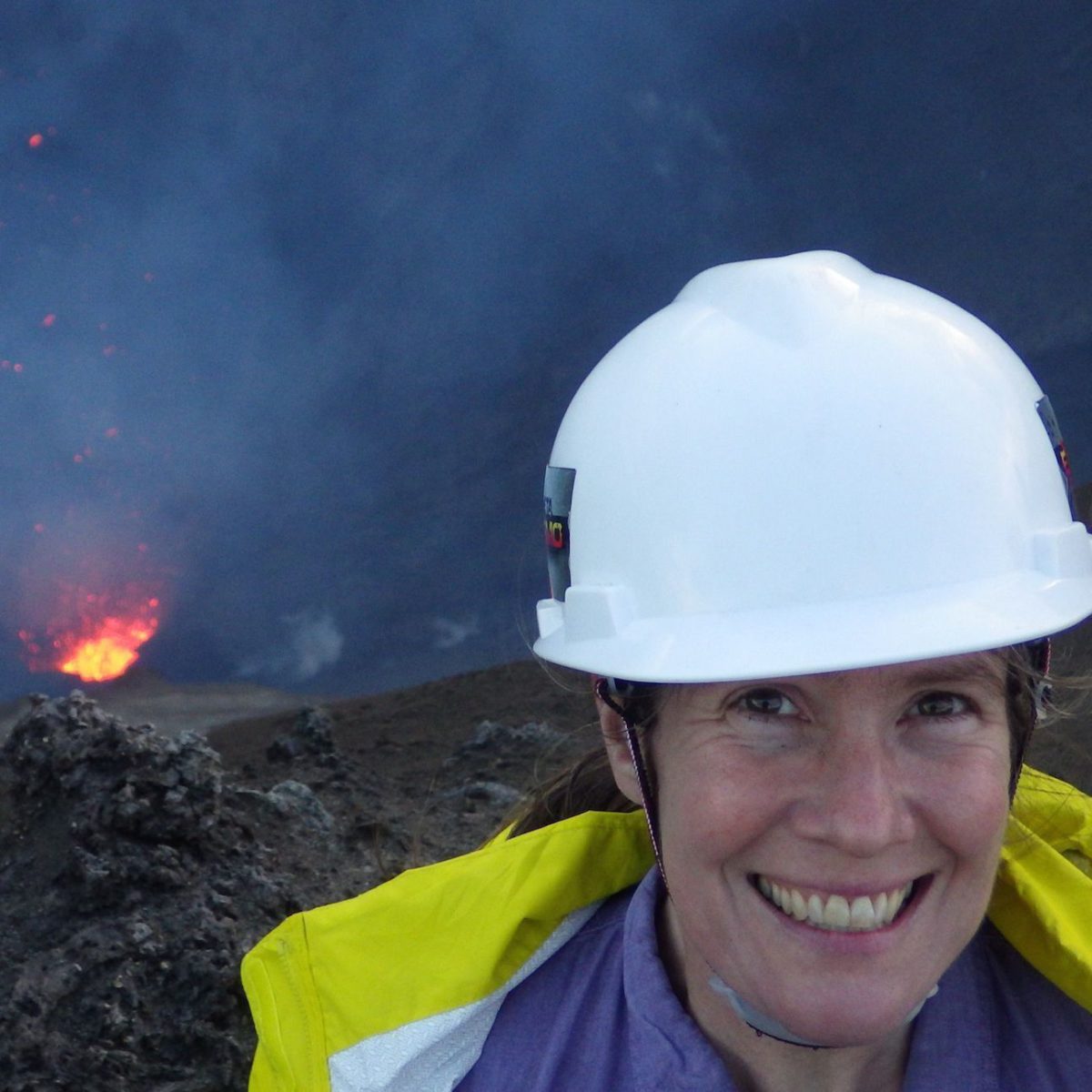
Elizabeth "Zibi" Turtle
Planetary Scientist at Johns Hopkins Applied Physics Lab and Dragonfly Principal Investigator
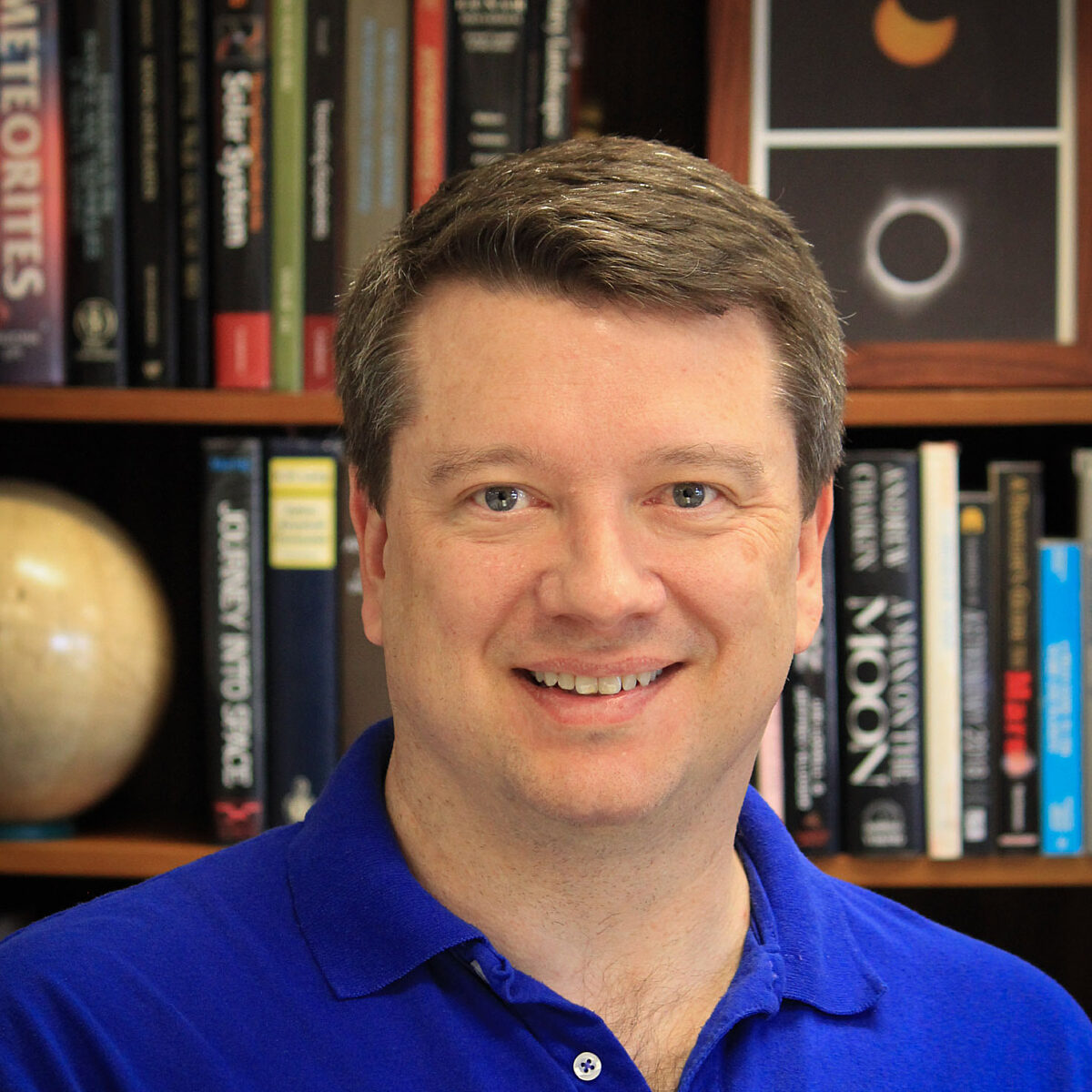
Bruce Betts
Chief Scientist / LightSail Program Manager for The Planetary Society
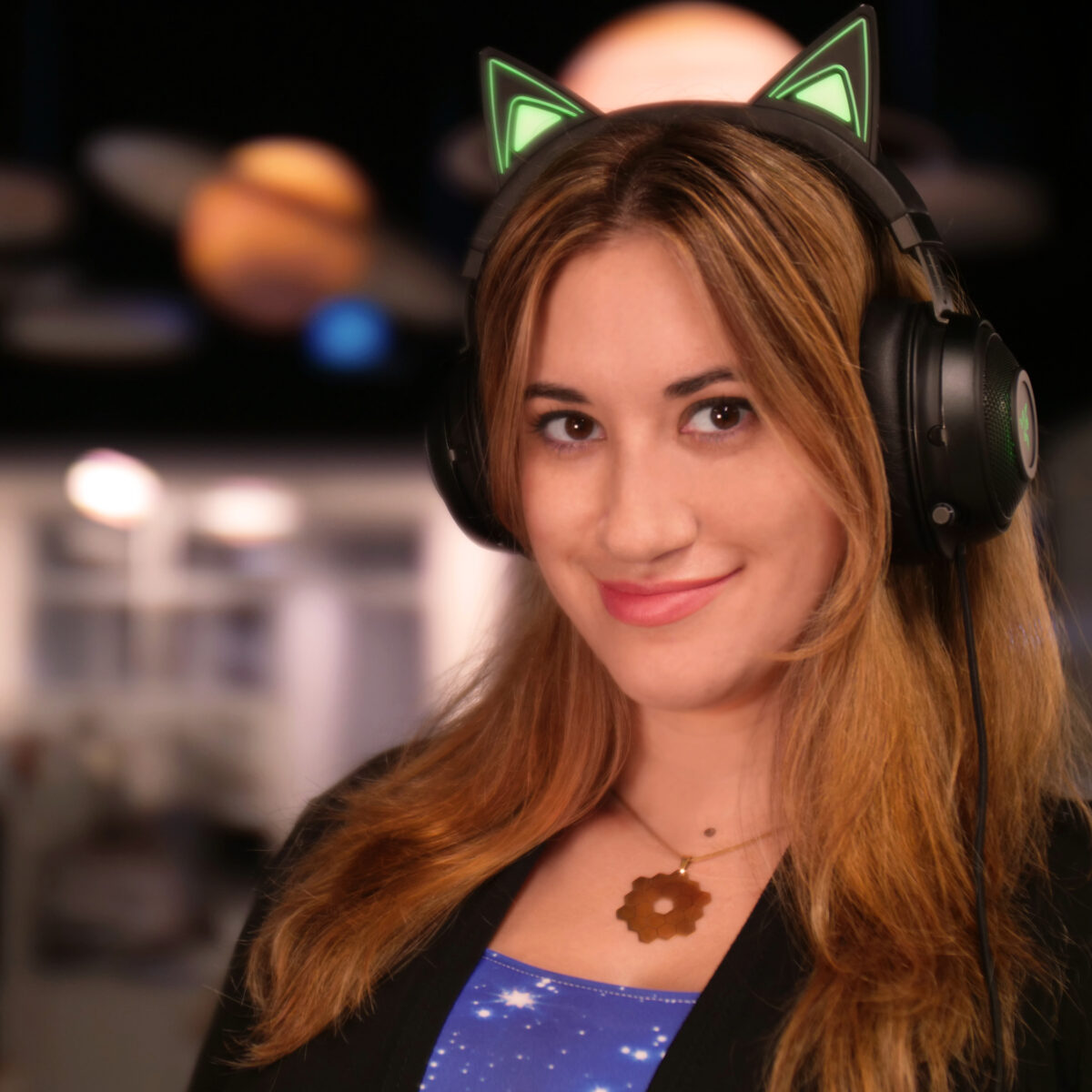
Sarah Al-Ahmed
Planetary Radio Host and Producer for The Planetary Society
Saturn's moon Titan is one of the most Earth-like worlds in our Solar System, with a dense nitrogen atmosphere, weather cycles, methane rivers, and vast organic dune fields. It also happens to be the perfect place to fly a drone. NASA's Dragonfly mission is doing exactly that, sending a car-sized, nuclear-powered rotorcraft to explore Titan's surface starting in 2034. With just two years until launch, the team is deep in the work of making it happen.
This week, we're joined by two members of the Dragonfly team from the Johns Hopkins Applied Physics Laboratory. Felipe Ruiz is the mission's lead rotor engineer and mechanical implementation lead, responsible for designing the eight-rotor system that will carry Dragonfly across Titan's skies. Zibi Turtle is the mission's principal investigator, a planetary scientist whose career has spanned missions from Galileo to Cassini to Europa Clipper.
Together, they walk us through the engineering challenges of flying a thousand-kilogram rotorcraft in an alien atmosphere, how the team is testing and validating the design here on Earth, and what the spacecraft's instruments will look for on Titan's surface.
Then Bruce Betts, our chief scientist, joins us for What's Up, where we pay tribute to the Ingenuity Mars helicopter and the legacy of the first powered, controlled flight on another world.


Related Links
- Dragonfly, NASA's mission to Saturn's moon Titan
- Dragonfly - JHUAPL
- How Dragonfly will explore Saturn’s ‘bizarro Earth’ moon, Titan
- NASA Dragonfly Mission – Rotor Blade Design and Optimization
- Flight Engineers Give NASA's Dragonfly Lift
- Dragonfly Soaring Through Key Development, Test Activities
- Dragonfly Mission Begins Rotorcraft Integration, Testing Stage
- Dragonfly Flight System Faces the Heat
- Planetary Radio: Dragonfly soars to final design phase
- Ingenuity, NASA’s Mars Helicopter
- Buy a Planetary Radio T-Shirt
- The Planetary Society shop
- The night sky
- The Downlink
Transcript
Sarah Al-Ahmed:
How do you fly a car sized nuclear powered drone through the freezing skies
of an alien moon? We're learning more about Dragonfly this week on Planetary
Radio. I'm Sarah Al-Ahmed of The Planetary Society with more of the human
adventure across our Solar System and beyond. Imagine a thousand kilogram
drones soaring through a thick atmosphere over organic sand dunes. That's
the vision for NASA's Dragonfly Mission, which is currently being built and
tested for an epic journey to Saturn's largest moon. This week we're
exploring the engineering required to fly a craft with that size and Titan's
frigid temperatures. Joining me from the Johns Hopkins Applied Physics
Laboratory are lead rotor engineer, Felipe Ruiz, and principal investigator,
Zibi Turtle. They'll reveal how the mission currently stands in its
integration and test phase and how they upgraded the rotor design to get the
smoothest ride through the titanium skies.
Then Bruce Betts, our chief scientist, joins me for What's Up, where we look
back at the Ingenuity Mars helicopter, the first powered controlled flight
on another world. If you love Planetary Radio and want to stay informed
about the latest space discoveries, make sure you hit that subscribe button
on your favorite podcasting platform. By subscribing, you'll never miss an
episode filled with new and awe-inspiring ways to know the cosmos and our
place within it.
Titan is one of the most Earth-like worlds in our Solar System, despite
being frozen and covered in methane rain, rivers, and lakes instead of
water. But its thick atmosphere and low gravity make it a perfect place to
fly. It's about 40 times easier to fly there than it is here on Earth.
That's why NASA chose a rotor craft to explore it instead of a traditional
rover. Dragonfly will be able to hop from site to site, covering ground that
no wheeled rover could ever reach. It's going to be sampling the organic
chemistry of this world that mirrors what early Earth looked like before
life ever took hold. To walk us through how this all works, I'm joined by
two guests from the Johns Hopkins Applied Physics Laboratory, which manages
the mission for NASA alongside a massive team of partner institutions and
universities.
Dr. Elizabeth Turtle, who goes by Zibi, is the principal investigator on
Dragonfly and a planetary scientist whose career spans Galileo, Cassini, the
Lunar Reconnaissance Orbiter, and Europa Clipper. She's a returning guest
and always a joy to have on the show. And Felipe Ruiz is Dragonfly's lead
rotor engineer and a senior staff mechanical engineer at APL. He's also
worked on the double asteroid redirection test or the DART mission and the
Parker Solar Probe. Felipe is a longtime fan of Planetary Radio, so it's a
real thrill to finally have him on. Here's my conversation with Zibi Turtle
and Felipe Ruiz. Hey, thanks for joining me.
Felipe Ruiz: Thanks, Sarah. Glad to be here.
Zibi Turtle: Thanks, Sarah. Great to be here.
Sarah Al-Ahmed: It's been a while since we had an occasion to talk about Dragonfly on the show when Burt were coming up. There's been a lot of developments recently, so I'm really glad to have you both on. But for people who aren't familiar with the spacecraft, Zibi, can you tell us just generally what is Dragonfly? Why are we going to Titan?
Zibi Turtle: Dragonfly is a mission to send a rotor craft, a large rotor craft about the same size as the Curiosity or Perseverance rovers on Mars to Saturn's moon Titan. The moon Titan has a dense atmosphere and lower gravity than Earth makes it at the perfect place in the solar system to fly. And that allows us while exploring Titan to be able to get to a variety of places on the surface and that's what we really ultimately want to do. Titan is a very carbon rich place. The complexity of the molecules on Titan is similar to the complexity we think we would've had on the early Earth. And what we really want to study is the kinds of molecules that are being produced there and whether they're like the kinds of molecules we think would've been produced on the early Earth before life developed. Titan's basically been doing complex prebiotic chemistry experiments, the chemistry that occurred before biology for an extended period of time and the results are sitting on the surface. And so Dragonfly is designed to go there to study the compositions of those materials and see what's there.
Sarah Al-Ahmed: I mean, other than trying to blast off from the moon with some kind of Apollo module or something, there's only ever been one other powered flight on another world, which is the Ingenuity helicopter in Mars. But this is a much better situation for flying, I feel, with the thick atmosphere and everything that's just waiting there for us. So I'm really excited about this, but we still have about two years out from launch. So where does the mission currently stand in terms of integration and testing?
Zibi Turtle: Yeah. In terms of flight on Titan, it's about 40 times easier to fly on Titan than it is here on Earth. So Titan is doing a lot of the work for us, which is really excellent. At this point coming up on two years to launch, the team is incredibly busy in our integration and test phase. So here at APL, people are every day working on building the electronics, building the lander itself, and assembling all of that together and doing testing of the hardware. The instruments will be coming in, will be being delivered during the next several months and those will be installed also on the lander. And then in parallel with the lander build here at APL, Lockheed Martin, out in Colorado is building the entry vehicle, the heat shield and the backshell that will protect Dragonfly as we descend down into Titan's atmosphere, as well as the cruise stage that takes us from Earth to Titan. So all of those components are coming together in parallel and our partners are working right now to build the instruments. So it's a very, very busy time.
Sarah Al-Ahmed: It's a really complex thing and I don't think the scale of this thing really resonated with me clearly until very recently. It was about two months ago. I was at an event in Washington, D.C. and someone from APL was there with VR headsets. I got to experience the size of Dragonfly through that VR headset and I tell you it's literally taller than me. I had to look it up afterwards. So it's just wild how big this is and how complex this machine is. How many people does it take to build something like Dragonfly? Like you've mentioned there are many institutions, but how many people?
Zibi Turtle: Yeah. All of these missions are incredible team efforts and on Dragonfly right now there are probably a few thousand people across the country and around the world working to bring this to reality.
Sarah Al-Ahmed: That's amazing. Everyone's going to be so excited when it's finally flying on another world. When I first saw this thing, I initially called it like a quadcopter. It looked to me like it had four rotor sets, but it's actually eight rotors on this thing. And Felipe, you're deeply involved in designing this. This has been like your brainchild for a while. What drove that design decision to have eight rotors on this spacecraft?
Felipe Ruiz: Yeah. Hey, Sarah. So that's an excellent question and it is a way of balancing requirements between getting the furthest range and having the most efficient vehicle that can plan Titan against being able to fit in the aeroshell. And so we have to be able to get the lander to Titan when we launch. We launch inside of an aeroshell that has the sheet shield, the parachute cone and the systems we need to descend. And so that gives us a diameter that the whole rotor cap has to fit in. And if you do this study, it actually ends up being that within that aeroshell diameter, a four rotor system maximizes rotor area. In maximizing rotor area, you become most efficient with the power that's actually required to fly. And then we stack two rotors on each arm to further maximize rotor area, further maximize thrust. That allows us not only to have the control margins we need to generate the thrust we need to fly, but also be the most efficient that we can within those parameters that we're given.
Sarah Al-Ahmed: If only we could origami this thing up the way we did with JWST, we'd get a million rotors on this thing.
Felipe Ruiz: And we actually went through some trade studies where we had deployable rotors and mechanisms and you'll see that the rotors are a single monolithic piece of aluminum because we'll talk about the cryogenic aspect of Titan. Titan is terribly cold. And so one of the trades we made was it's better perhaps not to have mechanisms that have to work after so many years of cruise at a cryogenic temperature, better to have rigid rotors and there's some savings in complexity there.
Sarah Al-Ahmed: Yeah. I mean, it is really, really cold, but it also doesn't have the temperature swings that some other worlds like say Mars would have. How does that change the way you're designing this spacecraft that is going to be operating at these super cold temperatures?
Felipe Ruiz:
So it is terribly cold. We're far away enough that the day night cycle on
Titan actually does not change the surface temperature a bunch. Surface
temperature is about -180C, -292F. It's roughly the same as liquid nitrogen.
And so from an engineering point of view, it's been a huge challenge just to
keep the internal vehicle warm enough, the avionics and the batteries
especially so that we can survive. The key way we do that is that we
actually, the vehicle has a MMRTG, it's nuclear-powered and we use the heat
that comes out of that RTG.
We have a system of fans and ducts that circulates the air inside the
vehicle around and that allows us to keep everything warm enough at Titan to
make sure all of the components survive. If you actually look at a picture
of Dragonfly and you see the outer mold line, the outer mold line is
primarily a foam and it is insulative and we have some very, very tight heat
leak requirements because it does not take a big heat leak to overcome the
heat that the RTG is producing, the heat that we're producing internally
through the avionics. And so that has been one of the biggest challenges
ever since we really started developing the lander.
We've had some pretty unique test campaigns and unique test facilities that
we've built at APL to replicate the Titan environment. And we then have to
test through different operating cadence because as you can imagine, flying
is a very power intense activity. So it's a heat intense activity, whereas
hibernating at night is not. So there's unique features like a cold duct and
a hot duct of there's a valve on the lander that can circle air closer to
the skin of the lander closer to that cold environment in Titan before it
brings it back in, which lets us fine tune some of those temperatures on the
surface.
Sarah Al-Ahmed: How do you keep the rotors rotating? How do you prevent the motors themselves from freezing?
Felipe Ruiz: So we don't. We let the motors freeze. And that was an early trade and early decision that we made because the amount of power it takes to keep the motors from freezing was more power than we had to give, more power that we get out of the RTG and more than we can pull out of the batteries. And so we have a motor design that is designed and analyzed and built to freeze. We warm those motors up in the EDL sequence before first flight and make sure they're at temperature before we release from the aeroshell. And then for subsequent flights, there's actually a whole pre-flight procedure of which a big step is bringing those motors up to temperature with internal heaters such that they're ready to fly. And then between flights, they are frozen and essentially the temperature of Titan.
Sarah Al-Ahmed: That's some wild engineering. But you mentioned this earlier that it's a lot easier to fly on Titan than it might be on Earth because of the density of the atmosphere. How does that atmospheric density actually change the rotor design or the shape of the blades?
Felipe Ruiz:
So the density is about four times that the Earth's density, if you look at
all of the aerodynamics equation, it's essentially scales and loads. And so
for a rotor that spins at the same rotation rate on Titan as Earth, we
generate four times the thrust. So that helps us be much more power
efficient. And that's where the number that Zibi said earlier comes from. It
takes a lot less power between the denser atmosphere and the one-seventh
gravity to fly on Earth than it is on Titan. We also care about a couple
other things in the tight atmosphere that are beyond the density.
We care about the viscosity. We care about the speed of sound. We typically
don't want rotor tips that go supersonic. It leads to high drags, high
torques, and high vibrations. And then viscosity for us means drag. So we
take all of those and compared to an Earth analog, the dragonfly rotors
operate in a aerodynamic regime that is more akin to what you see in a wind
turbine on Earth as opposed to what you see on Titan. And so the dragonfly
rotors, the air flows that we selected, the blade pitch distribution is all
designed in mind for that operating regime.
Sarah Al-Ahmed: I'd ask you how heavy the spacecraft is, but we'd be thinking about that in terms of Earth gravity. So instead, I guess I'll ask how much mass is in this spacecraft and how hard is it to actually get it off the ground on Titan, even if it's easier to fly there?
Felipe Ruiz:
Yeah. So the maximum mass that we are using in our rotor design and our
flight design is just shy of a thousand kilograms, so about 2,200 pounds.
That is for a sense to scale, a Robinson R44 helicopter weighs roughly that
much. Divide that by seven and you get to roughly a little bit over 300
pounds. Now we're talking in terms of thrust. So in Newtons it's about 1,400
Newtons and to put that in scale, that's about what a Vespa Sprint weighs on
Earth. And so you get that help from the gravity. We can spin rotors up to
150 RPM. Each rotor pair for reference generates about 800 Newtons, it's
about 200 pounds. Add all that up together and the whole system at max RPM
can generate about 3,000 Newtons, just shy of 800 pounds. And so hey, that
number is bigger than what we see the way the land is going to be on Titan,
great.
And in fact, we will typically not spin the rotors that fast. That is a max
RPM that we use mostly for controllability. So it lets us turn out the
vehicle, it lets us get acceptable margins for our pitch roll and yaw
controllability. And then there's also a sticky ground constraint that as we
learn more about Titan, Zibi can talk about this, we have some margin where
we say, "Hey, maybe we land in place that's got sand dunes and it's not
that easy to get off the ground, it's a little bit stuck." And so that
thrust to weight margin lets us fly and have conservatism in the design and
the high confidence that we can fly through all the flight regimes we want
and throughout the whole flight envelope.
Sarah Al-Ahmed: Part of why I know that these rotors are going to be super successful is because the company Sikorsky is involved in this and they're the ones that build these Blackhawk helicopters. What does their rotor expertise bring to a mission like this and what have you been learning from their team?
Felipe Ruiz:
So much. So Sikorsky has over a hundred years of lessons learned and
expertise and really institutional knowledge that we can leverage for a
mission like Dragonfly. We brought them on when we started getting into the
implementation and production phase of the lander and they've been
instrumental to help us with all of the analysis that it takes, not just
looking at the road and making sure it's going to survive the flight
environment, but what are the loads? What is the flight envelope? What sorts
of things and aerodynamic regimes like vortex ring state that we have to fly
through during EDL? Do we need to be extra careful of and where should we
spend extra resources to make sure both in the analyses and the testing and
the verification we do the due diligence to make sure that any issues that
we might discover we discover here on Earth?
They're helping us with hardware. We have a biogenic rotor fatigue test
coming up here in about a month where we're going to build ourselves a
little chamber, take four rotors down to Titan temperatures and cycle them
with hydraulic cylinders so they break. And Sikorsky has been running tests
like that for decades. So there's a lot of institutional knowledge that
we're taking, for example, just for that small scale test. And then even
moving forward, making sure all the flight hardware gets verified
adequately. We had them in our clean room about a week ago. We did something
called a ground vibration test and the ground vibration test is you take the
fuselage, you hang it off a crane with bungees. So it's like a free, free
condition as if it's flying and then you hit it with a modal hammer and with
stingers to shake it like the rotors are going to shake so you understand
the structural dynamics.
And that's a test they do all the time. That's a test that was novel for us
on the APL side, but having that expertise and having the folks that do that
for a living and get good test data that we can then use to correlate our
models and build the confidence we need to then fly on Titan is unique. And
then in addition to Sikorsky, I want to give some credit to the Penn State
Vertical Lift Research Center of Excellence. So before Sikorsky got
involved, especially in the conceptual phase and proposed preliminary
design, we actually worked with Penn State's aerospace department and that
lift research center of excellence to work the proposal, to do the early
design on the rotors, to do the early design of the mechanics and
aerodynamics analyses. We wouldn't be here two years away from launch if it
weren't for them. They were critical in the initial design and they're still
a huge part of the team.
Sarah Al-Ahmed: There is so much that I wouldn't have thought goes into figuring out every single contingency. What would you say are the biggest aerodynamic challenges that you're trying to overcome when you're trying to solve for a place like Titan?
Felipe Ruiz:
So I'll give you a couple examples. If you look at early images of
Dragonfly, you will note that the lander has rotors with two blades. And if
you look at more recent pictures of Dragonfly, you'll note that we now have
a lander with rotors that have three blades. So when we put the proposal
together and when we did the initial rotor design, we had two blade rotors
because that let us put the rotors out as far from the lander CG as possible
while still staying within the aeroshell. And what that means is we have
longer arms, longer control arms for the torques that we then use to fly the
lander. So it helps with the control margins. The drawback to that is two
blade rotors, through a quirk of dynamics and aerodynamics and some of the
harmonics that happen when you go through forward flight shake really hard,
really, really hard.
Early on, the decision was we would rather focus on maximizing control
margins and we can probably deal with the vibration issue. Turns out did
enough analysis, enough testing to realize we can't deal with the vibration
issue. We're probably going to fatigue or endurance, fail something, that we
need to change the rotors. And so we upgraded the rotor design to three
blade to mitigate that vibration issue. So that's been one of the biggest
changes. That change happened after our first wind tunnel test. So the
second wind tunnel test, we had redesigned rotors ready in time and they
performed actually quite well compared to what we used to have. So we're
very happy with that. The other big challenge I'll talk about is scaling.
And so there's very unique test facilities that NASA has, specifically the
Transonic Dynamics Tunnel at NASA Langley that get us close to Titan's
aerodynamic conditions, but it's not perfect.
And so the rotor design, we picked air foils and we picked a plan form that
is not the most efficient design for Titan, but it is a design that through
the different Reynolds numbers that the rotors operate both in the wind
tunnel and then at Titan and then the Mach tip numbers, we can correlate
from that wind tunnel test analytically to what we see on Titan with high
confidence. And how do we pick the most efficient airflow? How do we picked
the most efficient plan form and twist distribution and tip geometry? We
don't have that confidence because that is a rotor that is very much built
for the tight environment and for nothing else. And so there were some
trades to be made to say, we need to make sure that our test program, our
analysis program, the software that we use to analyze is robust enough
through the conditions that we can actually test on Earth and build that
confidence to fly on Titan and we're going to take a little bit of hit in
efficiency to do so, but without that confidence to fly, we're not wanting
to launch.
Sarah Al-Ahmed: Yeah. Which just means we have to do a lot of testing. And in order to do that, you need a bunch of different test models. And I was lucky enough to see one of them, it was about a year and a half ago we did a live show in Washington, D.C. and the team from APL brought this actual, it was like a smaller scale model of the Dragonfly spacecraft. How many different models do you have and what are they all designed to test?
Felipe Ruiz:
So you saw what we call the integrated test platform. The integrated test
platform is what we do Earth flight testing. So that is a model that
actually flies and a scale model that is primarily used for testing and
development of some of our flight-like software and algorithms with hardware
in the loop. So we can take some of the things that we program and fly in
the closed loop sims and fly them on Earth and see how they behave on Earth.
There's a couple other models. We've had two big wind tunnel test campaigns
and two different models for that. So the one that's near and dear to my
heart is the full scale model that we built. We flew that in NASA Langley's
Transonic Dynamics Tunnel. It's a semi-span model. So what that means is
it's only half of the vehicle. So if you imagine running dragonfly through a
bandsaw and so it's only two arms sticking out and half the fuselage, that's
what the model looks like.
Stick it up on a wall and then be in full scale, that test lets us go
through more of aeromechanics testing than we would've otherwise been able
to. And so that means loads, that means stresses, that means putting the
rotor in the vehicle through actually a couple lifetimes and worse flying
conditions that we would expect on Titan and from a structural mechanical
point of view that helps us build confidence that it can survive. We had a
second wind tunnel test model. We actually flew that into Transonic Dynamics
Tunnel too and that was a partial scale model, but it was a full span model.
And so that actually looks like the full lander, four arms, eight rotors.
And whereas the previous model, we could only really actuate the model and
pitch so we could move the nose up and down. That full span model lets us
roll it, lets us pitch it, lets us yaw it.
And so we can put it in different angles of attack, different flight regimes
and really understand how the aerodynamics of the body are going to interact
with all of the rotor spanning through the different aspects of the flight
envelope. And then getting away from aerodynamics and aeromechanics, we
mentioned how thermal is such a challenge for this mission. And so there is
a fourth full scale model at APL that we call the DTM, the demonstration
thermal model and that has been used for thermal testing. So at APL, we have
a Titan ed chamber. It's a 16 foot cube and test section. It can go down to
that -180C liquid nitrogen like temperature.
And we have been using that as a high fidelity model to prove out our
thermal design, prove out our temperature control techniques, prove out that
the insulation we've picked and the process to install it not only works,
but is robust, and work through some operations on Titan that then help us
correlate not only our thermal models, but also our computational fluid
dynamics models because Titan is convection driven. And so unlike a
spacecraft where you care mostly about radiation, we have convection and
convection takes a lot more testing and analysis to make sure that all the
models are right and that we know how to operate the vehicle on Titan and
keep everything within thermal limits.
Sarah Al-Ahmed: You also did heat shield testing recently in New Mexico, right? What has that kind of revealed about how this vehicle is going to handle actually entering Titan's atmosphere?
Zibi Turtle: Sure. There's a Sandia test facility, the solar tower, and it has a lot of mirrors and they focus the heat or they focus the light from the sun into a single very small point and the team, engineers at NASA Ames, one of our partners from Lockheed as well, was out there at the solar tower test facility where they can take one of a piece of the material that is used on our heat shield to protect Dragonfly as we go down through Titan's atmosphere and subject it to very high temperatures to make sure that the material behaves as expected and will indeed protect Dragonfly when we get to Titan. So that testing completed earlier this year and happily was very successful and demonstrated the robustness of the entry material.
Sarah Al-Ahmed: That's a really cool way to test that. It's like the most extreme end of putting a leaf under a magnifying glass under the sun.
Zibi Turtle: Yes, but scaled up quite a lot.
Sarah Al-Ahmed: You mentioned earlier the Titan chamber. This is kind of a space designed to help us test the environment on Titan, but what specific elements of Titan's environment are we testing in that chamber? Because we can't get everything perfectly Titan accurate.
Felipe Ruiz:
And that's one of the big stories of Dragonfly where there is not the
perfect test facility to do everything we would like to do on the vehicle.
And so we break out testing into different facilities, be they wind tunnels,
be them environmental chambers, be them thermal test equipment chambers. Two
main titan simulators, we have what we call the TPEC, the Titan pressure
environment chamber. It's five feet in diameter, five feet deep and the two
key parameters that we match there are temperature. So that gets us down to
-180C and pressure. Titan's surface pressure is about 1.4 times Earths. That
matters a lot for conduction and making sure that the heat transfer that we
get convectively actually matches what we would expect to see on the lander.
The full scale Titan chamber is a little bit different. It is 16 feet by 16
feet by 16 feet, so it is a big cube.
It also gets us down to -180C and that is primarily used for full scale
testing. So the DTM that we talked about, the full scale thermal model gets
tested in there. In a couple short months, the full up lander will get
tested in there and we actually do two Titan test campaigns, one before we
go to Lockheed and one after. And that matches the -180C condition. It
doesn't match pressure. We run that chamber at just under a Earth
atmosphere, but then with the knowledge that we have from the TPEC, we are
able to correlate the results we're going to get out of that Titan chamber
test to what we would expect to see on Titan. And so both of those add up to
essentially a thermal correlation and validations that we need
Sarah Al-Ahmed: We'll be right back with the rest of my interview with Felipe Ruiz and Zibi Turtle after this short break.
George Takei: Hello, I'm George Takei and as you know, I'm very proud of my association with Star Trek. Star Trek was a show that looked to the future with optimism, boldly going where no one had gone before. I want you to know about a very special organization called The Planetary Society. They are working to make the future that Star Trek represents a reality. When you become a member of The Planetary Society, you join their mission to increase discoveries in our Solar System, to elevate the search for life outside our planet, and decrease the risk of Earth being hit by asteroid. Co-founded by Carl Sagan, The Planetary Society exists for those who believe in space exploration to take action together. So join The Planetary Society and boldly go together to build our future.
Sarah Al-Ahmed: You also did some rotor testing at Langley, I believe. And if I read correctly, it was like you used Freon to simulate Titan's atmosphere. How close of an analog is that exactly?
Felipe Ruiz: The Transonic Dynamics Tunnel is a unique facility in the world. The entire facility's the size of a city walk.
Sarah Al-Ahmed: Whoa.
Felipe Ruiz:
And the test section's 16 feet by 16 feet. So you go up to the third floor
of this facility before you walk into the test section. The entire tunnel is
a pressure vessel, it can run in air, but then the facility can also be
route down a vacuum and then they backfill it with a heavy gas, Freon. It's
R134a, so it's a environmentally sensitive version of Freon. What that does
is it lets us scale some key parameters to Titan that we otherwise would not
be able to with Earth-like testing. So the density of the atmosphere, we get
about 80% of the way there with that R134a as we get to Titan. So it helps a
lot with dynamic pressures, but even more importantly than that from an
aeromechanics point of view, it lets us match key parameters like thrust
coefficients, advanced ratios, tip Mach numbers, Lock numbers.
And while we don't exactly match Reynolds numbers, we're close enough that
we can scale that performance in a way that we're only scaling across a very
small range as opposed to trying to go from Earth-like one atmosphere
conditions all the way to Titan. And so we take all of that information, we
plug it into all of the aerodynamics and aeromechanics models that we have
to correlate. And then we take those models, we flip the switch, turn it to
Titan, and that's how we get our expected flight conditions.
Sarah Al-Ahmed: But luckily too, you're not subject to solar panels or things like that like they are on Mars or that day-night cycle that is pretty similar to what's happening on Earth. So your team's not going to be on Mars time, thankfully, but how long is a day on Titan and how does that change your operational rhythm?
Zibi Turtle: A Titan day is 16 Earth days long. So you're right, nobody's going to be living on Titan time. It actually means that we can do operations during the day here on Earth and kind of tailor that during the Titan day. So there's about a week of operations during the Titan day and most of the ground in the loop activities where we're communicating back and forth with the lander and sending up new commands and getting data back. We can actually schedule that during business hours. So that makes it somewhat easier on the team. I expect it's actually going to be hard for people to, while Dragonfly is operating during the Titan day to actually go sleep. And I expect that there will be a bit of a challenge to make sure everyone is taking care of themselves and that we're taking shifts and things like that. But the primary operations can actually be scheduled during the business day here on Earth, which will make it a lot easier from that perspective.
Sarah Al-Ahmed: I know functionally the spacecraft itself can fly at nighttime, but are you going to be flying during the Titan night considering how difficult it'll be to actually see where you're going?
Zibi Turtle: Yeah, we do do Terrain Relative Navigation and we want to be communicating with Dragonfly before and after the flights. So all of the flights will be during the Titan day and during the Earth day, the Earth day here at Mission Operations. But we can do some activities at night. Some of the instruments will be monitoring Titan conditions, atmospheric conditions, listening for Titan quakes, Titan earthquakes. And those will operate all the time. And if there is a Titan quake, we'll take a quick set of data. So there are activities we can do with a science payload at night. The camera actually has a set of LEDs at different wavelengths and some of those wavelengths are in the ultraviolet where organic materials can fluoresce. And so there could be kind of a spooky camera observation during the Titan night where we illuminate the surface with the ultraviolet LEDs and see if we see fluorescence from the organics. A few different activities over the Titan night.
Felipe Ruiz: We don't have any orbital assets around Titan, which means we can't communicate back to Earth during the Titan night because as we are on the surface that faces away from the sun, it's also facing away from the Earth. And so those ground in the loop activities, since we can't communicate to Earth, we keep them during the day when we can get down links from DSN.
Sarah Al-Ahmed: But you mentioned this earlier that the entire thing is powered by an RTG. How long can it actually fly before it needs to kind of sit back down and settle in to do some science?
Felipe Ruiz: So Dragonfly is powered by an MMRTG. The flight times and the different flights we take can vary based on ground in the loop. So we have repositioning hops, which are anywhere from under 10 meters to 100 meters. That is our safe landing circle that the vehicle evaluates when it's flying is a 10 meter radius. And so a reposition just says, "Hey, we're going to jump from one spot to the other." Or a hop is about a 100 meter radius. So that's someplace that we've managed before and we have a high confidence to find a landing site. We have other different flights like scout, scout to land, jumps, committed jumps. The longest flights are on the order of about 30 minutes and that's all when we're on the surface. EDL and first flight is different. So our EDL sequence from entry interface to landing is about two and a half hours, slightly longer than on Mars. We spend quite a bit of time on the shoot.
Sarah Al-Ahmed: Two and a half hours of terror.
Felipe Ruiz: Correct. And there is no sky crane. There is nothing that gets us to a soft landing on the surface other than ourselves. About a kilometer off the ground, we actually cut free from the aeroshell. We go through an event called pose where the lander is lowered, the rotors spin up, we despin the yaw rates with the rotors and then we pop the separation nuts on the lander and fall and then from 1,000 meters up, the vehicle flies itself down. We start doing a safe landing site search at about 100 meters AGL and then when we find the safe landing site, we land for the first time under our own power. So that is a unique flight and can't wait.
Sarah Al-Ahmed: Yeah, that's going to be really cool, but also kind of nerve wracking. And even if everything goes right in that circumstance, it's going to be on this world for a while. So what happens if something goes wrong during the flight given this communication delay? What autonomy does the spacecraft have to handle a situation like that?
Felipe Ruiz:
So we have a very robust fault management approach. As you can imagine, it's
about a 90 minute one-way light time. And so there's nobody behind a
joystick, nobody that can take control. And we have a whole team that has
been working through fault trees and planning responses to each and then
also testing that both through some of our closed loop sim and some of our
planned mission sims with flight hardware in the loop. There's three main
categories of responses. The first one is a return to a previously scouted
safe landing site. And so that is really used where we see a loss of
redundancy. Something that says, "Hey, we're a little bit squeamish
about moving forward, but the vehicle can still fly and fly safely. Let's
fly back to the safe landing site. Let's call Earth and let's see if we can
do some troubleshooting." The second response is a search for a new
safe landing site.
And so that might be used when we are a little bit perhaps too far from the
previous takeoff site. Maybe our battery state of charge doesn't allow us to
get back. And so we enter more of a first flight operational contingency
where now the vehicle is looking for its own new safe landing site and as
soon as it determines a new safe landing site, it'll land right away and
then call home and get ground in the loop to see what's happened. And then
the most critical of the three responses is the land now. And so that is
triggered when we see something that actively risks the lander. It could be
critically low power, low state of charge.
It could be a temperature on a component that we see trending very high and
that is a response that basically says, "Hey, get on the ground."
Now the vehicle as it's flying is looking at breadcrumbs and it is actively
looking for safe landing sites. And so at that point it picks the safest
landing site it has and then goes to that. And so there's all sorts of ways,
all sorts of testing were done where depending on the fall, we have high
confidence that we can get back safely on the ground and testing and
simulation here is key.
Sarah Al-Ahmed: Yeah. Although difficult to test every single scenario, right? I'm glad that you're thinking through them and testing them in simulations and doing all these kinds of things because you never know what might happen on another world.
Felipe Ruiz: Oh, yeah.
Sarah Al-Ahmed: So you mentioned earlier that we're going to be trying to learn more about what's going on with the organics on this world and what's going on with the ground by, for example, using the LEDs on the DragonCam. But that's just one way that we can try to analyze what's going on in that world. And there's a lot of complex instruments on board the spacecraft that's going to help us understand this world better. And thankfully a couple weeks ago we did kind of a more in depth dive into what was going on with testing organics on Mars. So thankfully we've talked about some of these kinds of instruments like mass spectrometers, but I want to talk a little bit about what's on board Dragonfly and what we can actually learn about this world while we're there. So we'll start with that mass spectrometer, the DraMS, I think it's called, which is very similar to the SAM instrument on Curiosity. How does that allow you to kind of analyze the organic molecules on Titan without accidentally destroying them?
Zibi Turtle:
Yeah. So the Dragonfly mass spectrometer or DraMS does measurements of very
small samples. We have a drill, rotary percussive drill that will break up
material on the surface. And again, because we have this great cold
atmosphere, we can effectively vacuum it into the sample cups in the mass
spectrometer. As you say, the DraMS instrument is based on flight heritage
instrumentation from the Curiosity SAM instrument. There's a lot of good
understanding of how that instrument has worked on Mars and what we've been
able to learn from it. Of course, at Titan, we're in a very different
environment with respect to the amount of carbon and the carbon complexity.
So we have two different modes. We have the laser absorption mass
spectrometry and the gas chromatography and they function in somewhat
different ways to give us different information about the range of materials
on the surface, especially at the large molecular scale that we know is
present on Titan to be able to measure very large molecules.
And then also with the gas chromatography capability to look at the
structure of those molecules, which gives us important information as well.
And so what we want to understand is whether these environments on Titan
where in the distant past, these very complex carbon molecules that have
formed in the atmosphere and fallen out onto the surface have had the
opportunity to mix with liquid water to understand how far the chemistry
progressed there and whether the processes there actually produced
biologically relevant compounds like amino acids, like proteins, the
building blocks of what developed into life here on Earth, because it's very
hard to study the prebiotic chemistry here on Earth. Biology overprints
everything, which is good for us, but it makes it hard to study those really
early steps. And in the laboratory, we don't have the same timescales and
Titan has been doing these kinds of chemistry experiments for thousands,
tens of thousands, hundreds of thousands, millions of years. And so it'll be
fascinating to see what has developed, how far that chemistry has
progressed.
Sarah Al-Ahmed: Yeah. Especially with everything we've been learning from both Mars but also samples that have been returned from asteroids. We're finding all of these really complicated building blocks of what is basically like the beginnings of what could be RNA and DNA on rocks just all over the place. So I can't even imagine what's going on on Titan.
Zibi Turtle: And one of the awesome things about our solar system is that we have such a wide variety of planets and moons and asteroids and comets with such different histories and each of them can give us insight into different aspects of the formation, evolution of these different types of worlds and the kinds of molecules and chemistry that are possible in these very different environments. It's very exciting.
Sarah Al-Ahmed: And even if there isn't liquid water on the surface, I understand there's a lot of frozen water underneath the surface of all these dunes. So who knows what's going on with mixing underneath the ground? I mean, that's some complex stuff that I cannot wait to see what this thing finds when it gets there.
Zibi Turtle: And that's one of the beauties of being able to fly. That's really one of the advantages that flight gives us is that we can get into environments on Titan that have very different geologic histories, very different types of chemistry that has occurred in the past to really understand what has happened in these different areas. The interdunes may have a water ice composition in places that represents the primordial water ice crust of Titan. The dunes themselves have this organic hydrocarbon sand that may be very widely sourced from across Titan. And then of course, ultimately Dragonfly will explore the deposits associated with an impact crater where the materials may reflect the chemistry that could occur in the past when we had this opportunity for liquid water to mix with these complex organics. And so we'll have this wide range of different geologic environments and different geologic histories and chemistries.
Sarah Al-Ahmed: Another one of the ways that you're going to be testing this material is with an instrument, I just love this name, DraGNS, the Dragonfly Gamma-ray and Neutron Spectrometer. And my first question I guess is what exactly is the physics of firing neutrons that stuff on the ground and then reading the gamma rays? How does that teach us more about this material without actually taking a sample?
Zibi Turtle:
Yes. By using this technique, you can measure the bulk elemental composition
of materials. Often gamma neutron spectrometers fly on spacecraft far above
planets. We've sent them to a number of planets in the Solar System. For
Dragonfly, of course, will be down on the surface and we're protected by
this dense atmosphere. And so we actually have to bring a neutron source
with us because the atmosphere also protects the surface from the cosmic
rays that usually excite the gamma rays and neutrons that the instrument
measures. So we actually bring a neutron source and what the instrument does
is look at the energy of the gamma rays and neutrons that come off of
materials in the surface as a result of the neutron source and that the
different elements have different energy signals and that allows you to
understand the elements in the surface materials.
So this allows us to characterize the composition of the material. Are we on
a organic rich layer? Are we on water ice, things like that. And that allows
us to characterize the material. And in fact, if there's a shallow layer, a
thin layer of organic material overlying water ice, say a few inches deep,
we'd actually be able to sense that there's water ice at depth. And so it
gives us a little bit of information into the layering right beneath the
lander, which would be very interesting as well.
Sarah Al-Ahmed: Oh man, I can't wait to see what this thing does, but also it just makes me wish that we could take a whole chemistry lab out there with us. But unfortunately, we're limited in what we can do and that's true on any world until we can get samples back. But I did want to ask because in a previous episode, I had spoken with Amy Williams, who works on the Curiosity team about how they're testing these samples of materials on Mars. It was specifically about their TMAH experiment, which I won't go into right now, but she said when I spoke with her that there was a similar experiment that was going to be on Dragonfly. Is that correct?
Zibi Turtle: Yeah. So in the mass spectrometer for the gas chromatography mode, we use a derivatization agent. This is a chemical that reacts with the material and allows it to be volatilized as it's going through the mass spectrometer to measure the specific compositions of the components of the material. So we have a couple of different derivatization agents, one of which is the TMAH. The other one is DMF-DMA. And the MOMA instrument actually for Mars exploration actually has both of those as well.
Sarah Al-Ahmed: This is going to be awesome. We're going to be able to compare all these different worlds, all these different ways of sampling. I cannot wait for it to get there, but we're going to have to wait until 2034 for this thing to actually reach Titan, which is all right. But once we actually get there, I mean, what would be the biggest marker of success to both of you? What is the headline that you're really hoping we can get out of this mission?
Zibi Turtle:
It's a mission of exploration. So one of the most exciting things when
you're exploring places you haven't spent a lot of time in before is the
discoveries that you didn't expect. So I fully expect that there will be
things that we're surprised by at Titan, but fundamentally Dragonfly is a
chemistry mission. We really want to understand that those early chemical
steps and how far organic synthesis can have progressed on an ocean world in
the outer Solar System that is very cold, but yet in many ways, surprisingly
Earth-like, especially chemically. And so really to see how far that has
progressed in this very different environment.
And then what that can tell us possibly about the same kinds of chemistry
and the chemical steps that may have occurred here early on Earth. One of
the things I really like about the mission is that we get to put that into
the context of understanding the Titan environment and really get that
bigger picture of aspects of Titan's atmosphere and methane cycle and the
geologic processes that are transferring, mixing, modifying materials on the
surface and then the opportunities for those two have mixed in the past, for
example, with liquid water at an impact crater or with liquid methane. So I
like that we get that kind of full view of Titan as a system, even though
we're exploring one small portion of Titan as a world.
Felipe Ruiz: From my side, that's the exploration of Titan too. And I love the Cassini-Huygens's picture that shows the surface of Titan, because you can almost close your eyes and pretend you're standing there. And so one of the things I'm very much looking forward to is that first picture from Dragonfly on the surface, maybe with a rotor in one of the field of views, because we'll just catch the tips on the side cams and being able to close your eyes and vicariously be on Titan, maybe not feel the ground beneath your feet, but it becomes a real place that you can explore and visit and just the expansion of powered flight onto yet another world. I'm a huge fan of Ingenuity. The first flights and what Ingenuity was able to accomplish is mind-blowing to me and to be able to enable that critical and amazing science that Zibi was talking about through powered flight and discoveries, the exploration that we're going to be able to do on that world to me is mind-blowing. So can't wait for EDL, can't wait for that first flight and can't wait for many more flights after that and many discoveries.
Zibi Turtle: One thing I'll add is that we'll be able to do some imaging, some aerial imaging while we're flying. So I think that also is going to be really evocative of getting to see Titan from that perspective as well as on the surface. It'll be very easy to, as Felipe says, to feel like you're in the Titan environment you're self-exploring.
Felipe Ruiz: Do we still have a microphone on the lander, Zibi?
Zibi Turtle: No, there is still a microphone, so we'll be able to listen as well. Although we'll mostly probably hear the lander itself.
Felipe Ruiz: Yeah, the fans and the routers, but the wind gusts and who knows what you're going to hear on Titan. To me, what I get out of the Mars missions the most is that kind of data set where you can almost strap on your spacesuit and put yourself in, whether it's pictures or visuals or sounds. I love that we're going to get enough of that on Titan that I can't wait to close my eyes and vicariously be on Titan with the lander.
Sarah Al-Ahmed: Yeah, sometimes it's like I've spent so much time listening to things from Mars and watching things from Mars. I have these really vivid dreams of what it's like to be a human standing on that world. And I think after Dragonfly is done, I might start having Titan dreams and I'm waiting for that day. Thank you so much for all the effort that you guys have put into this just amazing mission and for coming onto the show to talk with us about it. I know we still have two years out from the launch and there's a lot left to do, but you guys have made amazing progress and I'm so excited about this. So thank you for joining us.
Felipe Ruiz: Thanks for having us. It's been a blast.
Zibi Turtle: Thank you. It's been great talking to you.
Sarah Al-Ahmed: I cannot, cannot wait to see what Dragonfly finds when it finally touches down on Titan in 2034. But while we wait for the first flight on an icy moon, we can look back at the little rotor craft that proved flying on another world was even possible. Let's turn things over to our chief scientist, Dr. Bruce Betts for What's Up and a look back at the legacy of the Ingenuity Mars helicopter. Hey, Bruce.
Bruce Betts: Hey.
Sarah Al-Ahmed: Is that the sound of your rotors spinning?
Bruce Betts: Yes. Yes, it was. It's a Brucefly.
Sarah Al-Ahmed: A Brucefly. Not really though. I mean, I know I was just saying this a few weeks ago, but it still trips me out that Dragonfly is literally taller than I am. This thing is so big.
Bruce Betts: Does that really say that much? I mean...
Sarah Al-Ahmed: It's true. I am a little short, but still.
Bruce Betts: No, it's amazing and it's a surprisingly big beast compared to what we're used to here in drone land and it just helps having that low gravity and big, thick atmosphere.
Sarah Al-Ahmed: Yeah. It also gives me a real appreciation of the fact that we've flown on any world at all. After talking to Felipe and hearing more about the actual engineering design of the rotors and how they have to think about this world they've never been on, I think about the fact that we flew on Mars and how difficult that's got to be given how thin that atmosphere is. The fact that we've done any of this at all is cool.
Bruce Betts: Yeah, no, not easy, not easy. It's amazing that they flew even the little guy, but it did great though. It did our first powered flight on another world, well, powered controlled flight.
Sarah Al-Ahmed: I did want to ask, so the reason we use that phrasing, a powered controlled flight, is that because technically we've launched off of the moon? It's not like we flew around the moon, but we've landed and left another world before. So in this case, it's like a powered controlled flight in that we're staying in the air and zooming around. Is that the case?
Bruce Betts: There's more. There also were the VEGA balloons and the Venus atmosphere in the 1980s from the Soviet Union, partnering a little bit with us. And so they flew but they were not powered and they were not controlled. But also, yeah, I guess that makes sense. We've done some controlled flights. But the other thing is it's just key. I mean, we use that terminology with the light sail too because we were doing not powered, but it was solar radiation pressure pushed, but controlled because the whole point was like with the helicopter, it doesn't do you any good if your helicopter flies but you don't have any control over it. Well, spacecraft get pushed by solar radiation pressure, but it only really matters if you can control it and use the propulsion. So that's why.
Sarah Al-Ahmed: Yeah, that makes sense. Well, since we've been talking about Dragonfly, I figure we should take some time to actually talk about that first powered controlled flight Ingenuity, which honestly, it feels like just yesterday, that little thing rolled out from underneath Perseverance. Those images were so cute and I am sad that Ingenuity is no longer helicoptering around there, but we're about to have all kinds of drones.
Bruce Betts: It did its little short test flight it was originally designed. I mean, I was kind of stuck on late in the process as an engineering demonstration and was planned for five test flights in 30 days. That was their level one requirement. But they ended up doing 72 flights over nearly three Earth years and just yeah, what other statistics you got? Its final flight was 2024, flew a total of just over two hours, covered about 11 miles and reached altitudes as high as 24 meters, high altitude for Ingenuity. So it was a wonderful precursor, very much hearkening back to Sojourner on Pathfinder as the first little rover that led us to big rovers that did all sorts of stuff later.
Sarah Al-Ahmed: Just imagine whenever we drop one of these rovers on another world, maybe, I mean, if the conditions are right, if it has at least a tenuous atmosphere, as Mars shows us, maybe we can fly around, scout things out. I don't know. I mean, but still, I mean, the fact that we're stepping up from there to something as big as Dragonfly, Titan is very unique, but I was completely impressed by Huygens just dropping a probe onto that world, let alone flying around Titan. It's so cool.
Bruce Betts: It's very cool, but definitely, huge challenge, much different than the Ingenuity. Really easy to fly conceptually, but it has to be fully, fully, fully autonomous. There's no rover to come play with it and it's a billion and a half kilometers away so the light time is... Yeah, it's an engineering challenging mission, but how awesome will it be if it works? So here's wishing them do it. Wishing them do it.
Sarah Al-Ahmed: And that's not the only possible flying missions we're going to have in the future. I mean, we haven't talked a lot about this since the Ignition Day episode we did a few months back, but this whole concept of SkyFall and MoonFall, Ingenuity-based probes that they're going to be sending out to the moon and Mars is really interesting. So I'm looking forward to learning more about that.
Bruce Betts: Yeah, those will be challenging and I'm still working on the connection between MoonFall on an airless world and Ingenuity, but they both fly around. They just use different techniques. So yeah, if those work, those will be nifty. There's no doubt. We'll move on to [inaudible 00:57:01]. If you squished all the asteroids together, they would still be much smaller than the Earth's moon.
Sarah Al-Ahmed: Like, just all the asteroids and the asteroid belts?
Bruce Betts: Take them from wherever you want. But yes, the asteroid belt and then there's a much smaller quantity kind of inwards and outwards of that. I don't know that we're counting the trillions of objects out in icy land out in the distant Solar System, but certainly the asteroid belt gives you, the mass of the asteroid belt is only a few percent the mass of the moon.
Sarah Al-Ahmed: I mean, makes sense. We've got a pretty big moon for a world our size, which is awesome.
Bruce Betts: Yeah, but there's a bunch of those asteroids.
Sarah Al-Ahmed: There are a bunch of them and next week we're going to be talking a lot more asteroid stuff, I'm excited to get into that.
Bruce Betts: Ooh, fun. All right, everybody, go out there, look up at the night sky and think about twinkly lights. Thank you and goodnight.
Sarah Al-Ahmed: We've reached the end of this week's
episode of Planetary Radio, but we'll be back next week with more space
science and exploration. If you love the show, you can get Planetary Radio
t-shirts at
planetary.org/shop
along with lots of other cool spacey merchandise. Help others discover the
passion, beauty, and joy of space science and exploration by leaving a
review and a rating on platforms like Apple Podcasts and Spotify. Your
feedback not only brightens our day, but helps other curious minds find
their place in space through Planetary Radio. You can also send us your
space thoughts, questions, and poetry at our email at
[email protected]. Or if you're a Planetary Society member, leave a comment in the Planetary
Radio Space and our online member community. Planetary Radio is produced by
The Planetary Society in Pasadena, California and is made possible by our
members who cannot wait to watch another rotor craft take flight in the
skies of an alien world.
You can join our global community of space enthusiasts at
planetary.org/join. Mark Hilverda and Rae Paoletta are our associate producers. Casey Dreier
is the host of our monthly Space Policy edition and Mat Kaplan hosts our
monthly book club edition. Andrew Lucas is our audio editor. Josh Doyle
composed our theme, which is arranged and performed by Pieter Schlosser. My
name is Sarah Al-Ahmed, the host and producer of Planetary Radio. And until
next week, ad astra.