

 Explore Worlds
 Find Life
 Defend Earth


Our Goal:
Increase discoveries about the worlds of our Solar System and beyond.
- Build public support for planetary science and exploration.
- Encourage decision-makers to prioritize continual progression of human and robotic exploration.
- Support scientific and technological advances in planetary exploration.
The Challenge
Space is hard, and exploration takes a long time.
When a government decides to take on a project like returning samples from the surface of Mars or sending a probe to Jupiter’s moons, it doesn’t happen overnight. From planning a mission to building, launching, and operating spacecraft, missions like these take decades to accomplish. They need decades of sustained funding.
Although private companies are increasingly active in space, funding for space exploration still mostly comes from governments. This means that elected representatives of the public make decisions about spending on space exploration and about which missions to undertake. It’s important to make sure that government decision-makers and the people they represent understand the value of space exploration and support the investments needed to make great discoveries.
Missions to explore other worlds also depend on advanced technologies and cutting-edge science, as well as international cooperation and collaboration. With the right investments and the world’s best minds working together, we can ensure a bright future for space exploration.
As a public citizen, your voice is critical in fueling and sustaining these efforts.
What We're Doing

Education and Public Outreach
We help more people get excited about space science and exploration.
- We provide free, accessible information to the public like our weekly radio program and podcast Planetary Radio, videos, articles, social media, The Planetary Report magazine, public events, and online courses.
- We host public events such as Planetary Radio Live and Planetfest to share information in an entertaining way and celebrate space exploration milestones.
- We give people tools to share space with their communities like our weekly newsletter, The Downlink, and our free outreach toolkits.

Policy and Advocacy
We demonstrate ongoing public support for space exploration, as well as during key moments like when funding for a mission is in jeopardy and when NASA’s budget is being determined.
- We rally our members and supporters advocate for space missions through petitions and letters, emails, and phone calls to government.
- We organize an annual Day of Action in which our members meet with their representatives in Congress and speak in person about their support for important space policy issues.
- We inform and educate government decision-makers about important and relevant space topics.
- We provide space policy analysis, white papers, and statements of support or opposition.
- We organize events on Capitol Hill to educate legislators on key space science and policy topics and helped form the first-ever Planetary Science Caucus which unites members of Congress from both parties who are passionate about the scientific exploration of space.

Science and Technology
We lead crowdfunding campaigns to financially support space science research and the development of innovative space exploration technologies.
- We identify novel, underfunded areas of research and technology to advance through donations from our supporters—like LightSail, our solar sailing spacecraft mission.
- We partner with institutions to fund important, cutting-edge research through donations from our supporters.

Global Collaboration
We connect with planetary exploration experts from around the world to strengthen our work and support international exploration efforts.
- Our 50,000+ international membership makes us the largest, independent space advocacy organization in the world.
- We participate in international meetings such as the International Astronautical Congress, AAS's Division for Planetary Science Annual Meeting, International Symposium for Solar Sailing, and many more.
- We partner with global outreach organizations like World Space Week and Yuri’s Night.
Latest Articles on Planetary Exploration
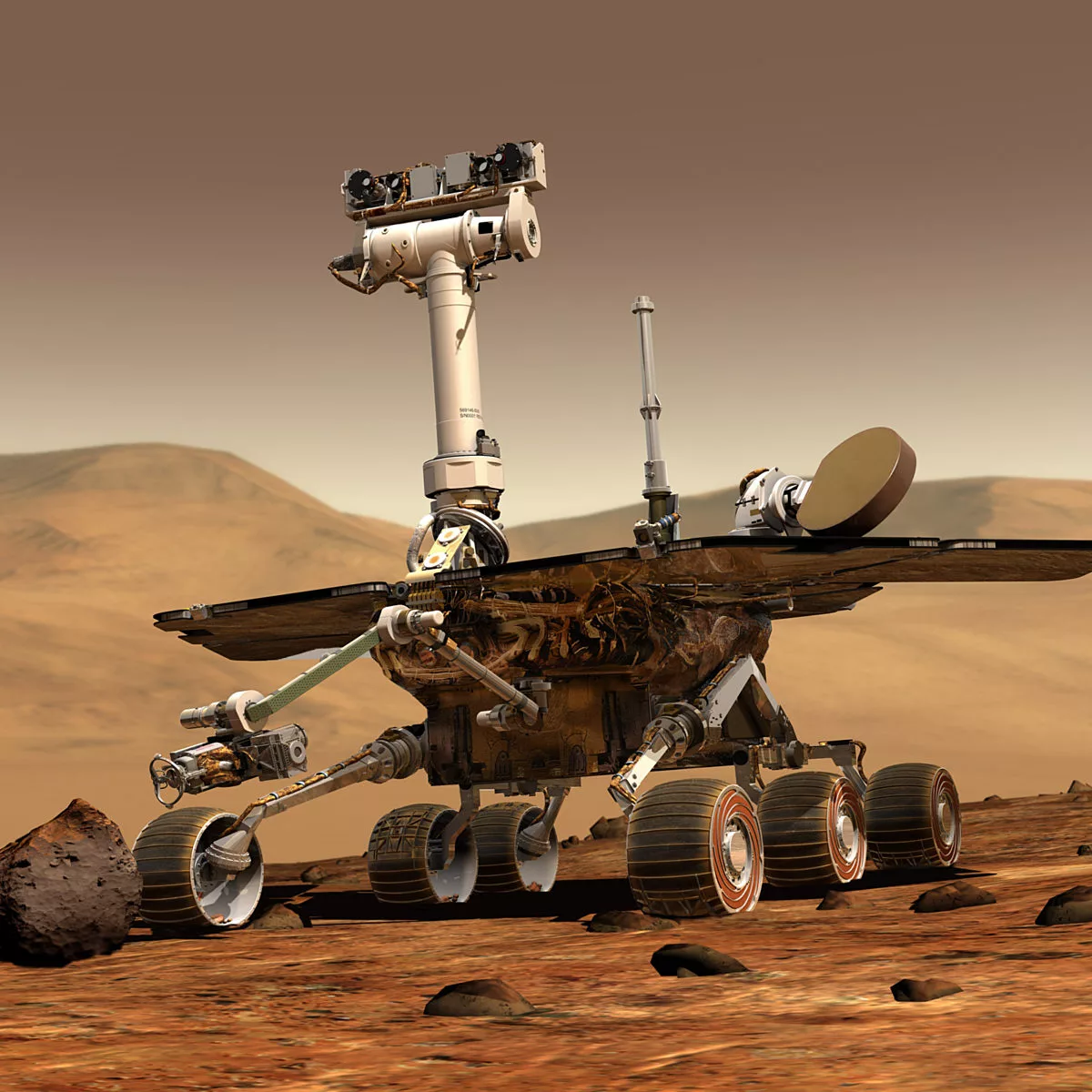
Larry Crumpler gives an update on the Opportunity rover's activities in Spirit of St. Louis crater.

Jason Davis shares five images of his home state, West Virginia, taken by astronauts aboard the International Space Station.

The Deep Space Climate Observatory (DSCOVR) has begun sending us fresh, whole-hemisphere images of our own fragile planet. Some sources say that the spacecraft is
Educational Resources
Inside the Mars 2020 Rover Clean Room Emily Lakdawalla guides a detailed, technical tour of the Perseverance rover in the JPL clean room.

What Is A Planet?
It's right there in our name: The Planetary Society. But what is a planet? This seemingly simple question is the subject of much debate.

The Bruce Murray Space Image Library
The Planetary Society’s Bruce Murray Space Image Library is a unique collection of photos and videos from the world’s space agencies, as well as artwork, diagrams, and amateur-processed space images, many of which are not available elsewhere.