

 Explore Worlds
 Find Life
 Defend Earth

All
All
 Sun
Sun Mercury
 Venus
Venus Earth
Earth Mars
Mars Jupiter
 Saturn
 Uranus
 Neptune
 Small Bodies
Stories, updates, insights, and original analysis from The Planetary Society.

Water on the Moon: Direct evidence from Chandrayaan-1's Moon Impact Probe
I've reported before about the detection of water on the surface of the Moon by the Chandrayaan-1 orbiter and the Deep Impact and Cassini spacecraft, but what I'm about to tell you about is actually more exciting: the direct detection of water in the lunar atmosphere by the Chandrayaan-1 Moon Impact Probe.

Planetary Radio LIVE!
Program note: If you will be in southern California on April 30, 2010, please join us at the public radio station KPCC's newly completed Mohn Broadcast Center at 7 pm for Planetary Radio's first-ever show recorded before a live studio audience!

Buzz Aldrin on Dancing with the Stars: Week 3, and that's it
Our favorite astronaut has moonwalked off the dance floor, and we want to thank him for showing us that you're never too old to try something new. This is my last post -- I hope you've enjoyed reading these little interjections of space-related pop culture.

Carnival of Space #148
Carnival of Space #148 is live over at Celestial Spider. Check it out!

Pretty picture: Rhea, rings, and two little moons
Here's a lovely picture whose components came down from Cassini a few days ago.

Pretty picture: Fly through the aurora
Space Station astronaut Soichi Noguchi is an awesome photographer. This image is going straight into the

Strong geomagnetic storm today
This morning I received a bulletin warning of a

Pretty picture: An unexplained chain of elliptical craters on the Moon
Here's the first cool pic I've managed to produce from the recently-released Lunar Reconnaissance Orbiter Camera data set.

My arduous journey to the Lunar Reconnaissance Orbiter Camera images
It's been two weeks since Lunar Reconnaissance Orbiter mission released a flood of data to the Planetary Data System, but I haven't posted any pictures dug out of the camera data yet. This post will explain why.

Quaoar: A rock in the Kuiper Belt
The paper I'm writing about today,

HiWish fulfilled (or, be careful what you HiWish for)
Yesterday the Jet Propulsion Laboratory issued a press release announcing the first eight image releases that resulted from HiWish suggestions.
Sweet dreams, Spirit
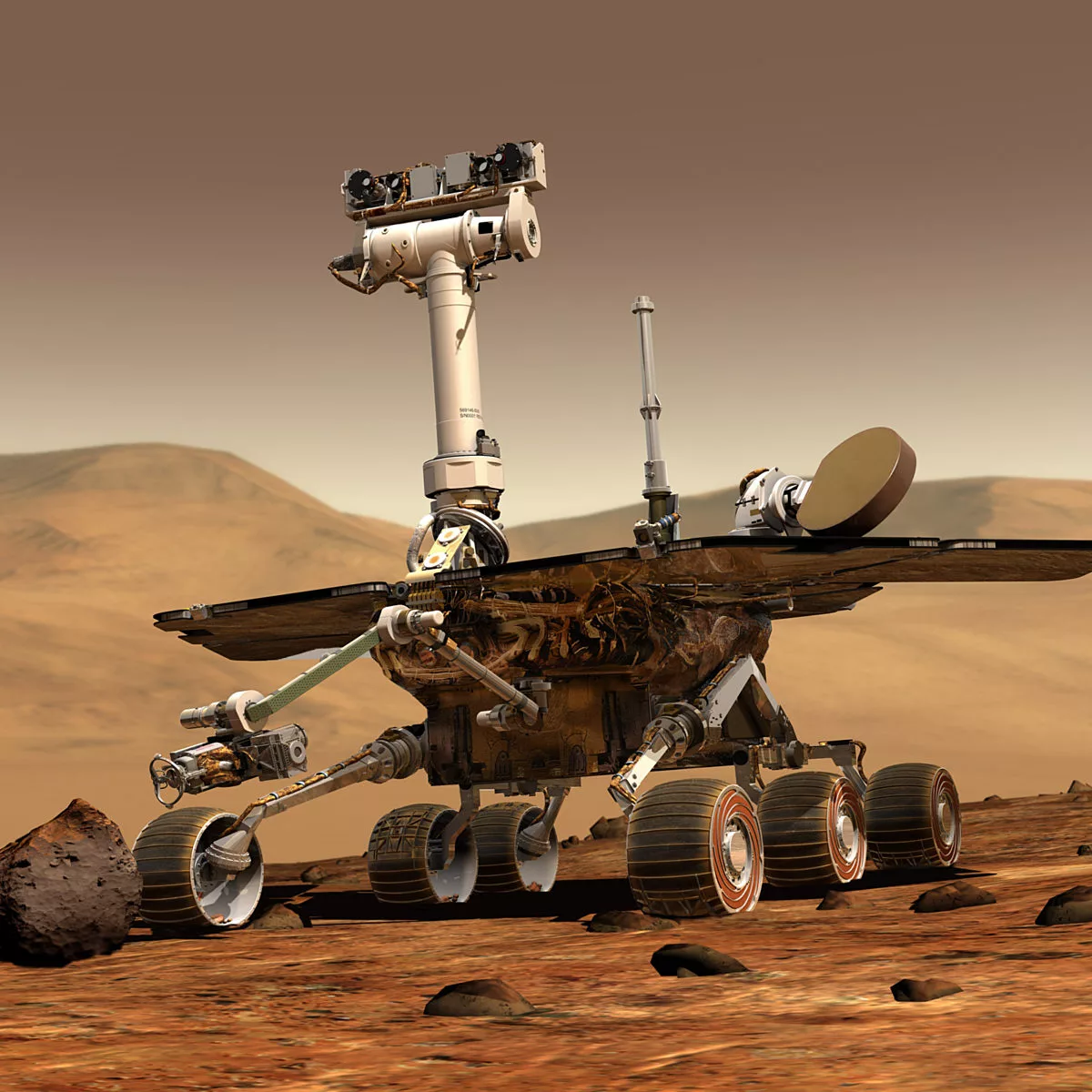
Spirit had been communicating on a once-per-week schedule in recent weeks. During the designated time for the rover to communicate with NASA's Mars Odyssey orbiter passing overhead on March 30, Odyssey heard nothing from the rover.

What's up in the solar system in April 2010
This month, we can expect lots of cool images of icy moons from Cassini, which will have close encounters with Dione and Enceladus, and more distant encounters with nearly every other iceball flying around the Saturn system inside Titan's orbit.
Mars Exploration Rovers Update: Spirit Begins Hibernation Probably, Opportunity Roves On to Endeavour Crater
March seems to have come in like a lamb and gone out like a lion on the Red Planet this year as the Mars Exploration Rovers trudged deeper into their fourth winter. While Opportunity finished up work at Concepcin Crater and shifted into gear back on the road to Endeavour Crater, Spirit finished up winter preparations and carried out a limited winter agenda before shifting, it appears, into hibernation mode.

Downloading the "First Voyage into the PDS" class
Here's how to watch the class on how to access Voyager data through the Planetary Data System, which I conducted to a small audience this morning.
Buzz Aldrin on Dancing with the Stars: Week 2
It's the second week of ABC's television program Dancing with the Stars, which means two things: (1) Someone will be getting the boot from the competition on Tuesday night, and (2) Our favorite rocket man had a second chance to prove to judge Bruno Tonioli that he could dance without looking like he was still wearing his moon boots.

Dawn Journal: It's Just a Phase
Our interplanetary adventurer still has a great deal of ion thrusting to complete before it can begin its orbital exploration of Vesta next year.

Mimas' cold region: another new mystery for Cassini to explore
This new map of Saturn's moon Mimas -- representing data captured by the CIRS thermal infrared spectrometer during Cassini's February 13, 2010 flyby -- is just baffling.

Space Imaging 3: First Voyage into the PDS
I've finally caught my breath enough to contemplate starting up my imaging classes again.

Opportunity's at the twin craters
Just a little update here to post a Navcam panorama from Opportunity showing that the rover successfully arrived yesterday at the doublet crater she's been aiming for since she left Concepcion a couple of weeks ago.