

 Explore Worlds
 Find Life
 Defend Earth


All
All
 Sun
Sun Mercury
 Venus
Venus Earth
Earth Mars
Mars Jupiter
 Saturn
 Uranus
 Neptune
 Small Bodies
Stories, updates, insights, and original analysis from The Planetary Society.

Official launch and landing dates announced for Curiosity
Yesterday the Jet Propulsion Laboratory formally announced the launch dates chosen for Curiosity, the next generation Mars rover also known as Mars Science Laboratory.

Voyager 2's flipped bit fixed
A happy ending to this story: JPL reported yesterday evening that the flipped bit in Voyager 2's flight data system software has been successfully toggled back to its correct value.

All's well on IKAROS and Shin-en
Today JAXA posted a very brief mission status update on the IKAROS spacecraft, launched yesterday along with Akatsuki. Brief is good; all's well.

Akatsuki, IKAROS, UNITEC-1, and your names are on their way to Venus
It was a picture-perfect launch for three Venus-bound spacecraft this morning: the Akatsuki Venus orbiter, the IKAROS solar sail, and a university-built minisat named UNITEC-1.

More Support for the 2011 Budget Proposal
The new joint statement by space organizations representing a large segment of the science and space-interest community, including The Planetary Society, is a terrific endorsement for the 2011 budget proposal for NASA.

Pretty picture: Messier 83
What does a barred spiral galaxy look like? THIS is what a barred spiral galaxy looks like.
Opportunity: longest-lived landed Mars mission
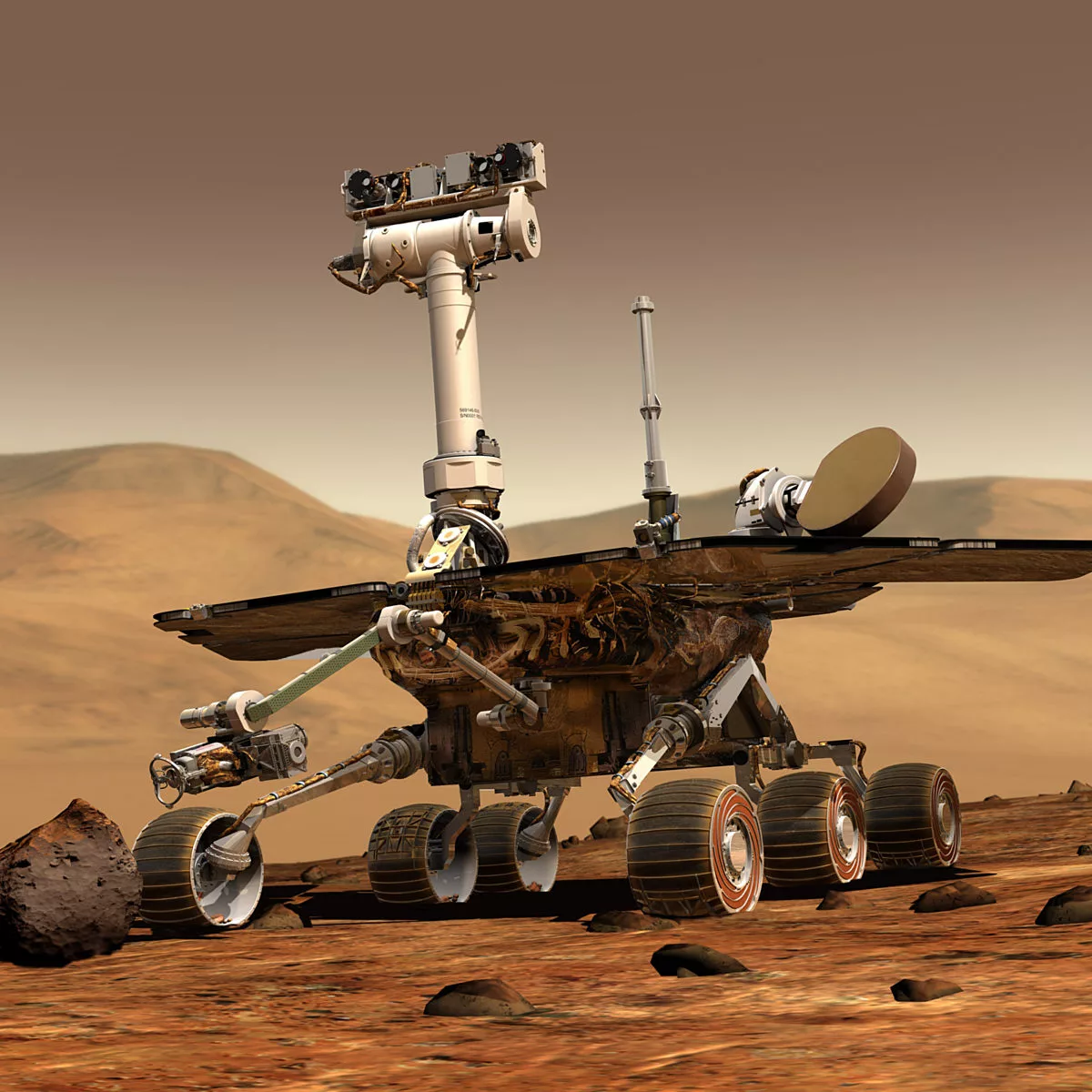
Today is sol 2,246 of Opportunity's mission to Mars; as I write, it's just before 7:00 local solar time. If this sol passes, as her previous 2,245 have done, with Opportunity still alive and speaking to Earth, she will have surpassed a record set on November 12, 1982: Opportunity will pass Viking Lander 1 as the longest-lived landed Mars mission.

The most amazing image of Enceladus Cassini has captured yet
Every time I think Cassini has captured the coolest image of Enceladus ever, it does better.
Apollo Astronaut Rusty Schweickart Boosts New NASA Plan
It's the hottest debate I've seen in 30 years of following space policy -- this uproar over NASA's proposed FY 2011 budget.

Dione and Telesto, close on camera but far apart in fact
This image, released today by Cassini's imaging team, is pretty cool; it shows one of Saturn's larger moons together with one of its smaller ones. I probably noticed the nice photo of Dione when it appeared on the Cassini raw images page two months ago, but I know I didn't notice the little speck below and to the left of the bigger moon. That speck is a small moon, Telesto.

Science and Hollywood -- The Two Cultures Meet in Jim Cameron's Avatar
Hollywood and Science are not congenial colleagues. When their paths cross, as they so often do in science-fiction films, each feels the other must give way to the cultural absolutes of their different tribes.

Akatsuki and IKAROS new launch date set
According to the Akatsuki Twitter feed, the next try for launch of Akatsuki and IKAROS will be Thursday, May 20, at 21:58:22 UTC.

Pictures hitting Earth from Cassini's close Enceladus flyby today
Cassini flew within 436 kilometers of Enceladus' surface today. Although it's Cassini's 11th targeted flyby of Enceladus, these close buzzes are never routine.
Voyager 2 status update: Yep, it was a flipped bit
Voyager 2's engineers have confirmed that the problem with the spacecraft was indeed the result of a single flipped bit in its software, as they predicted.

Akatsuki and IKAROS launch scrubbed due to weather
The countdown for the planned launch of Akatsuki and IKAROS got to about four minutes before they decided to cancel the attempt due to weather, and I can't blame them.

Sighting the homeworld
Coming closer every day, Mr. Hayabusa has sighted his final destination: his homeworld, Earth, and its attendant Moon.

Photos of your names on the IKAROS spacecraft
IKAROS, Japan's solar sail, is nearly ready for launch, piggybacked behind the Venus orbiter Akatsuki.
Solstice? What solstice?
Thumbing her nose at this whole winter thing, Opportunity drove 20 meters yesterday, sol 2,240, on the winter solstice.

Venus, and the Moon, and Atlantis, and ISS, and Magellan
Pam Chadbourne, one of the many engineers who made the Magellan Radar Mapper mission possible, sent this note out to Magellan team members this morning, and graciously permitted me to post it here.
Update on Voyager 2 status
Good old Voyager 2; she takes a licking and keeps on ticking.