

 Explore Worlds
 Find Life
 Defend Earth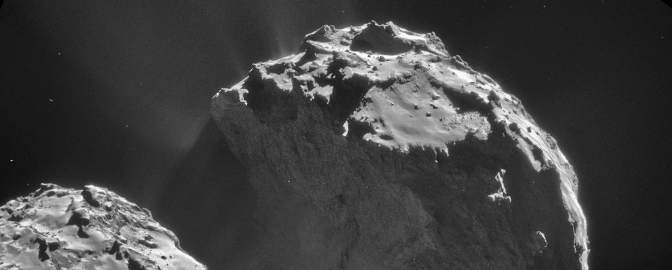


All
All
 Sun
Sun Mercury
 Venus
Venus Earth
Earth Mars
Mars Jupiter
 Saturn
 Uranus
 Neptune
 Small Bodies
Stories, updates, insights, and original analysis from The Planetary Society.

Testing Sail Deployment
The first full scale deployment of the Planetary Society's LightSail 1 solar sail was conducted on March 4, 2011 at Stellar Exploration in San Luis Obispo, California.

Glory Lost - But Its Mission Must Go On
Another painful loss to NASA's mission to study Earth from space: Today a Taurus XL rocket failed to lift the Glory satellite into Earth orbit when its clam-shell nosecone refused to open, forcing the rocket and its payload into the southern Pacific Ocean.

Public service announcement: How to use Wget to grab the 2011 LPSC abstracts
The Lunar and Planetary Science Conference is happening next week. The sessions and abstracts are all in PDF format, so it's tiresome to access them online; I much prefer to download them all to my computer and browse them locally.

What does decommissioning a spacecraft entail?
In my last couple of posts about the Stardust spacecraft, which is now basically out of fuel after a remarkably successful extended mission to comet Tempel 1, I've mentioned that it's soon to be decommissioned. A reader asked me: what does it mean to decommission a spacecraft?
Endeavour on Opportunity's horizon: Are we there yet?
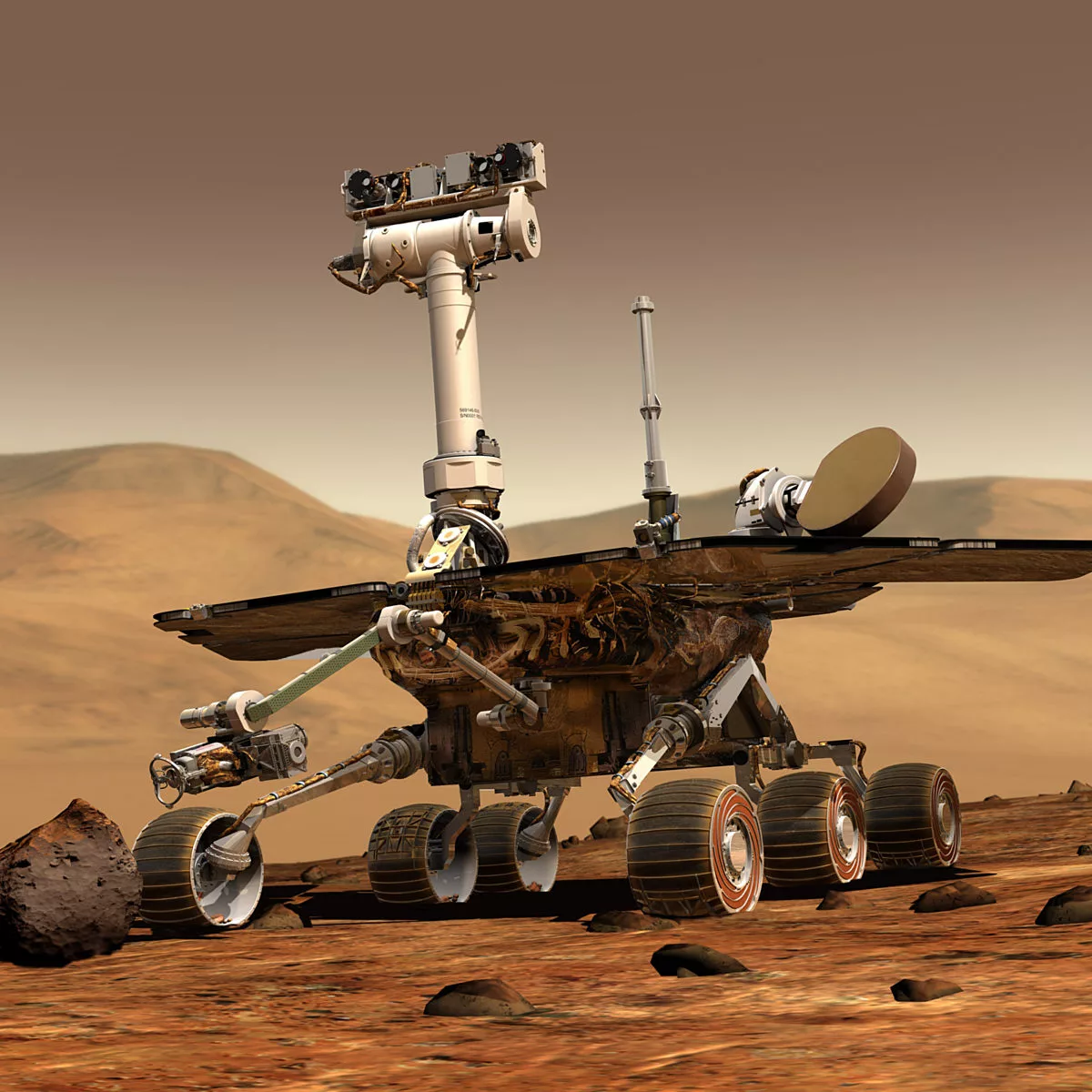
Last week the Mars Exploration Rover team dumped another 90 sols' worth of data from Mars into NASA's Planetary Data System, the national repository for space mission data. As I did once before, I dove into this fresh pile of data to pull out Opportunity's color views of the distant rim of Endeavour crater.

Explore the Moon in 3D through the Chandrayaan-1 TMC image data set
Data from two of the cameras aboard Chandrayaan-1 are now available through the ISRO Science Data Archive (ISDA), a new(?) site that is being established to host the data from ISRO's deep-space missions.

Map the world's light pollution by participating in GLOBE at Night
Now in its sixth year, GLOBE at Night is a citizen science program that marshals the eyes of thousands of people around the world once a year to assess the degree to which light pollution diminishes our views of starry skies.
The Future of Women in Chemistry and Science
Are you concerned about the future of women in science? Well, you should be, since the women working in science today and tomorrow will help shape the world you live in.
Mars Exploration Rovers Update: Efforts to Recover Spirit Expand as Opportunity Wraps Up Work at Santa Maria
The Mars Exploration Rover (MER) mission emerged from its third solar conjunction this month and, as March roars in, is embarking on its 86th month on the Red Planet. While Opportunity roved away from a surface target it had been studying at Santa Maria Crater and on to an intriguing blue boulder, JPL engineers on Earth stepped up their efforts to recover Spirit, which has been silent, ostensibly in hibernation mode, since late March, nearly one year ago.

365 Days of Astronomy Podcast: Stardust at Tempel 1
Yesterday the 365 Days of Astronomy podcast aired my contribution, Stardust at Tempel 1: The First Second Trip to a Comet.
Announcing the winners of the "Are We There Yet?" contest
I'm pleased to announce the winners of the Planetary Society's

What's up in the solar system in March 2011
I don't think there's any question what the big event of this month will be: MESSENGER is finally, finally entering orbit at Mercury on March 18 at 00:45 UTC (March 17 at 16:45 for me).

A Planetary Society Trifecta
A Planetary Society trifecta -- that's what Neil Tyson calls this episode of his StarTalk radio show broadcast this week. His guests include the Society's Vice President, Heidi Hammel, and its Executive Director, Bill Nye, (along with the Society's friend, Steve Squyres, Principal Investigator for the Mars Exploration Rovers).
Stardust update: last image taken today
According to the Stardust website, the spacecraft has continued taking navigational camera images of Tempel 1 since last Monday's flyby. But

New website full of color versions of Opportunity rover's microscopic images
There is a fascinating new page on the Mars Exploration Rover Pancam science team's website, full of color versions of Opportunity's microscopic images. The Microscopic Imager is one of the tools on the end of the robotic arm, and serves as a hand lens for the robot geologist to explore the rocks and sands of Mars in great detail.

A dog-bone-shaped asteroid's two moons: Kleopatra, Cleoselene, and Alexhelios
Asteroid (216) Kleopatra has been interesting to astronomers for a long time because its brightness is highly variable, but it seems to get more interesting every time somebody looks at it with a new instrument. This week a paper was published in Icarus revealed that it's 30 to 50% empty space.

Rosetta Update: 98% of rendezvous burn achieved, more detail on the safing event
ESA's Rosetta comet chaser has achieved 98% of the velocity change that it needed to accomplish in order to set itself up for the final leg of its cruise to comet Churyumov-Gerasimenko. The original plan was to perform this velocity change in a series of five rocket burns at the end of January, but the plans were interrupted by a scary event: the spacecraft went into safe mode during the second burn, on January 18.

The Solar System from the Inside Out - and the Outside In
Space probes grant us perspective, the ability to see our place within the vastness of the solar system. But opportunities to see all of the solar system's planets in one observation are rare. In fact, there's only been one opportunity on one mission to see the whole solar system at once, until now.
Sounds of Stardust, and a cool morphed Tempel 1 video
Here's two more items from Tuesday's flyby of comet Tempel 1 by the Stardust spacecraft to add to my previous roundup of Tempel 1 data. The first represents data from a dust counting instrument, portrayed as sound, and the second is a terrific morph animation of the flyby produced by Daniel Macháček.

Conjunction season is over, and Opportunity is back to work
It's always a relief when conjunction passes. Opportunity has gotten right back to work, sending down data acquired just before the moratorium, which spanned from January 27 to February 11.