

 Explore Worlds
 Find Life
 Defend Earth

All
All
 Sun
Sun Mercury
 Venus
Venus Earth
Earth Mars
Mars Jupiter
 Saturn
 Uranus
 Neptune
 Small Bodies
Stories, updates, insights, and original analysis from The Planetary Society.

Cheat sheets for Vesta's craters and Dawn's Vesta timeline
I made myself a cheat sheet to many of Vesta's distinctive-looking craters, and also wrote down a list of the major dates in the timeline of Dawn's exploration of Vesta.

Pioneer Anomaly Solved!
With the latest piece of the puzzle just published in a scientific journal, a solar system mystery that has perplexed people for more than 20 years has been solved, truly thanks to the support of Planetary Society members.

JUICE: Europe's next mission to Jupiter?
The Twitterverse is buzzing this morning with news that the Science Programme Committee of the European Space Agency has recommended that the next large European mission be JUICE, a mission to explore the three icy Galilean satellites and eventually to orbit Ganymede.

Planetary Radio: Taking Back the Night
Planetary Radio for April 16, 2012 features an interview with Scott Kardel of the International Dark Sky Association.

Pretty pictures from Cassini's weekend flybys of Enceladus and Tethys
Cassini flew past both Enceladus and Tethys on April 14. Here's a cool animation of its approach to Enceladus' plumes, and a pretty global picture of Tethys.

MESSENGER Mission Update: First burn performed to lower extended mission altitude
The MESSENGER mission just issued a press release announcing that they have completed the first step in the two-step process of lowering the spacecraft's orbit around Mercury.

SpaceX Dragon flight to ISS draws near
SpaceX and NASA have completed a successful flight readiness review (FRR) for the Dragon's upcoming visit to the International Space Station.

NASA collects round three of CCDev proposals
NASA is soliciting a third round of proposals from private spaceflight companies looking to send astronauts to the International Space Station.

Of inclinations and azimuths
A classified U.S. military satellite recently launched into an orbital inclination of 123 degrees. What makes this trajectory so unique? Pondering the answer affords the opportunity to learn some deceptively tricky concepts about the nature of all spacecraft orbits.

Pretty Pictures: Amazing Asteroid Lutetia
A long-awaited data set is finally public (well, long-awaited by me, at least). The Rosetta team has now published their data from the July 10, 2010 flyby of asteroid (21) Lutetia. This data set is absolutely stunning, and my friends in the amateur image processing community wasted no time in creating art out of it.

A Turning Point at Mars
Today, NASA's highly-successful robotic solar system exploration program, and the Mars exploration program in particular, is on the brink of a major turning point.

A call to action
Paul Hayne, representing the Facebook group

Nearly the last view of Endeavour with its life-blood flowing
After 12 years of photographing the space shuttle, and even getting to work for NASA as a photographer for the final three years of the program, I never had the privilege of going inside the cockpit until the program was over.

A possible nine-planet system
Someone on Twitter pointed me to a paper recently posted to ArXiv titled

Where is space?
Obviously the Earth ends and space begins somewhere, but today, as it has been for the entirety of humanity's manned and unmanned exploration of

Pretty picture: Janus and Saturn
In the last few days as it's rounded periapsis in its current orbit of Saturn, Cassini has taken a lot of great photos of Saturn's moons. One series of photos was taken from pretty close to Janus, a moon about a third the diameter of Enceladus that orbits between the F and G rings. And among those, several were taken with the moon sitting in front of Saturn.

An update on Opportunity, and a plea for some volunteer desktop publishing help
A. J. S. Rayl has just posted her monthly update on the goings-on at Meridiani planum, noting that the update recaps the 99th month of the Mars Exploration Rover mission. There's a lot of detail on how the radio-tracking campaign is going. While she's not driving, Opportunity's acting like a lander, with radio antennas on Earth performing Doppler tracking to allow very fine measurement of Mars' orbital motion.

What Saturn's moons can tell us about comets (Notes from LPSC 2012)
My notes on a two-part presentation by collaborators Jim Richardson and David Minton about the sizes of things in the Kuiper belt, a story they told by looking at Saturn's moons. How does that work? What connects Saturn's moons to the Kuiper belt is craters.

Nichelle Nichols and the Nerd-in-chief
I got this wonderful photo from Nichols' Twitter after Mike Okuda retweeted it.
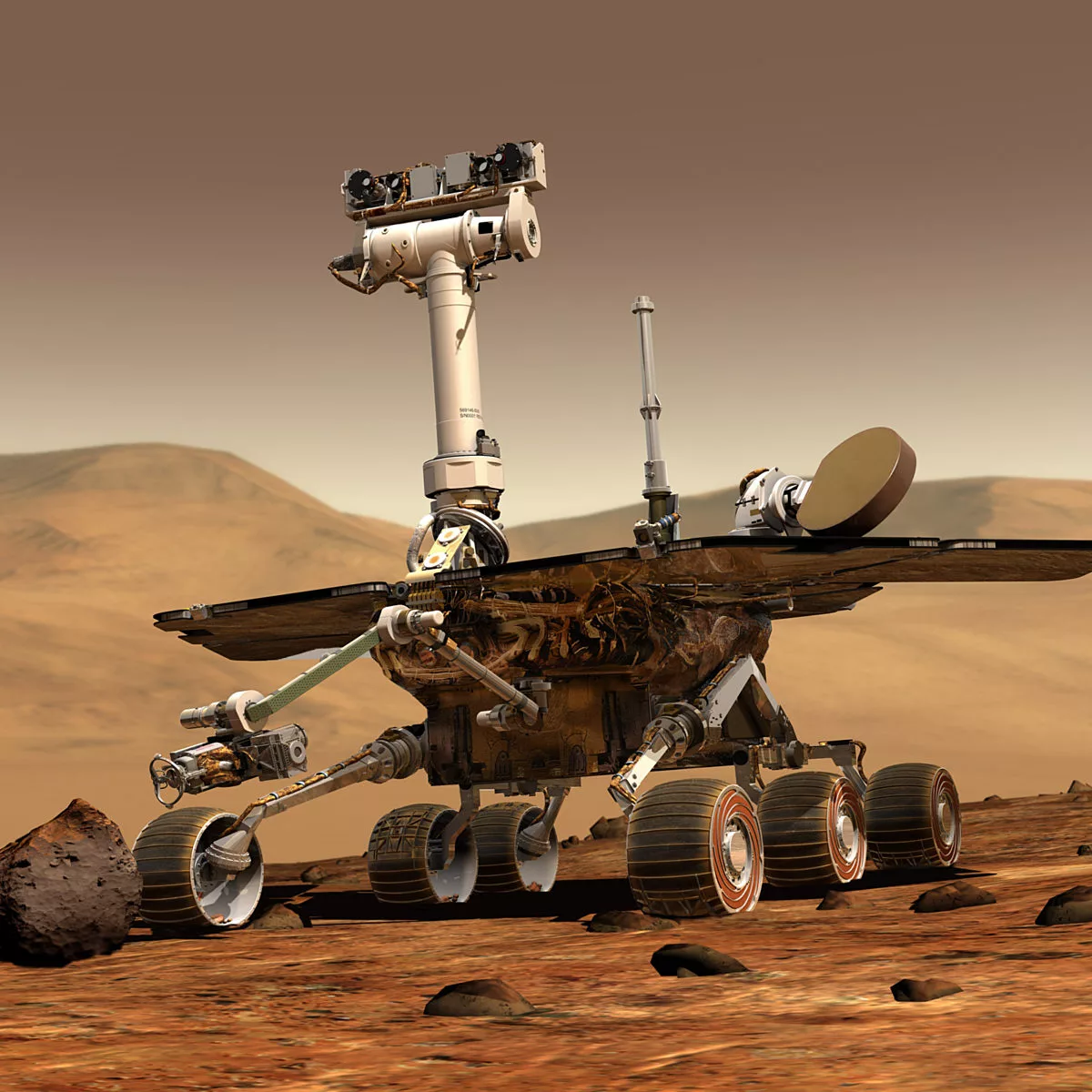
Mars Exploration Rovers Update: Opportunity Gets Energy Boost and Works Through Depths of Winter
March came in like a lion and went out like a lamb at Meridiani Planum, Mars: Opportunity felt the cold wind on her solar panels, then