

 Explore Worlds
 Find Life
 Defend Earth


All
All
 Sun
Sun Mercury
 Venus
Venus Earth
Earth Mars
Mars Jupiter
 Saturn
 Uranus
 Neptune
 Small Bodies
Stories, updates, insights, and original analysis from The Planetary Society.

SpaceX's Falcon 9 aborts liftoff due to abnormal engine reading
The launch of SpaceX's Falcon 9 rocket and Dragon capsule was aborted last night a half-second before liftoff, due to abnormally high pressure readings in engine number five.

A stunning view of Mars from Argyre to Thaumasia
Image magician Daniel Machacek has done it again, producing a jaw-dropping view of Mars from Viking Orbiter 1, featuring a frosty Argyre basin and stretching across to a series of faults called Thaumasia Fossae.

SpaceX set to launch COTS 2 flight this Saturday
This Saturday, SpaceX will attempt to make history by launching the first commercial spacecraft to berth with the International Space Station.

Cool video: Jupiter, its moons, a comet, and...the Sun?
Here's a neat video posted by SungrazerComets (the Twitter identity of the U.S. Naval Research Laboratory's Sungrazing Comets website) this morning.

Making eclipse magic
How to enjoy a solar eclipse with your kids, making shadow magic with a pinhole viewer.

Third Martian Anniversary for Mars Climate Sounder
May 16, 2012 is the third martian anniversary of the start of Mars Climate Sounder (MCS) observations from Mars Reconnaissance Orbiter. MCS started measuring the atmosphere of Mars three Mars years ago, on September 24, 2006. We can now compare the weather and behavior of the atmosphere in three different years, and find the temperature differences to be surprisingly large.

Earth�s toughest life could survive on Mars
The surface of Mars is a tough place to survive, but researchers at the German Aerospace Center (DLR) found some lichens and cyanobacteria tough enough to handle those conditions.
Rovers in the desert
I took a field trip to watch scientists and engineers play in the sand with Mars rover models, and got a bonus tour of some evidence for the
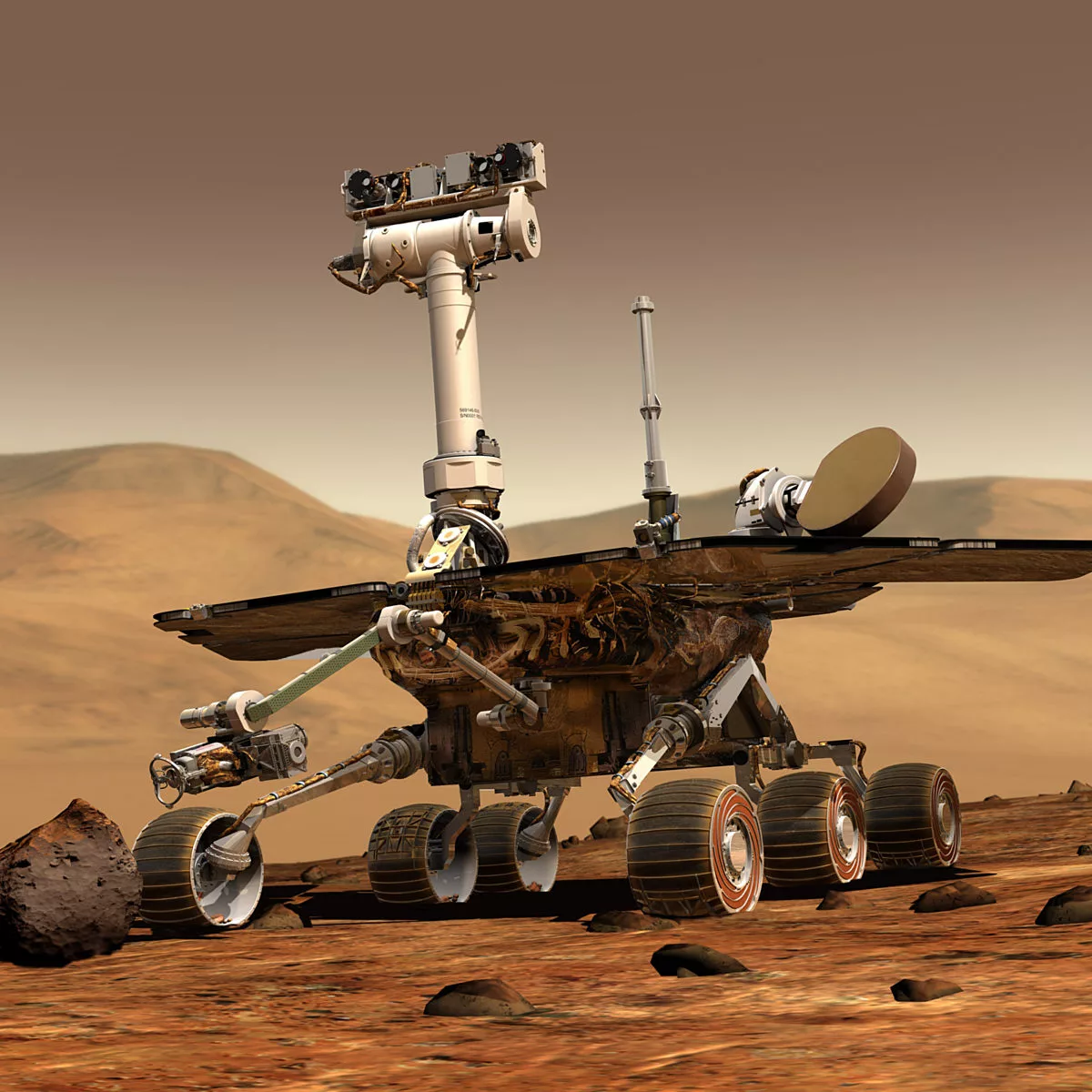
Opportunity is a ROVER again!
After driving off Greeley Haven – where she stood patiently for 19 long weeks – Opportunity is now driving again. Not just turning, not just bumping, but driving.

Night Sky Guide for Summer 2012
This summer should provide great opportunities for stargazers to view planets, meteor showers, the transit of Venus, and for some, the annular solar eclipse. Check out these highlights of what you can look forward to this summer.
Bringing a little star power to Capitol Hill
On May 8, 2012, Bill Nye and Neil deGrasse Tyson brought their unique brand of motivational speaking to Capitol Hill. In a standing-room-only lunch discussion in one of the meeting rooms for the Committee on Space, Science, Technology, these two space superstars, along with planetary scientist Louise Prockter, explained to members of Congress, staffers, and media why we must continue to invest in planetary exploration.
Space Hangout with Britney Schmidt
Watch a conversation I had with planetary astronomer Britney Schmidt about Europa and the current state of outer planets exploration! Also, bonus video of an earlier hangout with Robbie Herrick.

In which I sit in a Soyuz capsule with a Real Live Astronaut
Emily Lakdawalla is ready to launch to space with Shuttle astronaut Mike Massimino, who guest-starred (as an astronaut, of course) on the fifth season finale of the CBS comedy The Big Bang Theory.

More Evidence for Impact Origin for Colombia’s Vichada Structure
Evidence continues to pile up that the Rio Vichada structure in Colombia is indeed the largest impact structure in South America.

In Honor of JUICE, a New View of Europa
To celebrate ESA's selection of the JUICE mission to Jupiter, Ted Stryk produced a new global view of Europa from Galileo data.

Pretty pictures from Cassini's 1 May 2012 Dione flyby
Cassini performed its last of three close encounters with Enceladus for 2012 two days ago, and followed the flyby with some spectacular images of Dione.

3D view of an unnamed lunar crater
Grab your red-blue 3D glasses and dive in to this small but spectacular unnamed lunar crater as seen in a Lunar Reconnaissance Orbiter photo.

Dawn Journal: Rising from a happily long LAMO
Marc Rayman's monthly check-in with the Dawn mission describes the achievements of the spacecraft in its Low-Altitude Mapping Orbit (including near-global high-resolution imaging!) and explains what's next.
Mars Exploration Rovers Update: Opportunity Begins to Wrap Winter Science, Mission Celebrates Month 100
As winter began to retreat in the southern hemisphere of the Red Planet, Opportunity was commanded to finish up her science assignments in April in preparation for leaving its refuge, and the Mars Exploration Rover mission rolled through its 100th month of exploration.

Titan, Dead or Alive? A Debate
A lively discussion and debate between planetary polymaths Ralph Lorenz and Jeffrey Moore about Titan, hosted by the Denver Museum of Nature and Science, moderated by David Grinspoon.