

 Explore Worlds
 Find Life
 Defend Earth


All
All
 Sun
Sun Mercury
 Venus
Venus Earth
Earth Mars
Mars Jupiter
 Saturn
 Uranus
 Neptune
 Small Bodies
Stories, updates, insights, and original analysis from The Planetary Society.

Mars Exploration Rovers Update: Opportunity Finishes First Marathon on Another Planet and Roves On
On March 24, 2015, after spending several weeks investigating some new rock types along the western rim of Endeavour Crater, Opportunity roved past 42.2 kilometers (26.2 miles) and put the first off-Earth marathon in her rear view mirror, driving the Mars Exploration Rovers mission back into the space history books.

OSIRIS-REx Begins ATLO (Assembly, Test, and Launch Operations)
The OSIRIS-REx mission passed another major milestone. We now have approval to build the spacecraft.

The Lunar Chronology: What Happens When Science Does Its Thing
Scientist Stuart Robbins discusses dating the lunar surface is using impact craters.

Dawn Journal: Preparing to Photograph Ceres
Dawn's Chief Engineer and Mission Director, Marc Rayman, explains why we haven't seen any new images of Ceres—and when we can expect them.

Revitalized 0.81m telescope studying properties of NEOs
Thanks to a new focal reducer and re-aluminized mirror from a Shoemaker NEO grant, a 0.81-meter telescope in Italy is performing astrometric follow-up observations and physical studies of asteroids.
Your First Timeline of Events for LightSail's Test Flight
The team behind The Planetary Society’s LightSail spacecraft is kicking off a series of simulations to ensure the spacecraft’s ground systems are ready for launch.
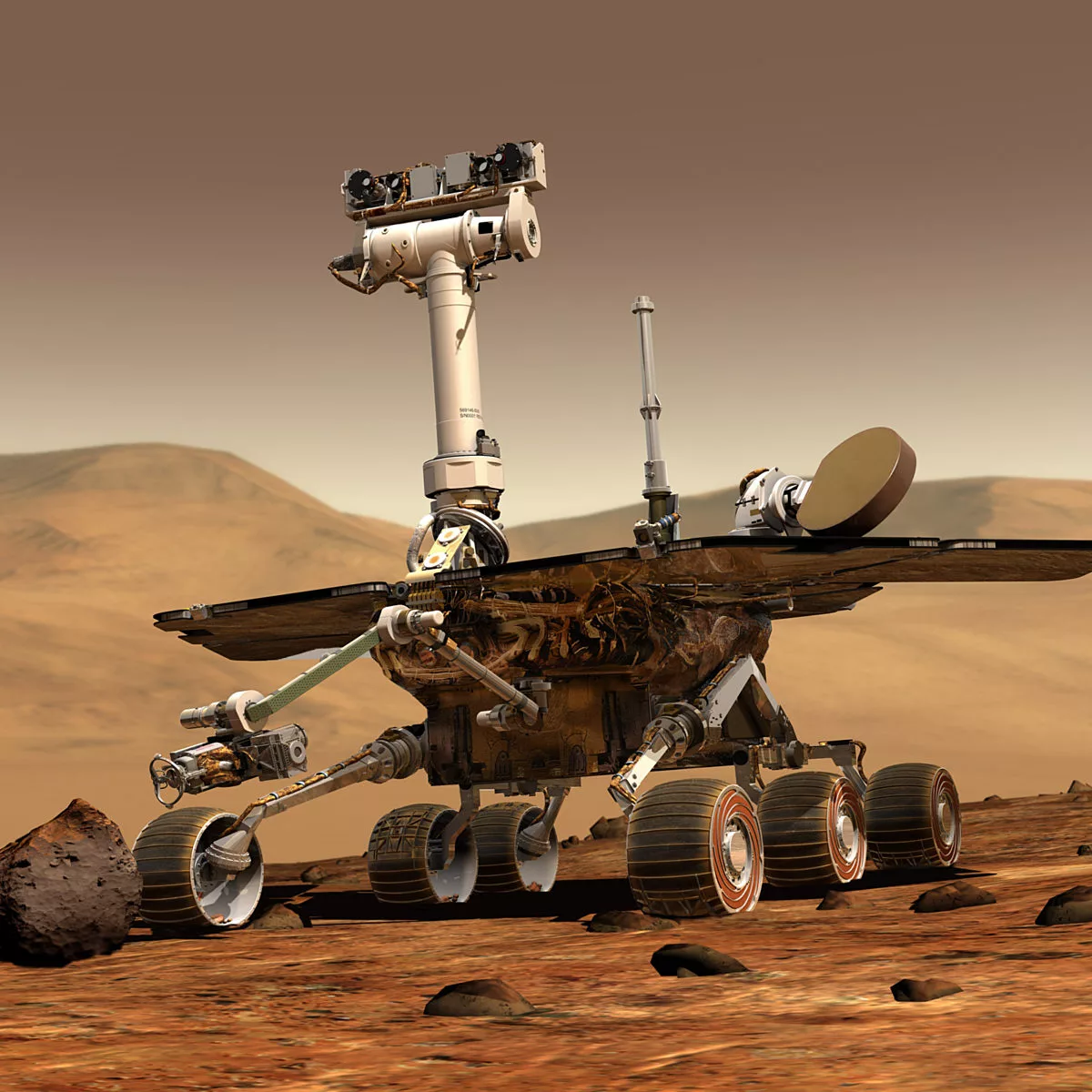
Field Report from Mars: Sol 3971 - March 26, 2015
Opportunity reaches a marathon milestone—in more ways than one. Larry Crumpler reports on the current status of the seemingly unstoppable Mars rover.

In Pictures: One-Year ISS Mission Begins
The one-year ISS mission of Scott Kelly and Mikhail Kornienko began with an early morning launch from Baikonur, Kazakhstan.

Ceres Gets Real; Pluto Lurks
Although we are still along way from understanding this fascinating little body, Ceres is finally becoming a real planet with recognizable features! And that's kinda cool.

Four Ideas to Bust the Floor on Outer Planet Mission Costs
The road to lower costs outer planet missions has been paved by NASA’s first two New Frontiers missions, the $700M New Horizons mission to Pluto and the $1.1B Juno mission to Jupiter. But can the cost of a mission to the outer solar system be cut to $450M, the limit for a Discovery mission?

LPSC 2015: Aeolian Processes on Mars and Titan
Planetary scientist Nathan Bridges reports on results from the Lunar and Planetary Science Conference about the action of wind on the surfaces of Mars and Titan.

LPSC 2015: MESSENGER's low-altitude campaign at Mercury
At last week's Lunar and Planetary Science Conference, the MESSENGER team held a press briefing to share results from the recent few months of incredibly low-altitude flight over Mercury's surface. The mission will last only about five weeks more.

One-Year ISS Mission Preview: 28 Experiments, 4 Expeditions and 2 Crew Members
This Friday, astronaut Scott Kelly and cosmonaut Mikhail Kornienko will embark for a one-year mission aboard the International Space Station.

Meet NASA's Winning Asteroid Redirect Spacecraft, and the Asteroid It May Visit
NASA has decided to pluck a small boulder off a large asteroid, instead of bagging an entire asteroid outright, the agency announced Wednesday.

Prometheus, Pandora, and the braided F ring in motion
Cassini recently took a long, high-resolution movie of the F ring, catching a view of its ringlets, clumps, and streamers, and two potato-shaped moons, Prometheus and Pandora.

Desert Moon, Narrated by Former Astronaut Mark Kelly, Now Available Online
Desert Moon, a 35-minute documentary that tells the story of Dr. Gerard Kuiper and the dawn of planetary science, is now available online.

Mars Academy
A new project—
Announcing: Planetary TV!
Planetary Society Media Producer Merc Boyan presents our new video resource.

The Mapping of Pluto Begins Today
When New Horizons flies past Pluto in July, we will see a new, alien landscape in stark detail. At that point, we will have a lot to talk about. The only way we can talk about it is if those features, whatever they turn out to be, have names.

Report: NASA May Be Hard-Pressed to Launch SLS by November 2018
A report released by NASA’s Office of Inspector General warns that the agency may be hard-pressed to have its Kennedy Space Center launch facilities ready by November 2018.