

 Explore Worlds
 Find Life
 Defend Earth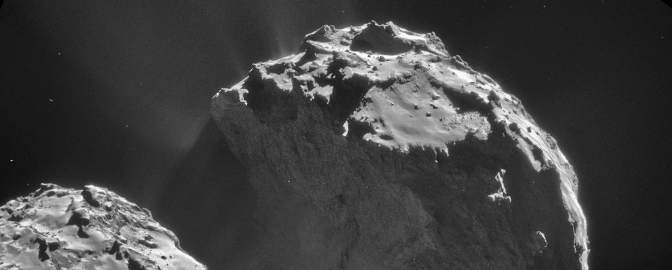


All
All
 Sun
Sun Mercury
 Venus
Venus Earth
Earth Mars
Mars Jupiter
 Saturn
 Uranus
 Neptune
 Small Bodies
Stories, updates, insights, and original analysis from The Planetary Society.

LightSail Arrives in Florida; More Launch Details Revealed
A cadre of CubeSats including The Planetary Society’s LightSail spacecraft completed a cross-country journey to Florida, where they await installation aboard an Atlas V rocket.

A Sky Full of Stars
In pictures of the planets, the stars aren't usually visible. But when they do appear, they're spectacular.

Mini mission updates: Dawn in orbit; Curiosity short circuit; Rosetta image release; Hayabusa2 in cruise phase; and more
Dawn has successfully entered orbit at Ceres, becoming the first mission to orbit a dwarf planet and the first to orbit two different bodies beyond Earth. I also have updates on Curiosity, Rosetta, Mars Express, Hayabusa2, the Chang'e program, InSIGHT, and OSIRIS-REx.

A First Time for Everything: Blitzing Congress for Space
There is a first time for everything. Riding a bike, stargazing, and yes, even lobbying Congress. Jack Kiraly describes his first Legislative Blitz with Michael Briganti and Casey Dreier on Capitol Hill last week.

Seeing Ceres: Then and Now
Technology writer Paul Gilster shares his interest in how we depict astronomical objects, focusing on the dwarf planet Ceres.

Dawn Journal: Ceres Orbit Insertion!
Dawn's Chief Engineer, Marc Rayman, gives an update on the mission's highly anticipated arrival at Ceres.

Venus From 33 Years Ago, and Why We Need to Explore
Thirty-three years ago today, Venera 14 plunged through the thick Venusian atmosphere to the surface. Ted Styrk shares some of his processed images from the Venera lander missions to Venus—and makes a plea for us to return.

Mars Exploration Rovers Update: Opportunity Discovers New Rock Type, Updates Flight Software
From the discovery of a new rock type to a successful flight software upload that should enable the robot field geologist to regain her long-term, flash memory, Opportunity and her team delivered what turned out to be a hugely productive and memorable 133rd month on the Red Planet.
Space Advocates Descend on Capitol Hill
The Space Exploration Alliance wrapped up its most recent 'legislative blitz' last week. Nearly 70 individuals participated in the democratic process, speaking to nearly 168 difference offices in Congress. Nearly half of those individuals were Planetary Society members.

Mars Orbiter Mission Methane Sensor for Mars is at work
After several months of near-silence, ISRO's Mars Orbiter Mission has released on Facebook the first data product from its Methane Sensor For Mars. Don't get too excited about methane yet: there is no positive or negative detection. The news here is that the Methane Sensor for Mars is working, systematically gathering data. They also released several new photos of Mars.

Watch Ceres rotate: A guide to interpreting Dawn's images
NASA held a press briefing on the Dawn mission yesterday, sharing some new images and early interpretations of them. I see lots of things that intrigue me, and I'm looking forward to Dawn investigating them in more detail. I invite you to check out these photos yourself, and offer you some guidance on things to look for.

Understanding why our most Earth-like neighbor, Venus, is so different
Van Kane introduces us to EnVision—a proposed European mission to help improve our understanding of Venus.

Leonard Nimoy: A Science Fan's Appreciation
Mat Kaplan pays a heartfelt tribute to a science fiction icon.

Highlights from our reddit Space Policy AMA
The space policy and advocacy team at The Planetary Society held an AMA (ask me anything) on reddit, here are some of the highlights.

Pluto Science, on the Surface
New Horizons' Principal Investigator Alan Stern gives an update on the mission's progress toward Pluto.

Russia Moves to Support ISS through 2024, Create New Space Station
The future of the International Space Station is a little clearer this week, following a statement from Russia supporting an extension of the orbiting complex through 2024.
At last, Ceres is a geological world
I've been resisting all urges to speculate on what kinds of geological features are present on Ceres, until now. Finally, Dawn has gotten close enough that the pictures it has returned show geology: bright spots, flat-floored craters, and enigmatic grooves.

Dawn Journal: Ceres' Deepening Mysteries
Even as we discover more about Ceres, some mysteries only deepen. Mission Director Marc Rayman gives an update on Dawn as it moves ever closer to its next target.

Clouds and Chasmata
New landscapes from Mars Express.

Spacewalk Timelapse Makes Cable Routing Look Fun
A timelapse video shows two NASA astronauts as they became typical neighborhood cable technicians—except for the fact that they were wearing space suits.