Blog Archive
Isostasy, gravity, and the Moon: an explainer of the first results of the GRAIL mission
Posted by Emily Lakdawalla on 2012/12/11 01:04 CST | 15 comments
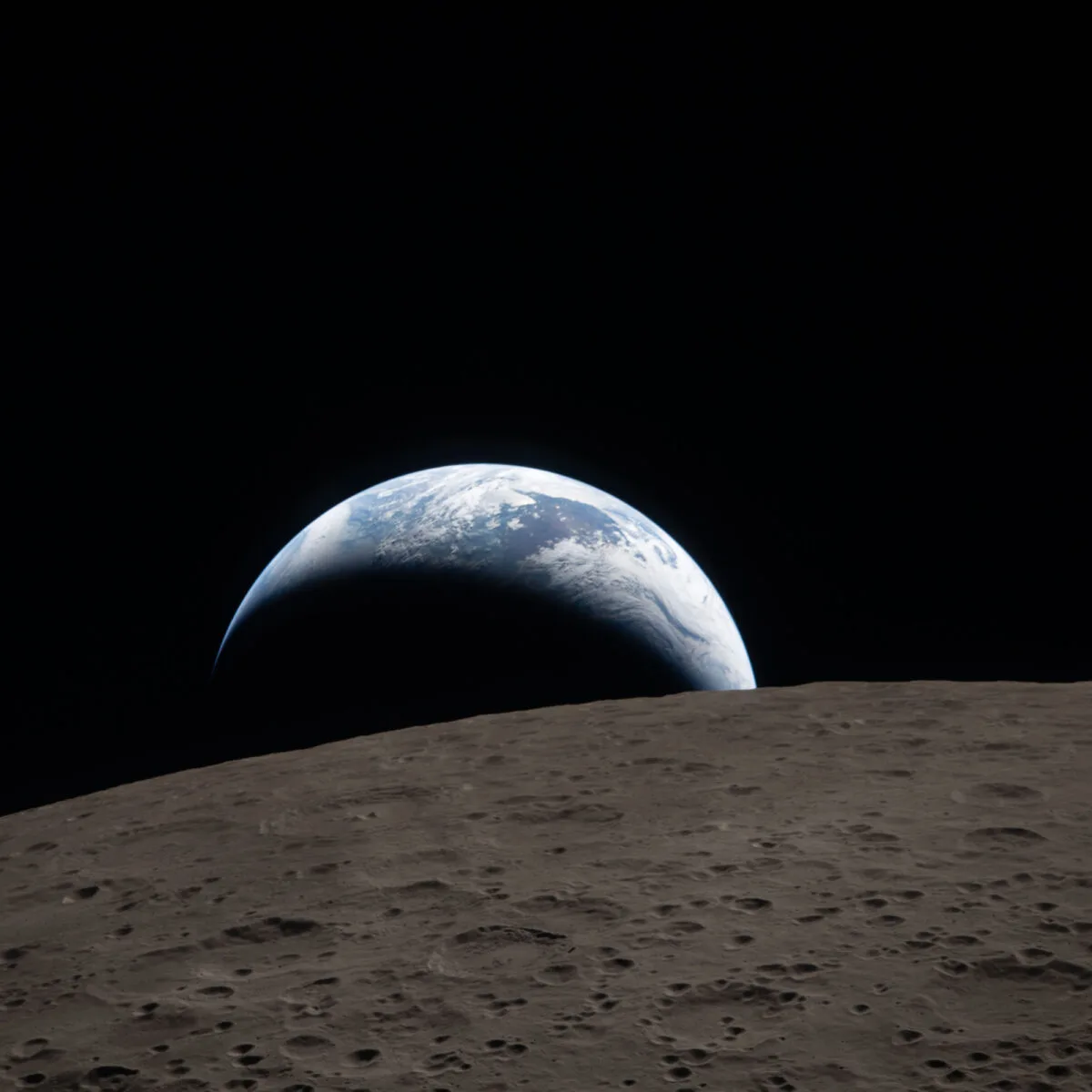
Last week the GRAIL mission published their first scientific results, and what they have found will send many geophysicists back to the drawing board to explain how the Moon formed and why it looks the way it does now. To explain how, I'm going to have to back way up, and explain the basic science behind gravity data.
Reviews of nonfiction book series for children
Posted by Emily Lakdawalla on 2012/12/10 05:49 CST
Here are four recommended space nonfiction book series that would make excellent additions to any children's library.
Blast from the past: Mariner 4's images of Mars
Posted by Emily Lakdawalla on 2012/12/10 09:15 CST | 5 comments
While hunting for photos to use in a presentation, I came across a couple of different amateur takes on the Mariner 4 photo catalog.
Sol 3151-3153 - December 5-7, 2012
Posted by Larry Crumpler on 2012/12/07 10:27 CST
An attempt to bump left and get a small bright vein into the instrument deployment device (IDD) work volume failed to get the target in the work plane.
Asteroid 4179 Toutatis' upcoming encounters with Earth and Chang'E 2
Posted by Emily Lakdawalla on 2012/12/06 12:19 CST | 6 comments
Near-Earth asteroid 4179 Toutatis will be passing within 7 million kilometers of Earth on December 12. Both radio telescopes and the Chang'E 2 spacecraft will be acquiring images.
Curiosity update, sol 117: Progress report from AGU
Posted by Emily Lakdawalla on 2012/12/05 07:58 CST | 4 comments
Monday was the big Curiosity day at the fall meeting of the American Geophysical Union. A morning press briefing was followed by an afternoon science session. I traveled to San Francisco briefly just to attend those two events. Here's my notes on the first science reports from the mission.
Planetary Society Weekly Hangout: present and future rovers
Posted by Emily Lakdawalla on 2012/12/05 06:56 CST | 3 comments
The Planetary Society has a new weekly Google+ Hangout time slot, Thursdays at noon PT / 1800 UT. This week, Casey Dreier and I talked about the Curiosity kerfuffle and NASA's future rover plans. Here's the archived recording.
Rovers are awesome, but where's the science?
Posted by Emily Lakdawalla on 2012/12/05 03:55 CST | 17 comments
Now that Casey has explained the budget implications of yesterday's 2020 rover announcement, and The Planetary Society has issued a formal statement, I thought it was time for me to talk briefly about science.
Dawn journal: hydrazine haste makes waste
Posted by Marc Rayman on 2012/12/05 11:02 CST | 1 comments
By saving fuel, Dawn will arrive at Ceres in 2015 with about half of the 45.6-kilogram (101-pound) hydrazine supply it had when it rocketed away from Cape Canaveral.
The 2020 Rover in Context
It's not as a big of a change as you might think
Posted by Casey Dreier on 2012/12/05 02:24 CST | 4 comments
The 2020 rover announced today is entirely consistent with NASA's reduced commitment to planetary exploration due to its 2013 budget.
Mars Exploration Rovers Update: Opportunity Digs In at Matijevic Hill
Sols 3119 - 3147
Posted by A.J.S. Rayl on 2012/12/03 08:34 CST | 1 comments
While Curiosity and her team found themselves entangled in a media furor over comments, assumptions, and rumors of findings that have yet to be found, Opportunity roved on in November, finishing up the geologic survey of Matijevic Hill and setting a new mileage record along the way.
The Curiosity Kerfuffle: the big (and increasing) difference between data and discovery
Posted by Emily Lakdawalla on 2012/12/03 03:12 CST | 17 comments
I'm in San Francisco, reporting from the American Geophysical Union meeting. This morning, there was a much-anticipated press briefing featuring the latest results from Curiosity.
Posted by Larry Crumpler on 2012/12/03 10:27 CST
Here at station 14 we have decided to do a detailed investigation of an outcrop that is well exposed and lies within an area where there is orbital remote-sensing evidence for clay minerals. These particular rocks are interesting in that they contain a lot of thin veins and alteration zones along joints (cracks) in the outcrops.
OSIRIS-REx "Name That Asteroid!" Contest Deadline Extended to December 31
Posted by Emily Lakdawalla on 2012/11/30 03:32 CST
Good news, everyone! The OSIRIS-REx team wants to give as many kids as possible a chance to Name That Asteroid! The contest entry deadline has been extended to December 31.
More than you probably wanted to know about Curiosity's SAM instrument
Posted by Emily Lakdawalla on 2012/11/30 12:31 CST | 24 comments
With all the hoopla surrounding the unknown results of the first analysis of a soil sample by Curiosity's Sample Analysis at Mars (SAM) instrument, I thought an explainer would be useful. What is SAM, what is it designed to measure, and what is the nature of its results? Here you go.
Posted by Emily Lakdawalla on 2012/11/29 11:56 CST
Zach Weiner of Saturday Morning Breakfast Cereal critiques NASA's announcement style.
Water ice and organics at Mercury's poles
Posted by Emily Lakdawalla on 2012/11/29 02:16 CST | 9 comments
Water ice at Mercury's poles? That's crazy, right? The MESSENGER team has made a very good case that radar-bright material seen by the Arecibo telescope is, in fact, water ice, covered in most places by a veneer of dark organic material.
Images from the long-awaited Dawn Vesta data set
Posted by Daniel Macháček on 2012/11/29 11:55 CST | 4 comments
A few days ago, the Dawn mission finally published their archival data. During the year of delay I often looked with anticipation to the Planetary Data System to check whether or not images were there, and I am delighted that they are finally available. Was the wait worth it? Definitely!
That amazing image of Saturn's north pole just got better: now, it moves!
Posted by Emily Lakdawalla on 2012/11/28 11:27 CST | 2 comments
Remember the amazing photo of Saturn's north pole that I posted yesterday? Now, thanks to an amateur image processor, it moves, and the motions of the individual clouds within the belts are mesmerizing.
The Planetary Society at AGU 2012
Posted by Casey Dreier on 2012/11/28 03:17 CST
Emily Lakdawalla and Casey Dreier will both attend this year's AGU conference in San Francisco as representatives of the Planetary Society.