Pluto's Neighborhood
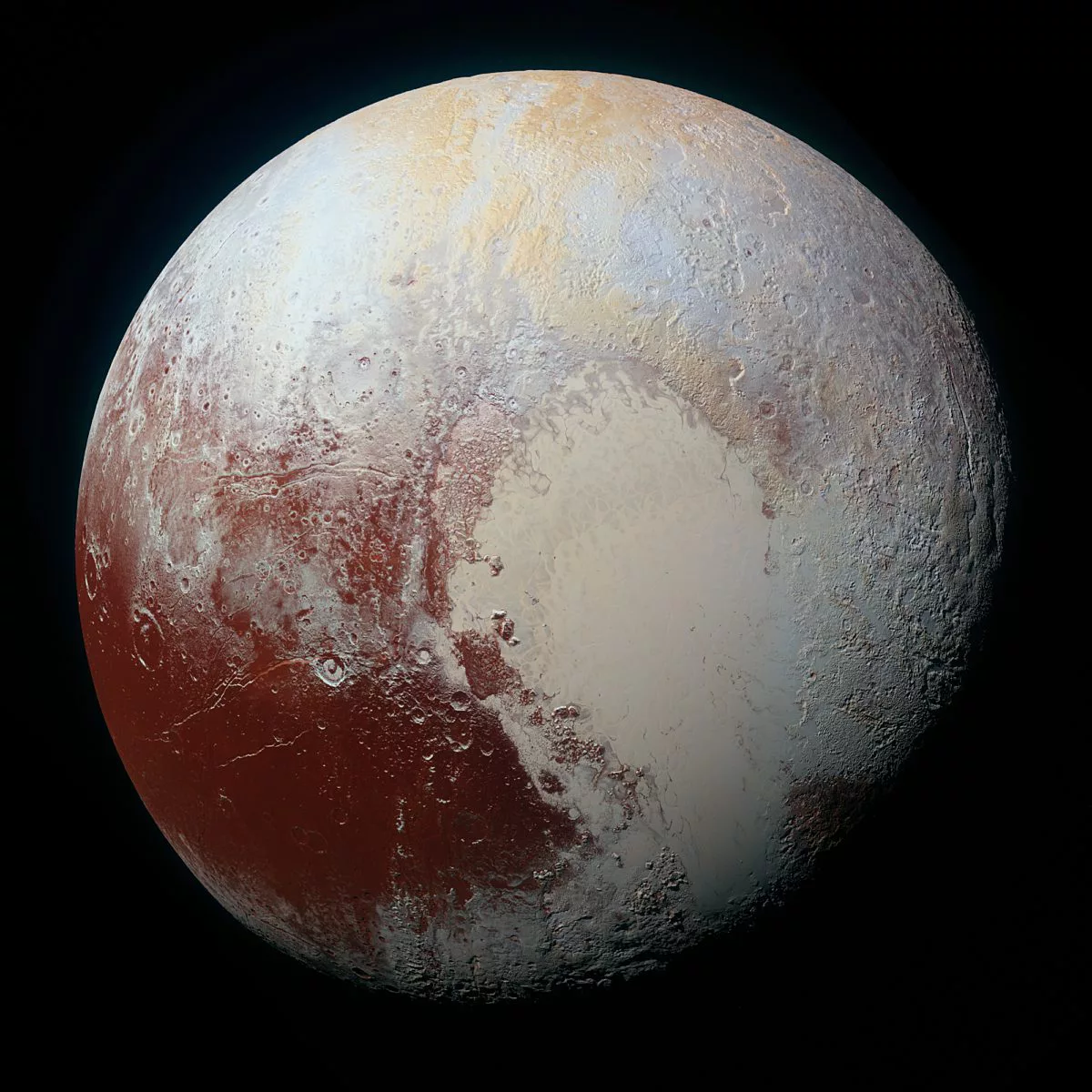
Pluto shares its part of the solar system with more than 1500 other icy worlds that we know about and countless ones that have, so far, evaded our detection. The shapes of their orbits are clues to a tumultuous history that hinges on the motion of Neptune.
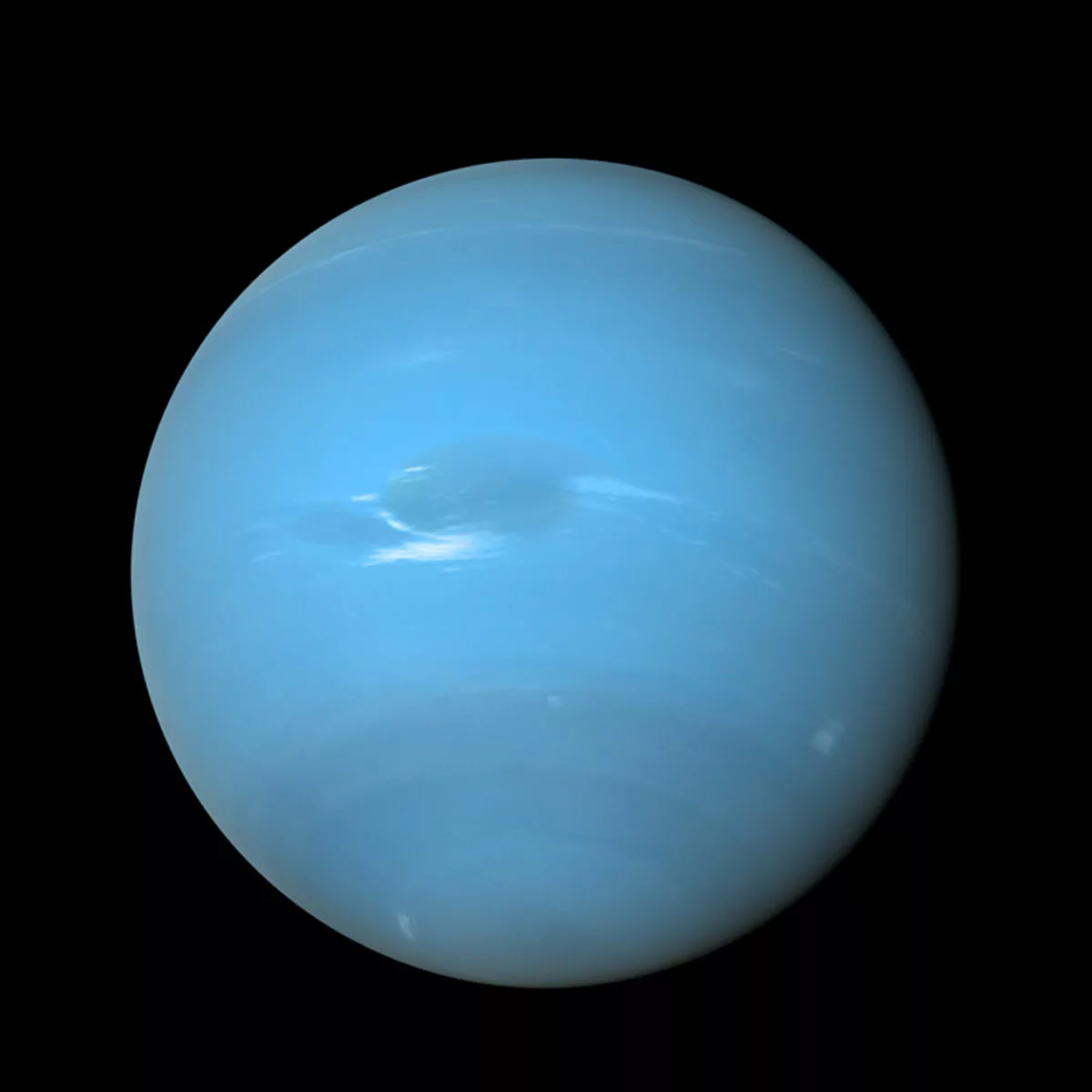
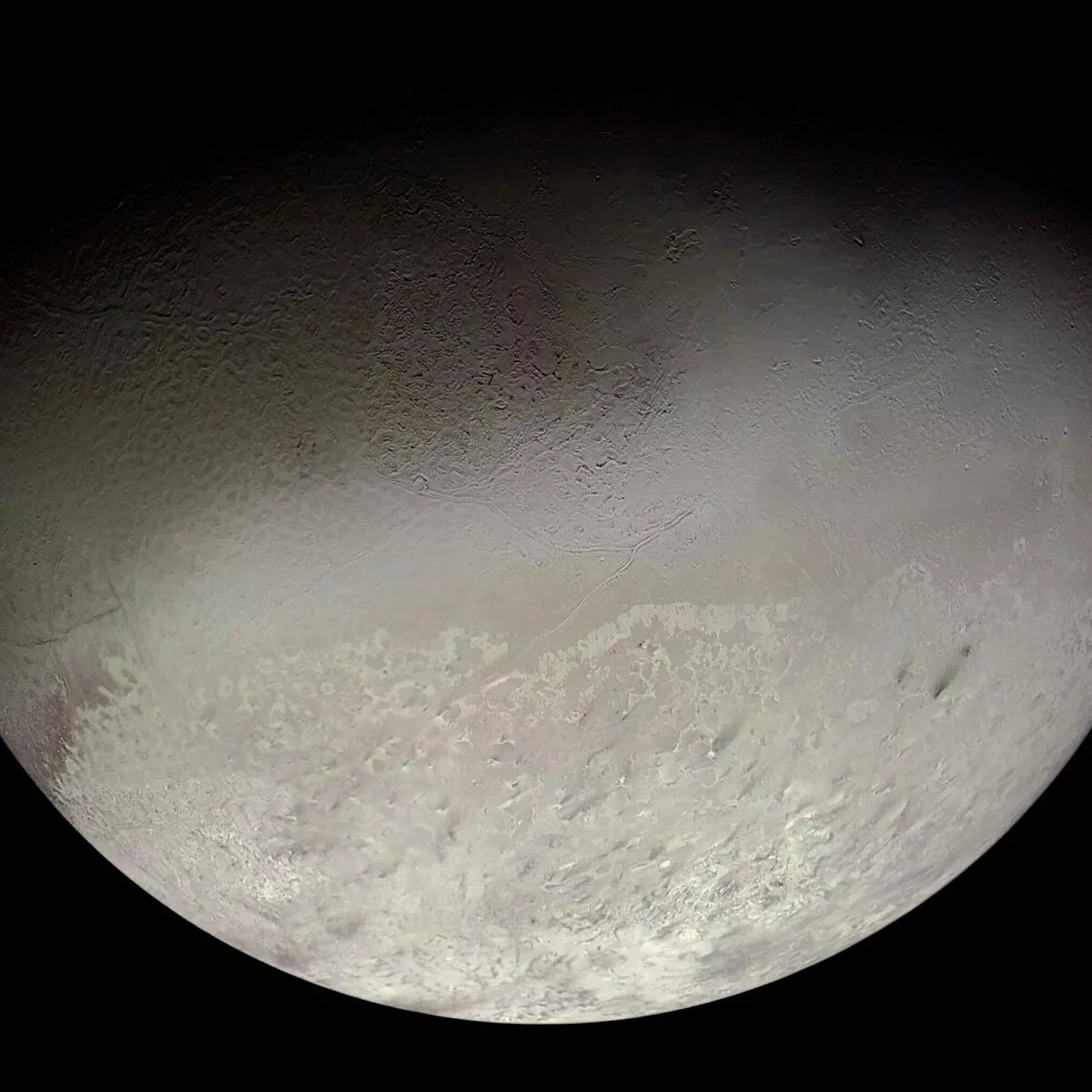
Neptune formed in a location much closer to the Sun than it is now, but migrated outward from the Sun over time. As it moved, it herded and scattered the objects in the Kuiper belt. Neptune trapped some of them -- like Pluto, Orcus, Haumea, and Makemake -- in orbital resonances, locked in motion synchronized to the giant planet's. Others -- like Eris and 2007 OR10 -- it scattered to extremely elliptical or highly inclined orbits. Others, it tossed inward into the solar system, to bombard the other planets or to orbit among them as Trojans, centaurs, or irregular moons. And one -- Triton -- it captured as its own moon. There is a belt of objects so far unaffected by Neptune's motion -- like Quaoar -- called the cold classical belt. Finally, there is Sedna, whose orbit is so distant from Neptune's that it may represent the first-discovered member of a wholly unexplored part of the solar system.
Eris, Orcus, Haumea, Makemake, 2007 OR10, Quaoar, Sedna, and Triton are the largest worlds in Pluto's neighborhood, and the little that we have learned to far about their surfaces proves that each is unique. More than a hundred others are probably large enough to be called "dwarf planets." And there may yet be even larger, Mars or even Earth-sized worlds beyond these, awaiting discovery.
There is only one mission that has ever been launched to study Pluto: New Horizons.
Recent Blog Articles About Pluto and Its Neighbors
Where are the big Kuiper belt objects?
Posted by Emily Lakdawalla on 2012/02/16 05:35 CST | 6 comments
Earlier today I wrote a post about how to calculate the position of a body in space from its orbital elements. I'm trying to get a big-picture view of what's going on in trans-Neptunian space.
When will New Horizons have better views of Pluto than Hubble does?
Posted by Emily Lakdawalla on 2013/02/18 04:22 CST | 7 comments
Last week, I posted an explainer on why Hubble's images of galaxies show so much more detail than its images of Pluto. Then I set you all a homework problem: when will New Horizons be able to see Pluto better than Hubble does? Here's the answer.
Visiting the San Diego SpaceUp Unconference
Posted by Mat Kaplan on 2012/02/14 08:38 CST
Emily Lakdawalla and I drove down to the 3rd annual San Diego SpaceUp Unconference on February 4. We had great fun hanging out with the other space geeks.
The Discovery of a Planet, Part 6: From Pluto to Sedna
Posted by Amir Alexander on 2005/02/17 11:00 CST
74 years after Clyde Tombaugh discovered Pluto as a faint dot on a pair of photographic plates, a modern group of astronomers made another remarkable discovery. On March 15, 2004, Michael Brown of Caltech, Chad Trujillo of the Gemini Observatory, and David Rabinowitz of Yale announced the discovery of Sedna – the furthest object ever detected in the Solar System.
The Discovery of a Planet, Part 5: The Aftermath
Posted by Amir Alexander on 2005/02/16 11:00 CST
The discovery of Planet X was announced to the world on March 13, 1930, which marked the anniversary of William Herschel’s discovery of Uranus in 1781 as well as Percival Lowell’s birthday. The observatory’s communiqué emphasized that the discovery was no coincidence, but the vindication of Lowell’s predictions made years before.
The Discovery of a Planet, Part 4: Clyde's Search
Posted by Amir Alexander on 2005/02/15 11:00 CST
Since his teenage years Clyde Tombaugh had been an avid amateur astronomer and a gifted telescope builder. Based on instructions contained in an article from a boy’s Sunday school paper, he built a series of telescopes of increasing power and quality on the family farm.
The Discovery of a Planet, Part 3: Planet X
Posted by Amir Alexander on 2005/02/14 11:00 CST
The discovery of Neptune accounted for nearly all the unexplained motions of the outer planets of the Solar System. Nevertheless, several astronomers insisted that some unexplained residual motions remained, pointing to the presence of a ninth planet beyond the orbit of Neptune.
The Discovery of a Planet, Part 2: Out of the Six-Planet World
Posted by Amir Alexander on 2005/02/13 11:00 CST
Since humans first set their eyes to the stars, they noticed that a few of these bright objects behaved differently from the others. Whereas all the stars moved together, revolving around the Earth once every 24 hours, five appeared to move within the firmament among the other stars. Accordingly, they were named “planets,” meaning “wanderers” in Greek.
The Discovery of a Planet, Part 1: The Blinking Image
Posted by Amir Alexander on 2005/02/12 11:00 CST
February 18, 1930, was a cloudy day at the Lowell Observatory, on top of Mars Hill in Flagstaff, Arizona. 22 year old Clyde Tombaugh was hard at work, peering through the lens of an ancient-looking brass-colored device. The instrument, known as a “blink comparator,” mounted two large photographic plates.
Posted by Meg Schwamb on 2011/05/25 08:30 CDT
The last decade has seen an explosion in our understanding of the solar system with the discovery of the largest Kuiper belt objects (KBOs) of comparable size to Pluto.
Salacia: As big as Ceres, but much farther away
Posted by Emily Lakdawalla on 2012/06/26 12:27 CDT | 10 comments
A newly published paper shows trans-Neptunian object Salacia to be unexpectedly large; it's somewhere around the tenth largest known thing beyond Neptune. It has a companion one-third its size, making it appear similar to Orcus and Vanth.
Pluto: The Discovery of a Planet
Posted by Amir Alexander on 2005/02/18 11:00 CST
To mark the 75th anniversary of the discovery of the planet Pluto, The Planetary Society presents to its readers the remarkable story of the discovery.
Pluto's seasons and what New Horizons may find when it passes by
Posted by Emily Lakdawalla on 2013/05/02 03:42 CDT | 2 comments
New Horizons might see a Pluto with a northern polar cap, a southern polar cap, or both caps, according to work by Leslie Young.
New Horizons workshop, day 1: Chemistry & climate on Pluto & other cold places
Posted by Emily Lakdawalla on 2011/08/30 11:27 CDT
New Horizons workshop, day 1: Chemistry & climate on Pluto & other cold places
New Horizons Day 2: Tectonic features on icy worlds
Posted by Emily Lakdawalla on 2011/09/09 01:05 CDT
New Horizons Day 2: Tectonic features on icy worlds
New Horizons Day 2: Liquids on Pluto's surface?
Posted by Emily Lakdawalla on 2011/09/13 01:27 CDT
Jeff Moore's presentation was cool because of the discussion it stimulated. He considered what exogenic processes might be operating on Pluto's surface. What's an exogenic process? It's something that modifies the shape of the surface from the outside, and doesn't require the body to be geologically active inside.
New Contest: Name the Moons of Pluto!
Posted by Emily Lakdawalla on 2013/02/11 11:41 CST | 15 comments
The discoverers of Pluto's fourth and fifth moons are inviting the public to vote on (and write in candidates for) their formal names. Voting closes in two weeks.
Kuiper Belt Objects Submitted to Minor Planet Center
Posted by Alex Parker on 2013/01/25 03:30 CST | 2 comments
Recently, several of the Kuiper Belt Objects our team has discovered while searching for New Horizons post-Pluto flyby candidates have been submitted to the Minor Planet Center (the organization responsible for designating minor bodies in the solar system) and their orbital information is now in the public domain.
Full Free Intro Astronomy Class Now Online
Posted by Bruce Betts on 2012/05/22 02:57 CDT
Bruce Betts' complete CSUDH Intro Astronomy and Planetary Science class is now available online. Find out how to access it, and go behind the scenes.
Ever Plan Ahead? How About Six Years Ahead?
Posted by Alan Stern on 2009/05/19 07:05 CDT
Despite still being more than six years and just over 18 Astronomical Units from the Pluto system, the project team for New Horizons is conducting the second and final portion of our Pluto Encounter Preliminary Design Review (EPDR) tomorrow and the next day.
Support our Asteroid Hunters
They are Watching the Skies for You!
Our researchers, worldwide, do absolutely critical work.
Asteroid 2012DA14 was a close one.
It missed us. But there are more out there.
Save Our Science
Become a Space Advocate
We are at a crucial turning point in the history of planetary exploration.
You can help.
Together, we can get the budget we need to support our planetary endeavors and Save our Science.
We've done it before. Let's do it again.