

 Explore Worlds
 Find Life
 Defend Earth

The Moon, gateway for science and exploration
Highlights
- The Moon is Earth’s only permanent natural satellite and the only world besides Earth ever walked on by humans.
- By studying the Moon, scientists can learn about Earth’s past and better understand worlds throughout the galaxy.
- A sample collection system funded by The Planetary Society, called PlanetVac, will fly to the lunar surface as early as 2024.
Why does Earth have a moon?
Earth gained its moon from a giant collision with another would-be planet billions of years ago. After the impact, some debris stayed in orbit around Earth and came together to form the Moon. Our planet’s gravitational pull keeps the Moon around it.
Why does the Moon have phases?
It can’t be daytime everywhere on Earth at once. At almost any given time, half of our planet will be lit up — the side facing the Sun — while the other half faces away and stays in nighttime shadow. The same thing is true of the Moon. But depending on where the Moon is relative to the Sun and us here on Earth, we see more or less of the side of the Moon that the Sun is shining on. This is what causes the Moon’s phases.
Imagine the Moon is between Earth and the Sun — not lined up perfectly in a row (that would cause an eclipse), but close. In that case, the side of the Moon lit up by the Sun would be facing away from us, and from Earth we would only see the part of the Moon in shadow. This is called a new Moon. In the opposite situation, when Earth is between the Moon and the Sun, then the side of the Moon illuminated by the Sun will be completely facing Earth. That’s a full Moon.

When the Moon is in other different positions in its orbit around Earth, it will appear as a crescent and other partial shapes. As the Moon shifts from new Moon to full Moon — as it moves to where we can see more of the part brightened by the Sun — we say the Moon is waxing. During the other half of the time, when the Moon is passing from full Moon to new Moon, we say the Moon is waning.
There can also be “supermoons”. Because the Moon’s orbit is slightly oblong instead of a perfect circle, there are times when the Moon is closer to Earth than usual and appears larger in the sky. When that also coincides with full Moon or new Moon, it’s called a supermoon. A supermoon will look slightly larger than normal, but the change is not big enough to be obvious to the naked eye.
How does the Moon cause a total solar eclipse?
A total solar eclipse happens when the Moon aligns so perfectly between our planet and the Sun that it blocks most sunlight from reaching some region on Earth. The counterpart to a solar eclipse is a lunar eclipse, when instead of the Moon blocking sunlight from reaching Earth, our planet blocks sunlight from reaching the Moon. There are several different kinds of solar and lunar eclipses.
Why does the Moon look the way it does?
The Moon’s surface is scarred by past volcanic activity and countless impacts from interplanetary debris. For billions of years, objects like asteroids and comets have cratered the Moon and pulverized its surface. Today, a layer of fragmented rock and glass, called regolith, covers the entire surface. There are also dark splotches visible on the Moon called mare (Latin for “seas”). These are lowlands, mostly carved out by impacts, that filled up with magma and cooled into basalt.

From Earth, we mostly just see one side of the Moon. Because of interactions between the Moon’s gravity and Earth’s, the Moon orbits with “synchronous rotation”: it rotates at the exact speed it orbits. In other words, the Moon completes a full rotation in exactly the same time it takes to complete an orbit around Earth. As the Moon travels around Earth, it continuously turns to face us, so we only see that same side.
The far side of the Moon – the side we don’t see – is often called the dark side, but that’s not accurate. The far side is lit up by the Sun half the time, just as often as the near side.
Why We Study the Moon
Learning about the Moon can help us understand how we got here and put life on Earth in context. By studying the Moon, scientists can investigate how Earth became habitable and developed life, how places throughout the Solar System have changed over time, and how worlds throughout the galaxy form and evolve. The Moon offers an entire world for humanity to explore, a testing ground for space technology, and a powerful laboratory for research in physics, astronomy, and biology.
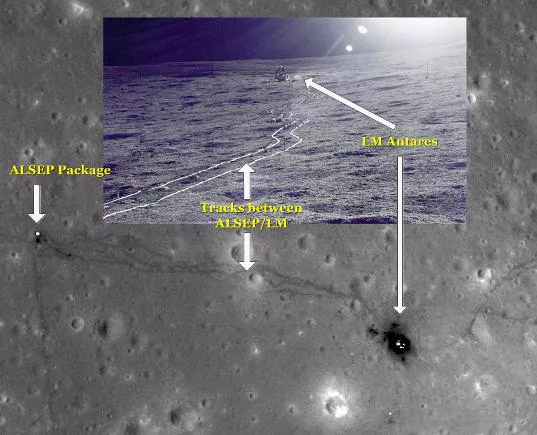
Most of the surface of the Moon has been the same for billions of years. Since it no longer hosts volcanic activity or any substantial atmosphere, the Moon provides a well-preserved record of its past (orbiters can even still see the paths that Apollo astronauts walked). This information is a boon for scientists, whocan use lunar geology to date surface features on other worlds and trace how different planets evolved over time. Studying the Moon also gives researchers a sense of what conditions were like in the Solar System’s past, which helps determine how habitable places like Venus and Mars might once have been.
The Moon may even provide direct samples of what Earth used to be like. For billions of years, pieces of our planet ejected by impacts have been landing on the Moon and mixing with the lunar regolith as meteorites. Analyzing these meteorites would be like opening a time capsule to the early Earth.
The recent discovery of water ice on the Moon has also opened a whole new world of possibilities for science and exploration. In places called “permanently shadowed regions” — typically within certain craters — the Moon’s surface can get cold enough to sustain water ice even without a significant atmosphere. These shadowed regions have broken the record for the coldest temperature ever measured by a spacecraft on a celestial body. In 2013, the Lunar Reconnaissance Orbiter (LRO), developed at NASA’s Goddard Space Flight Center, measured the temperature on the floor of Hermite crater to be a frigid -247 degrees Celsius (-413 degrees Fahrenheit).
The presence of water is one of the most fundamental requirements for life as we know it. Though the Moon is almost certainly uninhabitable and hosts no liquid water, investigating how it gained and sustained water ice could reveal how water — as well as other fragile ingredients for life — may have spread throughout the Solar System. Water ice on the Moon could also be a resource for future space exploration, since it can potentially be harvested to make breathable air, drinking water, and rocket propellant.
Lunar exploration acts as a proving ground for technology like this. The Moon was the first extraterrestrial body that humanity successfully landed on, orbited with a spacecraft, and sent people to walk on. To much of humankind, the Moon represents a crucial first step on the path to exploring the wider Solar System.

Moon Facts
Surface temperature: -173°C (-280°F) to 127°C (260°F), depending on exposure to sunlight
Average distance from Earth: 384,400 kilometers (238,855 miles)
Diameter: 3,475 kilometers (2,159 miles), roughly 3.7 times wider than Earth
Volume: Approximately 22 billion km³ (about 5 billion mi³), the Moon could fit inside Earth almost 50 times
Surface gravity: About 16% as strong as Earth’s
Solar day: 29.5 Earth days
Atmosphere: Extremely thin, with pressure at the surface roughly one-quadrillionth that on Earth
Exploring the Moon
From the time of Galileo to the advent of spaceflight, we could only study the Moon with telescopes — and, starting in the 1940s, radar. Then, the Space Race between the U.S. and the Soviet Union kicked off. Both countries sent dozens of robotic spacecraft to fly by, orbit, and land on the Moon. On July 20, 1969, the Space Race culminated when NASA astronauts Neil Armstrong and Buzz Aldrin became the first humans to walk on the Moon.
Between Apollo 11 and the end of the Apollo missions in 1972, NASA sent five additional spacecraft and 10 more people to the Moon’s surface. These astronauts set up instruments, conducted experiments, and brought samples of lunar regolith back to Earth. Between 1970 and 1976, the Soviet Union also returned lunar samples as part of the robotic Luna missions.
Studying all of these samples has helped scientists reconstruct important aspects of the Moon’s history, like the Moon’s formation in the aftermath of a giant collision. But the samples in hand also have limitations. For one, they are almost entirely from the Moon’s near side. Regolith collected from new, more diverse locations is needed to find out all that the Moon can tell us about the history of our planet and the Solar System.
Going back to the Moon
There were over 40 missions to the Moon between 1959 and 1979 that were at least somewhat successful. Between 1980 and 2000, there were three. Now, a new wave of lunar exploration is heating up. Technological advances have brought the Moon back within the sights of groups on Earth, including the U.S., China, Japan, India, and a variety of private corporations. Over 30 missions are slated to launch to the Moon between 2024 and 2030 alone.
China’s Chang’e program has already achieved some major milestones. The Chang’e-3 spacecraft’s 2013 soft-landing was the first on the Moon in almost 40 years, and just a little over five years later, Chang’e-4 became the first ever spacecraft to soft-land on the far side of the Moon. In 2024, Chang’e-6 became the first mission ever to return samples from there.
The Indian Space Research Organisation (ISRO) and the Japan Aerospace Exploration Agency (JAXA) each recently accomplished their own soft-landings on the Moon. In 2023, ISRO’s Chandrayaan-3 became the first spacecraft to soft-land near the lunar south pole, and in 2024, JAXA’s SLIM spacecraft achieved the most precise soft landing on the Moon ever. Both agencies plan to collaborate on a lander-rover pair in the future.
Meanwhile, the U.S. is aiming to put humans back on the Moon with NASA’s Artemis program. Artemis II sent a crew around the Moon in 2026, marking the first time humans have left low-Earth orbit in over 50 years. After that, the goal is to put astronauts on the surface in 2028, at the earliest. At the same time, NASA is sponsoring private missions to deliver a variety of science instruments to the Moon as part of their Commercial Lunar Payload Services program. Over the next few years, private spacecraft will launch to the Moon with everything from NASA radio telescopes to rocket-powered hopping robots. These missions will demonstrate space exploration technology while conducting new investigations into the Moon’s geology, history, and water.

How you can support Moon exploration
For over a decade, The Planetary Society has supported the development of a technology designed to solve one of the trickiest problems in space exploration: how to gather samples from the surface of another world reliably and in low-cost fashion.
The technology is called PlanetVac, a sample collection system built by Honeybee Robotics of Pasadena, California. Members of The Planetary Society have come together on multiple occasions to advance PlanetVac, helping fund a lab test in 2013 and an actual rocket flight in 2018.
These efforts have paid off. NASA selected PlanetVac to go to the Moon as part of its Commercial Lunar Payload Services program, and on March 2, 2025, PlanetVac landed on the Moon as part of Firefly Aerospace's Blue Ghost Mission 1. The instrument successfully collected samples, providing a true demonstration of PlanetVac in the field. Though this particular was not meant to bring back any samples, it has helped prove the technology and advanced the utility of the collection system for future missions.
Sign up for the Space Advocate Newsletter and The Downlink to find out more about how you can advocate for space, and to stay up to date on the latest in lunar exploration.

Action Center
Whether it's advocating, teaching, inspiring, or learning, you can do something for space, right now. Let's get to work.
Acknowledgments: this page was initially written by Jatan Mehta. It was revised by Asa Stahl in April 2024.