

 Explore Worlds
 Find Life
 Defend Earth


Planetary Radio Episodes
Since 2002, Planetary Radio has visited with a scientist, engineer, project manager, advocate, or writer who provides a unique perspective on the quest for knowledge about our Solar System and beyond. The full show archive is available for free.
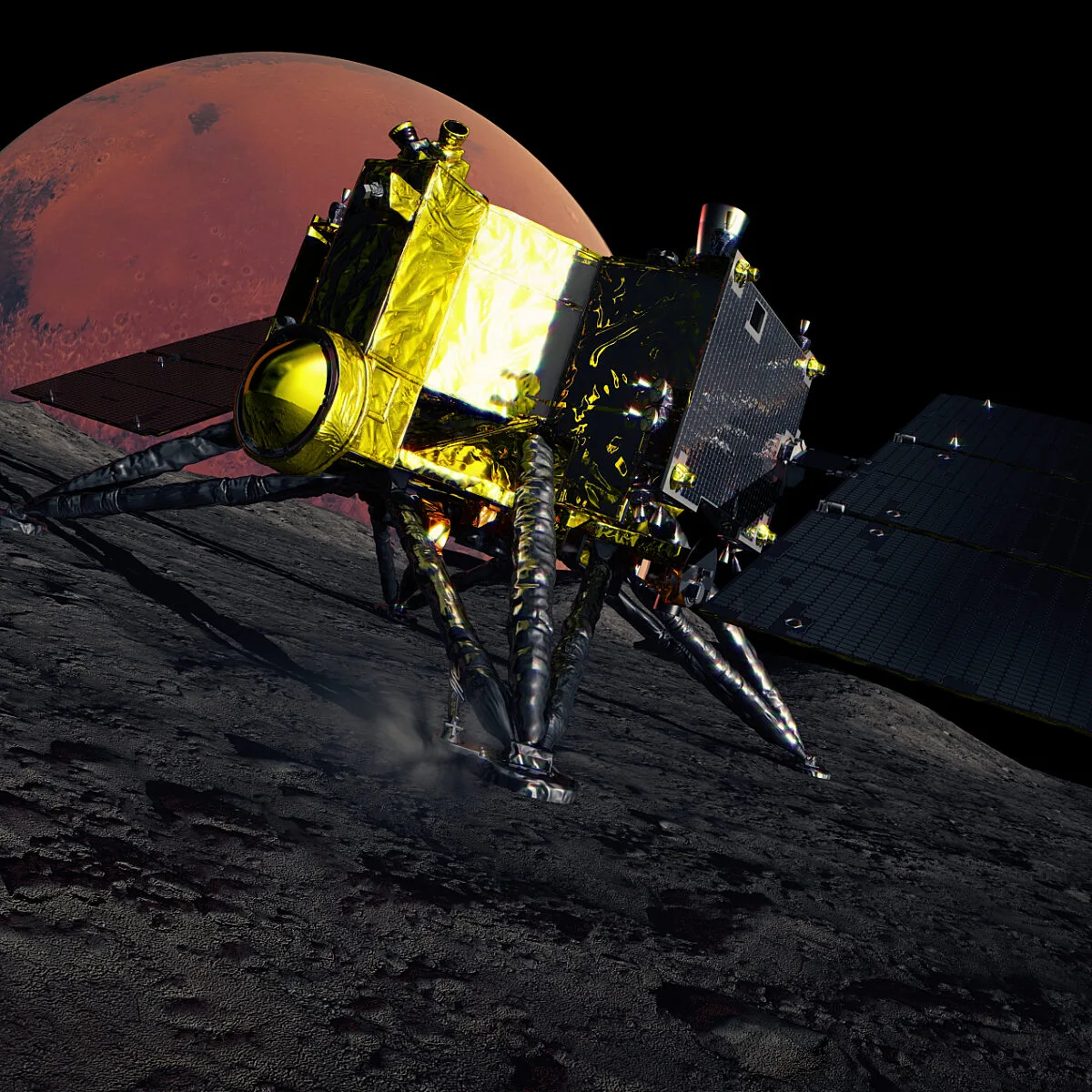
Japan’s MMX mission is about to launch for the moons of Mars, carrying a sampler with deep Planetary Society roots. Asa Stahl, public outreach astronomer at The Planetary Society, and Kris Zacny, vice president and senior research scientist at Honeybee Robotics, tell the story.

Jack Kiraly, chief of advocacy for The Planetary Society, and planetary scientist Britney Schmidt join Casey Dreier to examine NASA’s push toward “science as a service,” and why science is so much more than buying data.

More conversations from the 2026 NIAC Symposium, this time about the propulsion and life support breakthroughs that could carry us to the outer Solar System and keep us alive when we get there.

Researchers at the 2026 NIAC Symposium share their bold concepts for exploring the most inaccessible places in our Solar System, from the Moon's permanently shadowed craters to caves on Titan and inside lunar lava tubes.

NASA Chief Scientist for Small Body Exploration at Johnson Space Center, Paul Abell, takes us inside Hayabusa2's flyby of asteroid Torifune and the surprise discovery that it's a contact binary.

Planetary scientist Kevin Hand joins us for a deep exploration of his excellent book about the search for life in the oceans of other worlds.

In part two of our Star Trek 60th anniversary series, Tim Russ, Tuvok from Star Trek: Voyager, and Karim Diané, Jay-Den Kraag from Star Trek: Starfleet Academy, explore what the Vulcans and the Klingons can teach us about becoming the people who deserve to reach the stars.

Robert Picardo, the Emergency Medical Hologram from Star Trek: Voyager and now Starfleet Academy, traces the sixty-year bond between Star Trek and The Planetary Society, from Gene Roddenberry's 1980 letter to the halls of Congress.

Alex MacDonald, former Chief Economist at NASA and author of "The Long Space Age," joins Casey Dreier to explore more than two centuries of privately funded space exploration in America.

Dennis Stone, president and co-founder of the World Space Week Association, shares how the largest annual space event on Earth came to be and how you can join the celebration this October. Plus, Science Editor Asa Stahl walks us through the final chapter of the Swift space telescope.

The Nancy Grace Roman Space Telescope is preparing to launch, promising to transform our understanding of dark energy and exoplanets. We talk with Julie McEnery, senior project scientist for Roman at NASA Goddard, and Jason Rhodes, project scientist for Roman at JPL, about what's ahead.

How will living in space change our bodies and minds? That’s the sub-title of Scott Solomon’s great new book, “Becoming Martian”, and it’s the question he takes up this month on the book club edition of Planetary Radio.

Jared Head, museum facilitator at Columbia Memorial Space Center and co-host of All Space Considered at Griffith Observatory, breaks down how a SpaceX Falcon 9 upper stage ended up crashing into the Moon. Plus, Planetary Society staff reflect on the 2026 total solar eclipse in Spain and share an update on the fight to save NASA science.

Astrophotographer Andrew McCarthy and bioacoustics researcher David Mann, join Planetary Radio to talk about the August 12th total solar eclipse and how birds responded to totality.

Casey Dreier is joined by Zach Pirtle, deputy director of the Consortium for Science, Policy and Outcomes at Arizona State University, and the Planetary Society's Chief of Advocacy Jack Kiraly to dissect the White House's "Science: A New Golden Age" report, which calls for a sweeping reimagining of how the U.S. funds and conducts science.

Collin Cherubim, NASA Hubble Fellow at the University of Chicago, discusses his team's detection of an atmosphere on LHS 1140b, the first rocky exoplanet in a star's habitable zone confirmed to have one.

A team of University of Maryland students is building a CubeSat to fly past asteroid Apophis during its historic close approach to Earth in 2029. Four members of the TERP RAPTOR team join us to share how they're turning a classroom project into a real space mission.

Research Scientist Tiffany Kataria of NASA JPL and Assistant Professor Lisa Dang of the University of Waterloo talk about two extreme hot Jupiters from the American Astronomical Society meeting.

Theoretical physicist Chanda Prescod-Weinstein visits the club for a mind-bending conversation about her brilliant, deeply personal exploration of the Cosmos.

Commercial space astronaut Sian Proctor and astronomer John Read join Planetary Radio to discuss “Baby's Guide to the Night Sky,” their new book introducing the youngest children to constellations and the wonders of the Cosmos.