

 Explore Worlds
 Find Life
 Defend Earth


Door 11 in the 2010 advent calendar

Written by
Emily Lakdawalla
December 11, 2010
NOTE: I posted a scientific clarification to my explanation of this image on January 14, 2011.
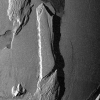
Time to open the eleventh door in the advent calendar. Until the New Year, I'll be opening a door onto a different landscape from somewhere in the solar system. Where in the solar system are these sinuous ridges?

In geology, lots of things make ridges, but the word "sinuous" is virtually synonymous with "created by the action of a fluid." The fluid can be either water or lava. But how could any fluid create a raised sinuous deposit?
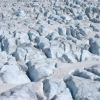
This HiRISE view from Tempe Terra, Mars shows esker-like ridges. Eskers are a landform common to landscapes that once bore glaciers. Meltwater running underneath the glacier erodes up into the glacier's base; over time, sediment gets deposited within this sub-glacial channel. When the glacier vanishes, a raised, sinuous ridge is left behind. They can have pretty steep sides, looking for all the world like railroad embankments. High-resolution views of Mars are showing all kinds of features that probably have glacial origins.
If you're a longtime reader you probably weren't expecting another HiRISE image so soon, or at all; last year there were no repeat worlds in my advent calendar, and of course I featured a HiRISE image on December 4. This year, there will be repeats, just because I like to change the rules. It's not like it's difficult to find fun HiRISE images. In fact, I could easily fill a month, or even a year, with cool places plucked from HiRISE views of Mars. You really ought to go to the catalog page and browse around. But don't just look at the most recent pictures; I like to edit the catalog URL to go to a different page, picking a page number at random (as of today, there are 857 pages of released images, each containing 20 pictures), which pretty much guarantees I'll find something I've never seen before. These eskers weren't necessarily the most amazing thing I saw while browsing today (I think that distinction goes to these two cavernous pits in the Tharsis region), but while I've walked along an esker in Montana I've never seen one on Mars before, and I thought that was cool.
The Planetary Society Blog 2010 Advent Calendar

You Power the Next Great Discovery!
Fund future scientific research that advances space science and exploration with your gift today.
Donate