
Help Shape the Future of Space Exploration

Join The Planetary Society Now  arrow.png

Join our eNewsletter for updates & action alerts

    Please leave this field empty
Multimedia
Facebook Twitter Email RSS AddThis

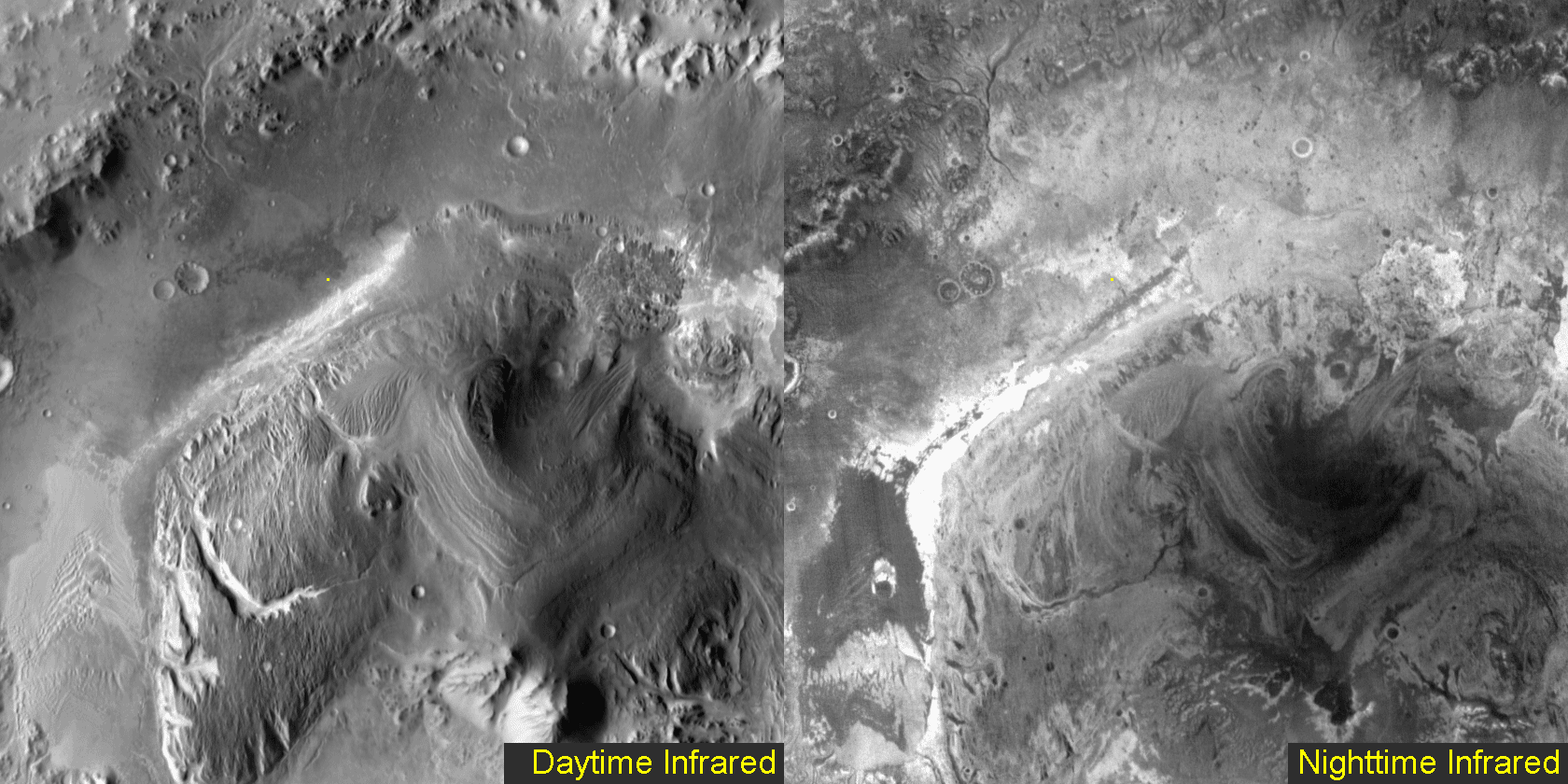
Blink comparison of daytime and nighttime infrared views of Gale crater
Filed under pretty pictures, animation, amateur image processing, Mars, Mars Odyssey, Curiosity (Mars Science Laboratory), geology

Go Back

Blink comparison of daytime and nighttime infrared views of Gale crater The Curiosity landing site is marked with a yellow square, just to the south of a deposit of material that is bright at night and dark during the day. This material is referred to as the "high thermal inertia unit" by the Curiosity science team.

NASA / JPL / ASU / Emily Lakdawalla

During the day, the surface of Mars are heated by the Sun, so a Mars Odyssey THEMIS daytime thermal infrared view looks similar to a visible-light view. At night, rocks retain heat better than dust, so rocky areas appear bright and dusty or sandy areas appear dark. Rock composition and texture also affects thermal inertia and the appearance of the materials at night.

More THEMIS data over Gale crater can be downloaded here. The data was originally released on July 14, 2006.

Copyright holder: Emily Lakdawalla

Creative Commons License
This work is licensed under a Creative Commons Attribution-NonCommercial-ShareAlike 3.0 Unported License.
Contact us to request publication permission from the copyright holder. Original image data dated on or about August 17, 2012

Comments:

Leave a Comment:

You must be logged in to submit a comment. Log in now.

The Planetary Report

The Summer Solstice issue is out!

Read it Now

Space in Images

Pretty pictures and awe-inspiring science.

See More

Connect With Us

Facebook! Twitter! Google+ and more…
Continue the conversation with our online community!



