

 Explore Worlds
 Find Life
 Defend Earth


Bruce Murray Space Image Library
Near-global high-resolution color view of Ganymede from Voyager 2
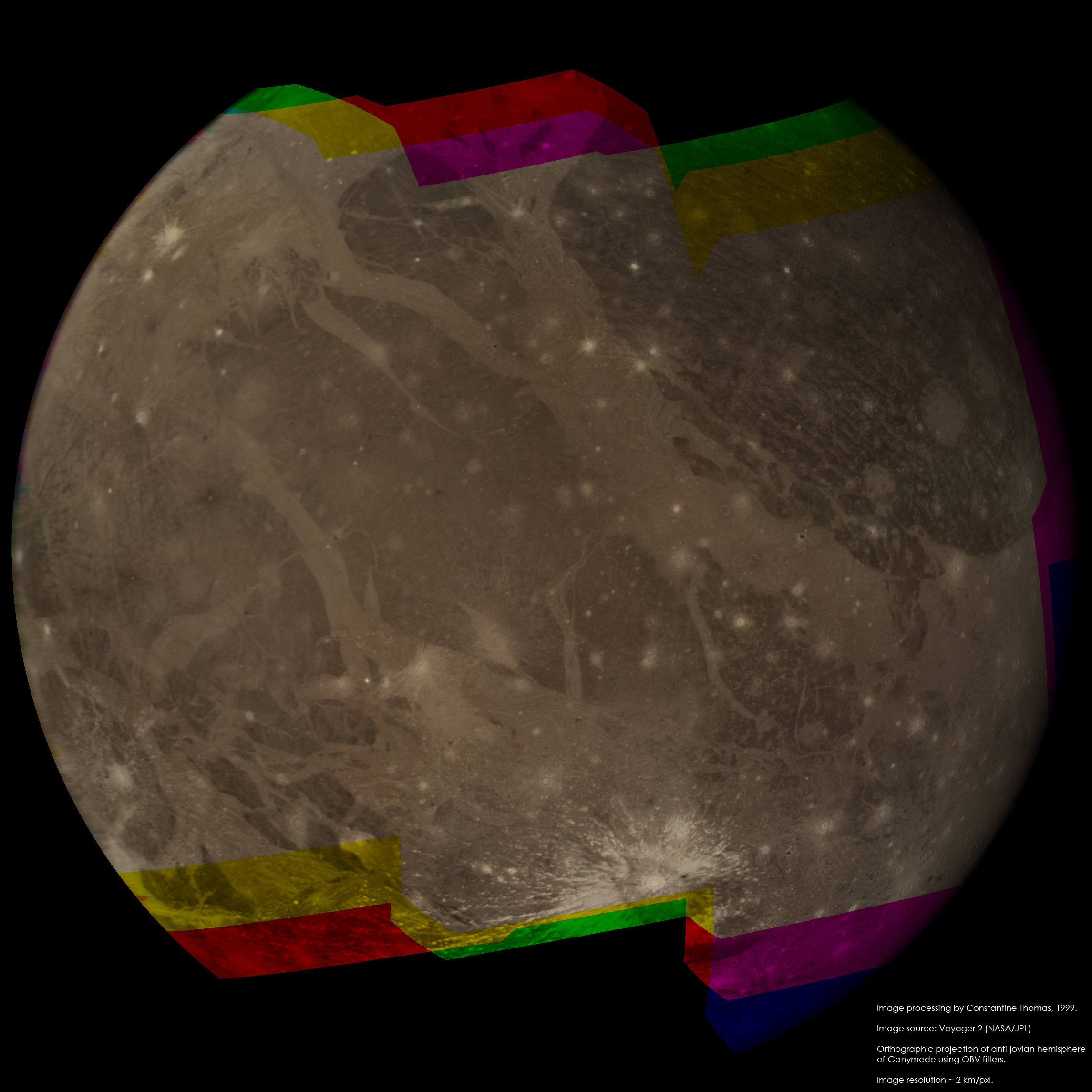
The large light-toned ridge systems crossing from the northwest to the southeast of the image are Uruk Sulcus (the northernmost of the two) and Tiamar Sulcus. The bright impact crater near the bottom of the image is Osiris. Near the left of the image just above center, many bright circular features are visible in the darker-toned terrain, with the two largest being Memphis Facula (340 km wide) and Siwah Facula. These faculae are features called "palimpsest," or "ghost craters," unique to the icy satellites of the outer solar system, and are thought to be the remnants of highly eroded ancient craters.