

 Explore Worlds
 Find Life
 Defend Earth

Planetary Society Applauds Increased Science Funding for NASA
For Immediate Release
December 18, 2007
Contact
Mat Kaplan
Email: [email protected]
Phone: +1-626-793-5100
The Planetary Society applauds Congress’ work on the omnibus Appropriations bill, which includes $17.3 billion for NASA, the funding level requested by the Administration. This figure provides important increases for planetary exploration and restores funding for science. This is especially gratifying to Planetary Society members, who have campaigned for two years to Save Our Science in the NASA budget.
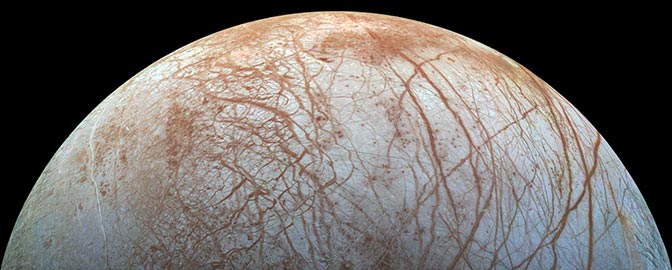
The Appropriations bill strongly supports Mars exploration, increases Research and Analysis funding, restores the Space Interferometry Mission, and provides preparatory funding for both a Solar Probe and an Outer Planets mission. The latter will probably be the Europa orbiter that The Planetary Society has long sought. In addition, Congress directed a boost in funding to both Earth science and the Earth observation program, which are crucial to understanding global climate change.
“If this Appropriations bill is passed, it will be an important victory for science and exploration,” said Louis Friedman, Executive Director of The Planetary Society. “Congress has listened to Society members as well as to scientists and other members of the public. They heard our SOS – Save Our Science,” he added.
About The Planetary Society
With a global community of more than 2 million space enthusiasts, The Planetary Society is the world’s largest and most influential space advocacy organization. Founded in 1980 by Carl Sagan, Bruce Murray, and Louis Friedman and today led by CEO Jennifer Vaughn, we empower the public to take a meaningful role in advancing space exploration through advocacy, education outreach, scientific innovation, and global collaboration. Together with our members and supporters, we’re on a mission to explore worlds, find life off Earth, and protect our planet from dangerous asteroids. To learn more, visit www.planetary.org.
###