

 Explore Worlds
 Find Life
 Defend Earth


The rest of Enceladus

Written by
Elizabeth "Zibi" Turtle
Planetary Scientist at Johns Hopkins Applied Physics Lab and Dragonfly Principal Investigator
July 17, 2009
by Zibi Turtle
That Saturn's little moon Enceladus has active plumes venting material from its south pole is incredibly exciting. Perhaps even more intriguing, however, is that the activity is so localized and that Enceladus' surface exhibits such a wide range of geologic terrains, potentially reflecting heterogeneity in its interior.
The youth of the South Polar Terrain is demonstrated not only by the current activity observed there but also the lack of impact craters.
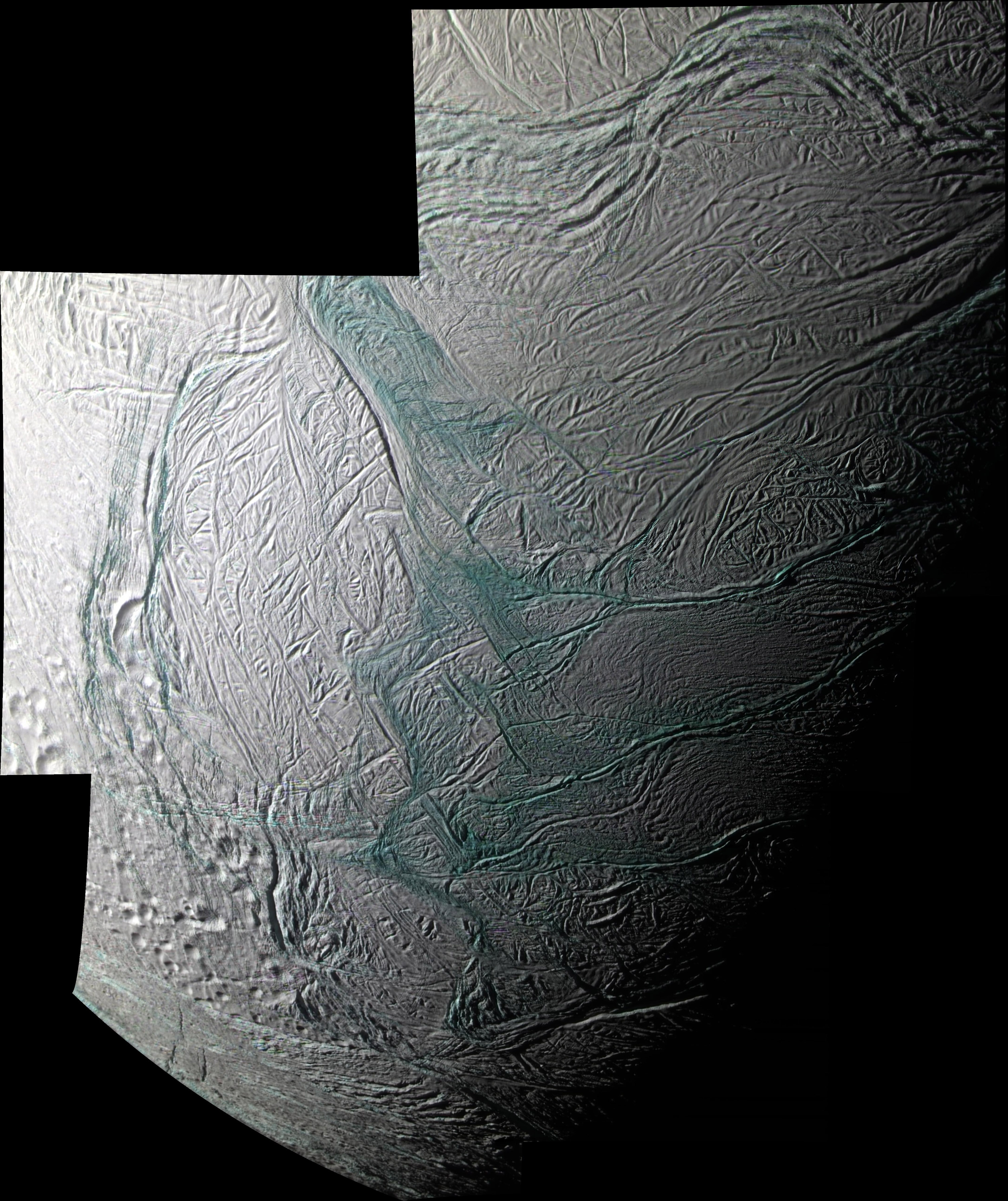
Enceladus' Southern Hemisphere
assini Imaging Science Subsystem (ISS) mosaic of Enceladus' southern hemisphere. The enhanced color emphasizes fresh exposures of coarse-grained ice.
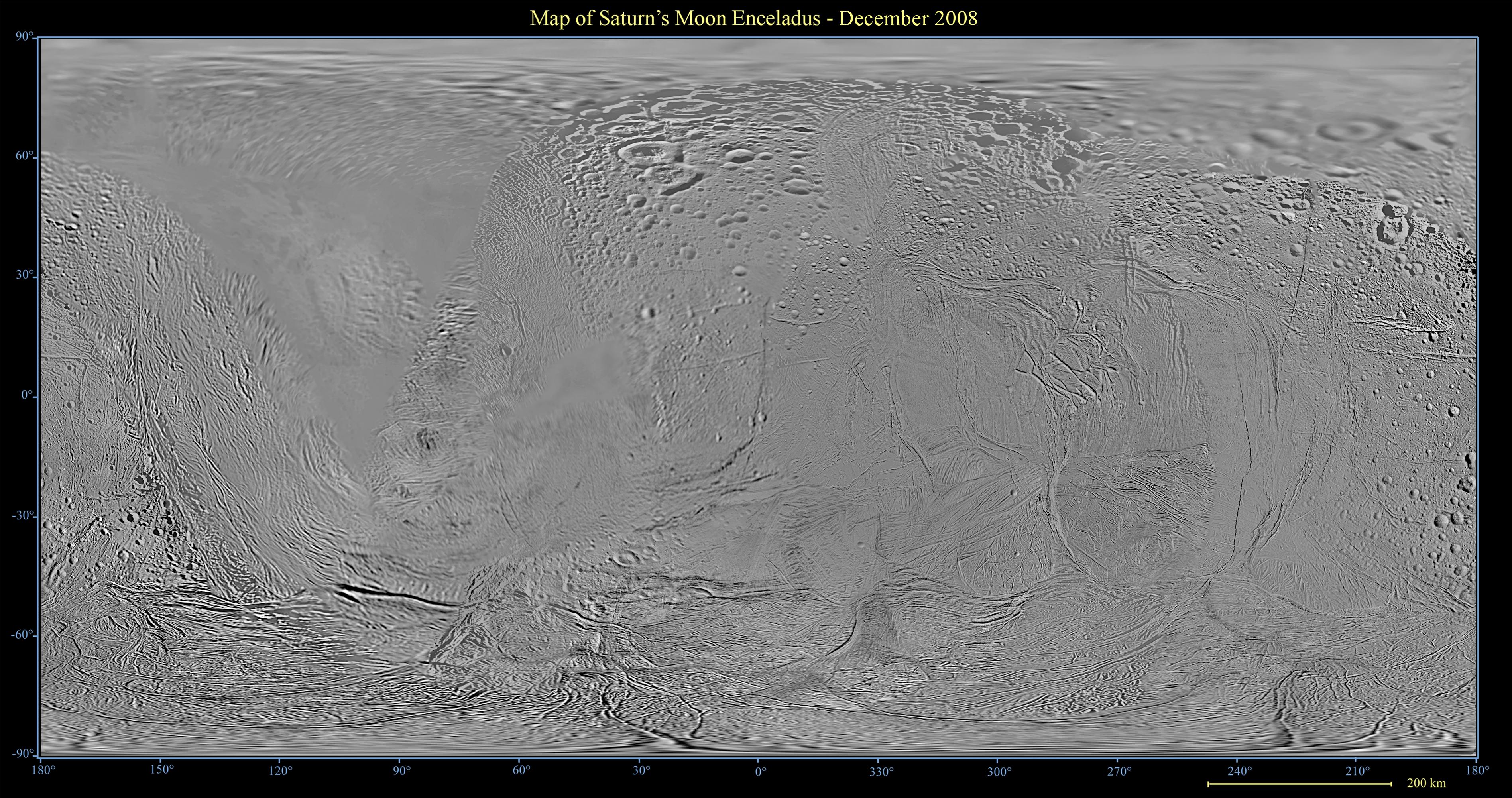
Map of Enceladus - December 2008
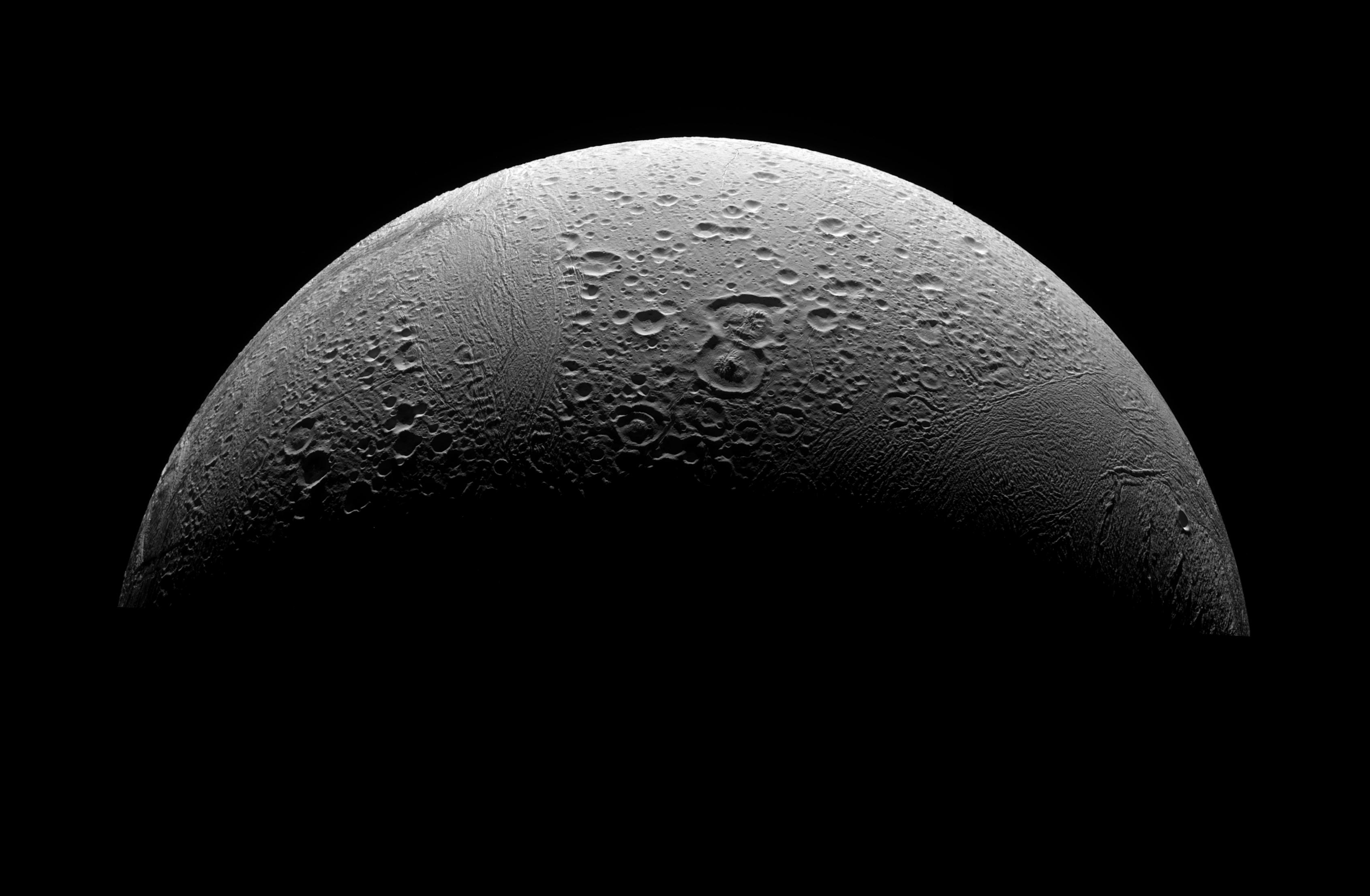
ap of Enceladus. The currently active south-polar region has few if any craters and cratering is sparse over some longitude ranges (~60°W to ~120°W, and ~240°W to ~330°W). However, the terrain at high northern latitudes and longitudes ~30°W and ~180°W have much higher crater densities.
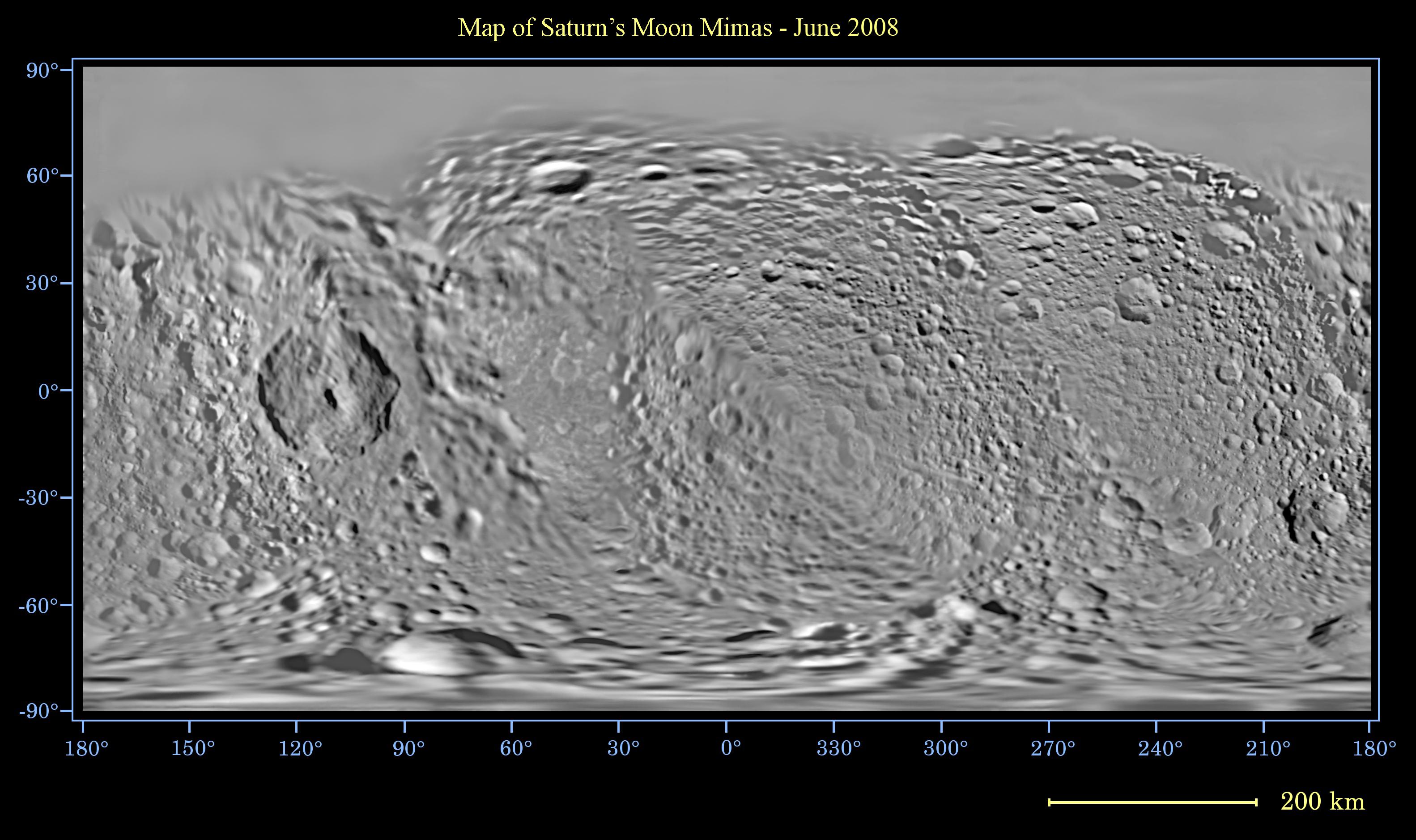
Map of Mimas - June 2008
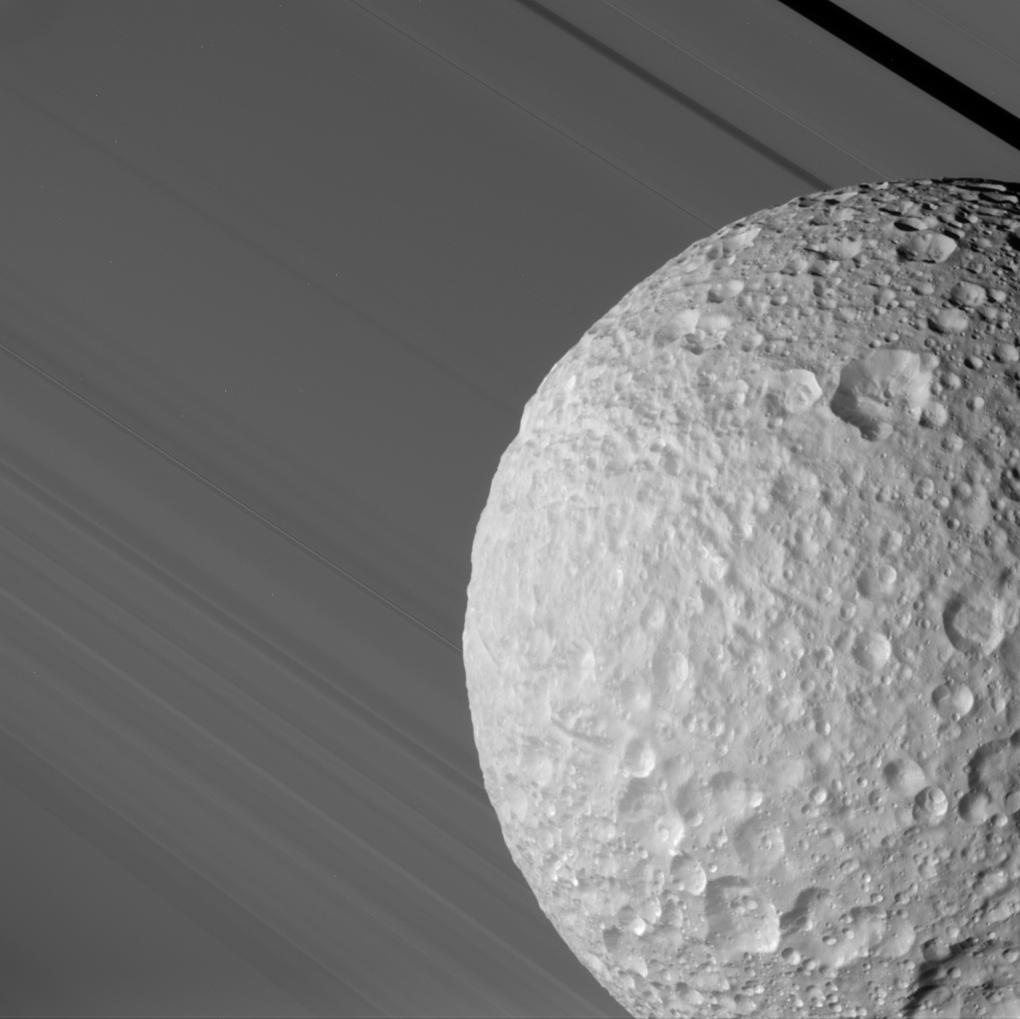
ap of Mimas' much more heavily cratered and older surface for comparison.
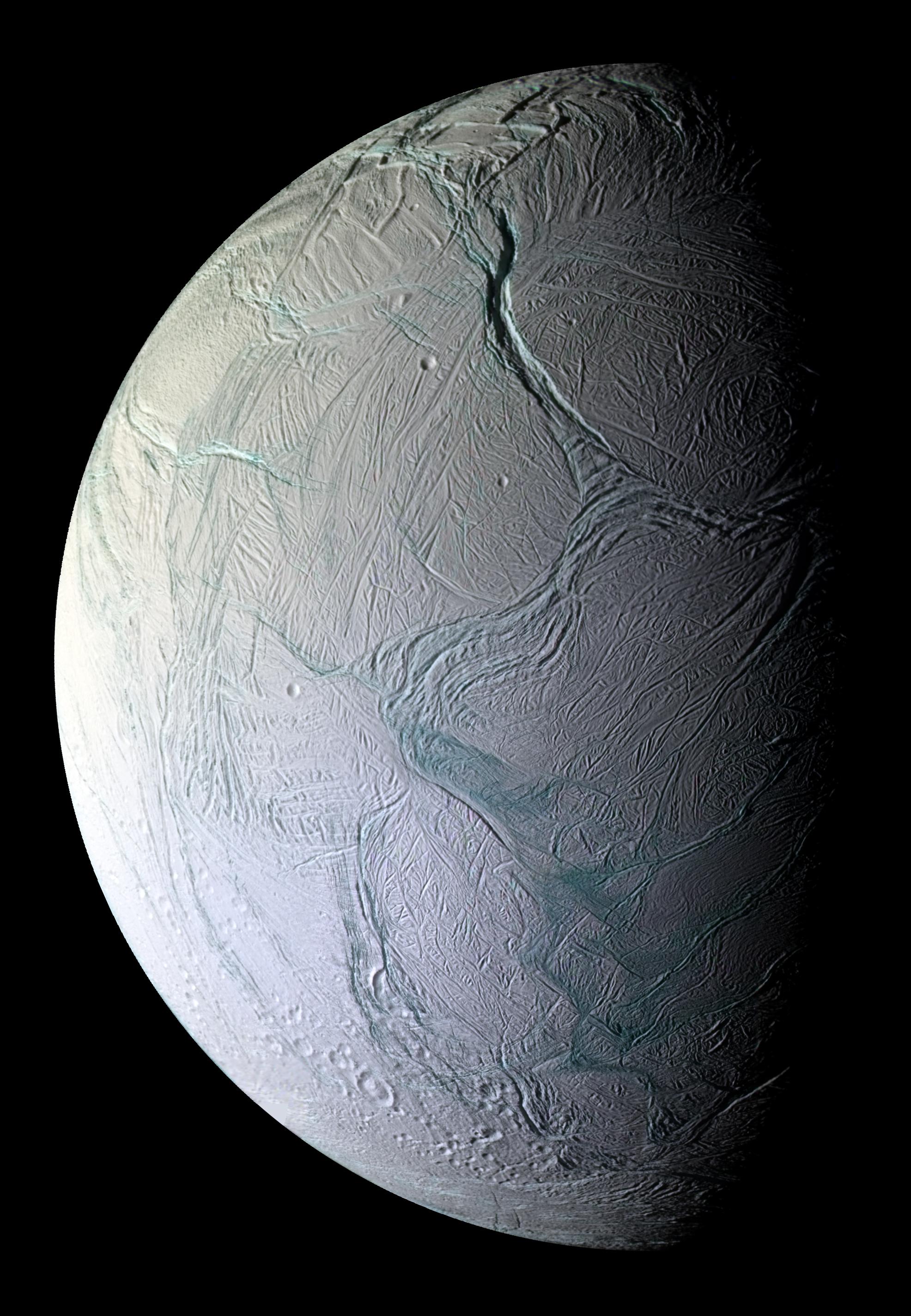
Tectonics on Enceladus
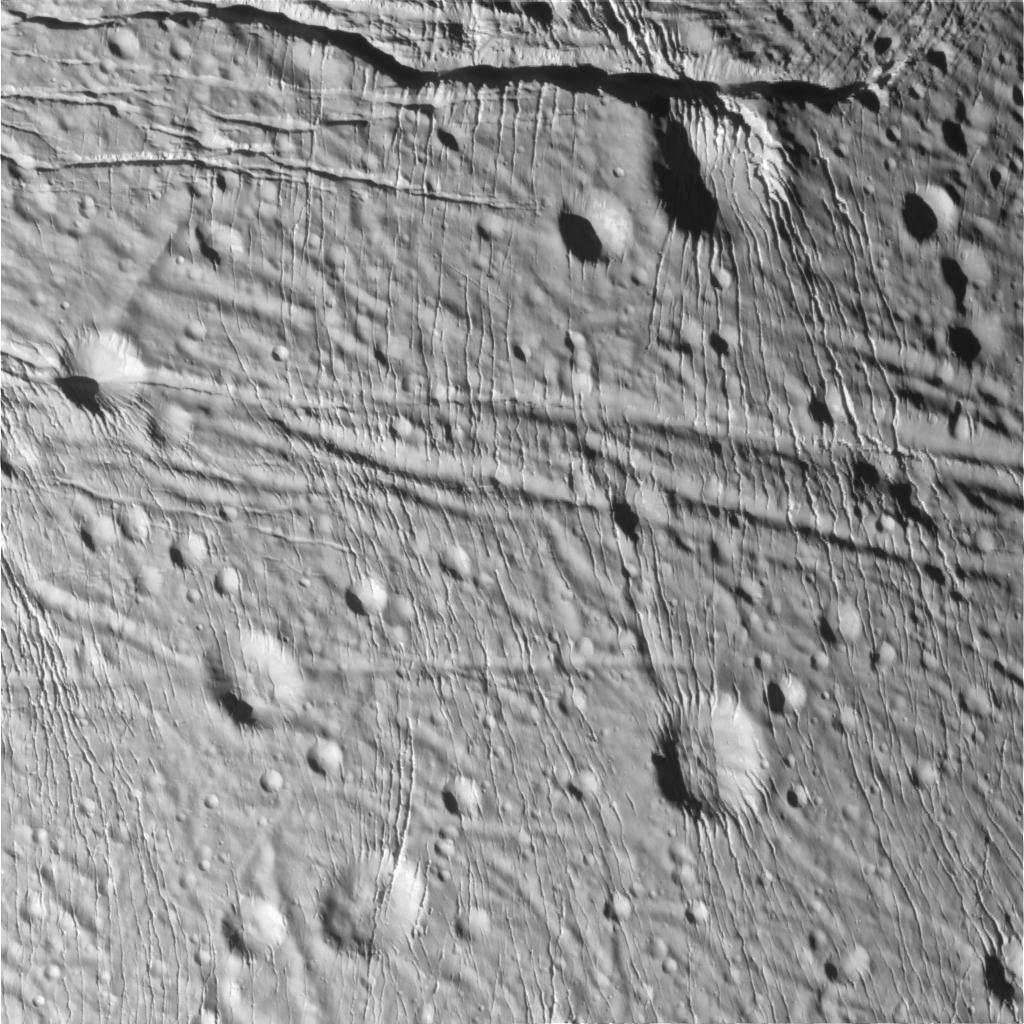
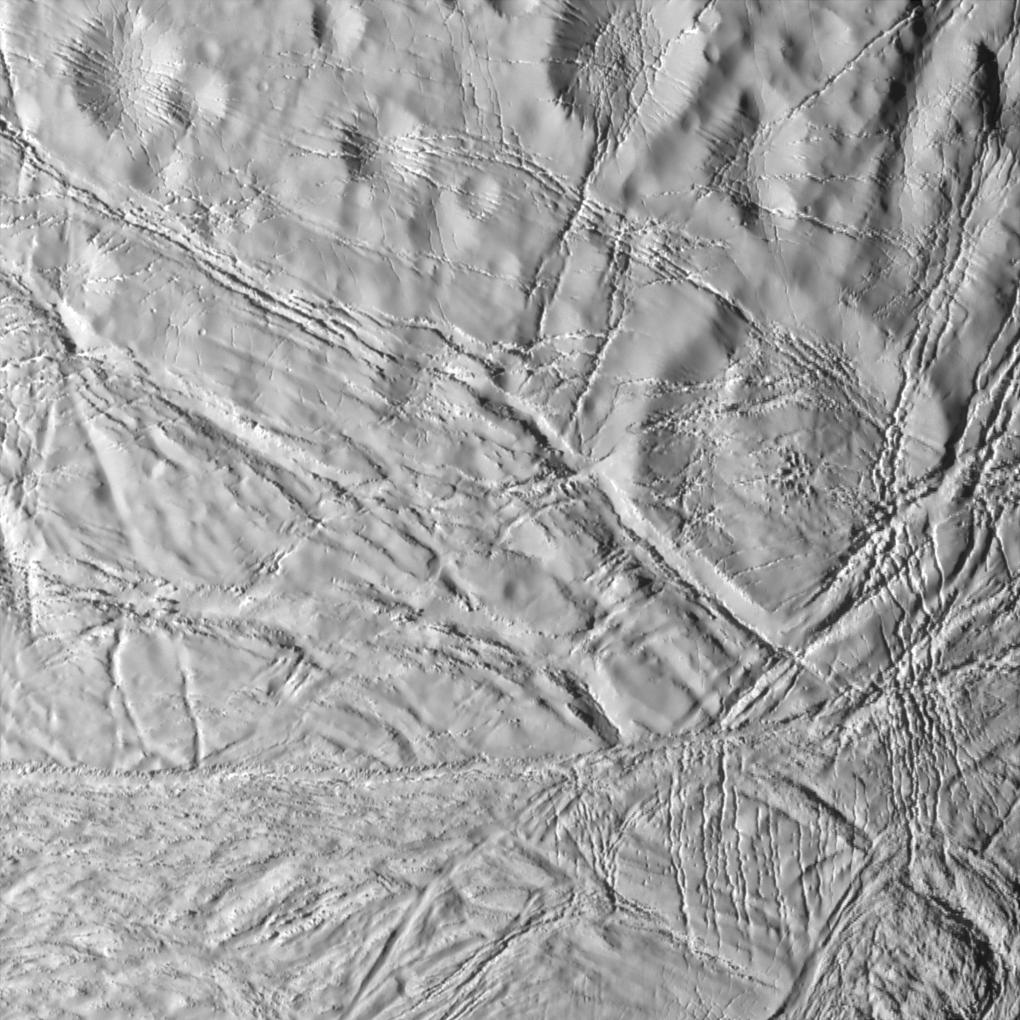
ectonic ridges and fractures dominate these areas of Enceladus; only a few younger craters are superimposed.
Sliced-up Craters
mages of Enceladus showing craters cut by more recent fractures.
NASA / JPL / Space Science Institute
Craters and Cracks
Enceladus' north pole
iew from above Enceladus' north pole.
Mimas Against the Rings
iew of Mimas (seen in front of Saturn's rings).
These observations give us important clues about Enceladus and its interior. That the geologic activity varies so significantly across the surface, from currently active areas to others likely eons old, suggests that the heat reaching the surface from the interior also varies from place to place. However, even the oldest areas, appear to have undergone some subtle modification, demonstrating that they, too, are not without some heat from the interior. In order to understand Enceladus, it's essential to consider the moon in its entirety.
Protect Our Shared Future
You help us defend humanity and prevent asteroid impacts. Donate now to become a Planetary Defender!
Donate