

 Explore Worlds
 Find Life
 Defend Earth


Penumbral Lunar Eclipse Tonight

Written by
Anne Verbiscer
July 6, 2009
by Anne Verbiscer
 Anne Verbiscer is a Research Associate Professor at the University of Virginia. She studies the surfaces of icy bodies in the outer Solar System and has been involved with the Cassini mission to Saturn since 2007. Currently a visitor at Southwest Research Institute, she has been enjoying the past year living in the mountains above Boulder, Colorado.
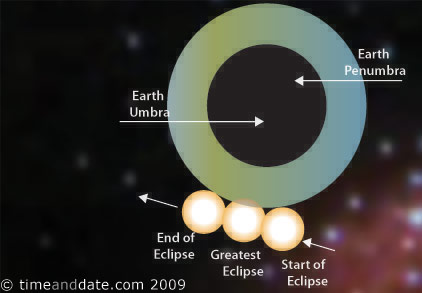
At 8:37:51 UTC on July 7th, the Moon will be eclipsed, but just barely, by the Earth's penumbra for about two hours. This penumbral eclipse, the second of four lunar eclipses in 2009, will be so slight that the difference in brightness between the eclipsed and uneclipsed Moon will be invisible to the unaided eye.
timeanddate.com
The penumbral eclipse on July 7, 2009
JAXA / NHK
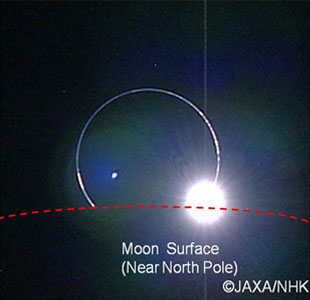
Kaguya spacecraft's view of the Earth during a penumbral lunar eclipse
July and December 2009 Eclispes
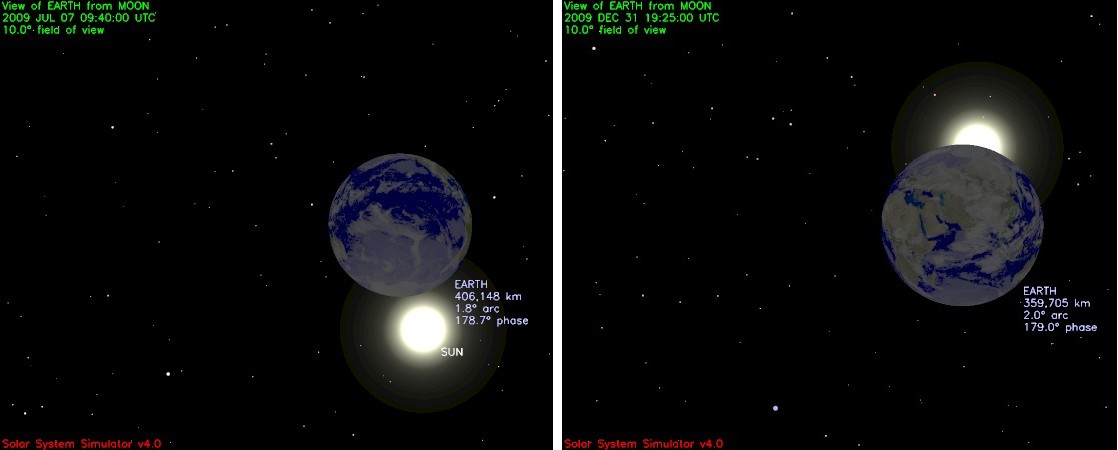
clipses seen from the Moon on July 7 (left) and December 31 (right) 2009.
Protect Our Shared Future
You help us defend humanity and prevent asteroid impacts. Donate now to become a Planetary Defender!
Donate