See other posts from February 2009
Got binoculars? Spot a comet near Saturn tonight
Posted By Emily Lakdawalla
2009/02/23 06:32 CST
Topics:
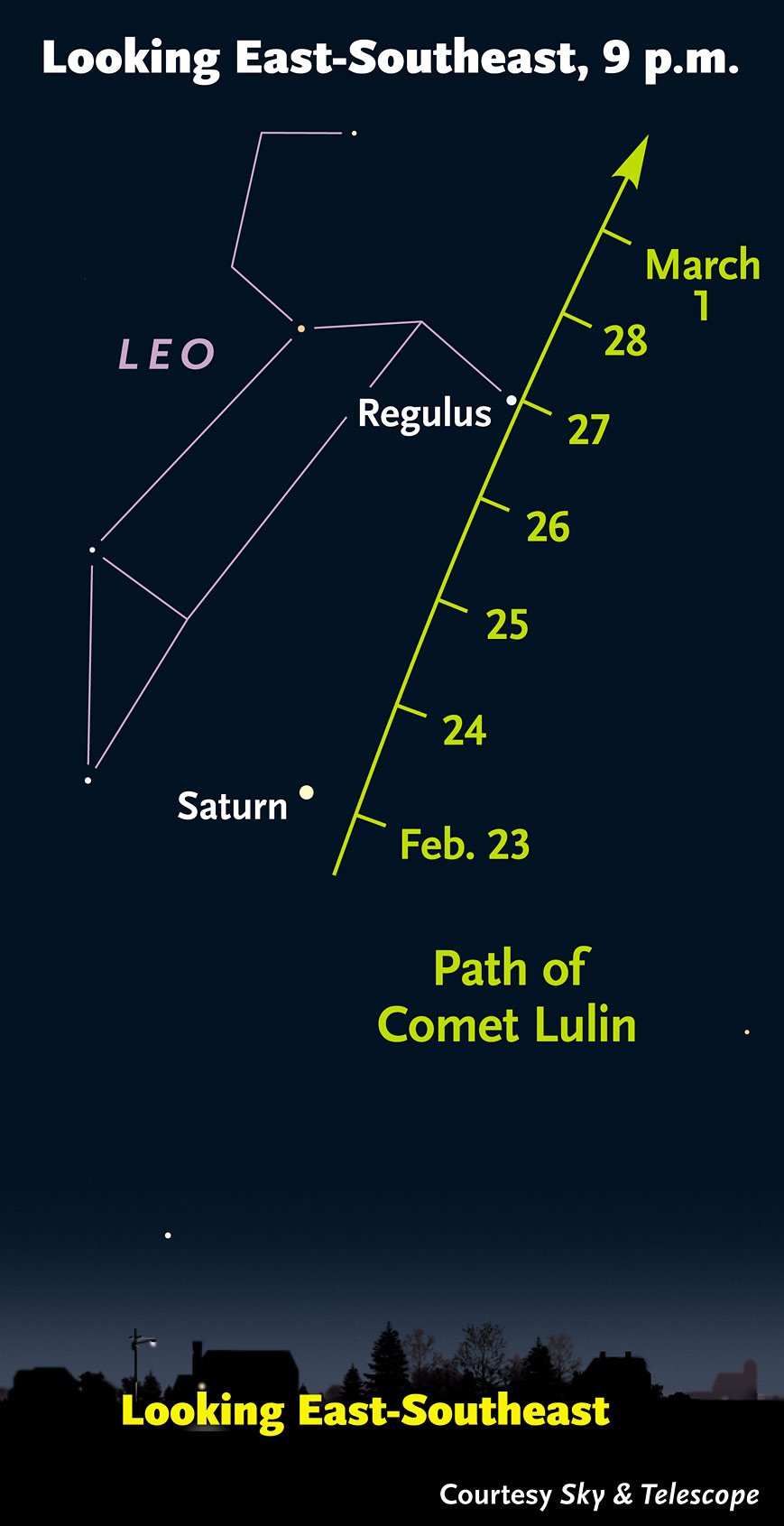
The greenish comet Lulin, more formally known as C/2007 N3, has been approaching Earth for some time and will, tomorrow, be at its brightest, as it'll reach its closest approach to us. But it might be easiest to spot tonight, as it will be passing especially close to Saturn. (Close, that is, in the flattened geometry of our sky; it's actually much, much closer to us than it is to Saturn.) Although Lulin technically a naked-eye object, if you're graced with particularly dark skies, it's more reasonably a binocular target for most people. The good news is that even if you live in a fairly light-polluted location, binoculars should still reveal it. (Or so I'm told.)
Lulin has a special significance for us at The Planetary Society, because it was discovered by one of our recent
Gene Shoemaker NEO Grant recipients:
Quanzhi Ye, the now-19-year-old principal investigator of the Lulin Sky Survey.

Philip Jones
Spotting comet Lulin
Comet Lulin climbs higher in the east-southeast each night this week. Spot bright Saturn and Regulus, and use them to zero in on the comet's position for your date.
(The comet's positions marked are for the evening of the date indicated in the time zones of the Americas. The orientation of the view with respect to the horizon is for North America.)
Credit: Sky & Telescope
Lulin has a special significance for us at The Planetary Society, because it was discovered by one of our recent
Gene Shoemaker NEO Grant recipients:
Quanzhi Ye, the now-19-year-old principal investigator of the Lulin Sky Survey.
Lulin has a special significance for us at The Planetary Society, because it was discovered by one of our recent
Gene Shoemaker NEO Grant recipients:
Quanzhi Ye, the now-19-year-old principal investigator of the Lulin Sky Survey.
Lulin has a special significance for us at The Planetary Society, because it was discovered by one of our recent
Gene Shoemaker NEO Grant recipients:
Quanzhi Ye, the now-19-year-old principal investigator of the Lulin Sky Survey.
Lulin has a special significance for us at The Planetary Society, because it was discovered by one of our recent
Gene Shoemaker NEO Grant recipients:
Quanzhi Ye, the now-19-year-old principal investigator of the Lulin Sky Survey.
Lulin has a special significance for us at The Planetary Society, because it was discovered by one of our recent
Gene Shoemaker NEO Grant recipients:
Quanzhi Ye, the now-19-year-old principal investigator of the Lulin Sky Survey.
Lulin has a special significance for us at The Planetary Society, because it was discovered by one of our recent
Gene Shoemaker NEO Grant recipients:
Quanzhi Ye, the now-19-year-old principal investigator of the Lulin Sky Survey.
Lulin has a special significance for us at The Planetary Society, because it was discovered by one of our recent
Gene Shoemaker NEO Grant recipients:
Quanzhi Ye, the now-19-year-old principal investigator of the Lulin Sky Survey.
Lulin has a special significance for us at The Planetary Society, because it was discovered by one of our recent
Gene Shoemaker NEO Grant recipients:
Quanzhi Ye, the now-19-year-old principal investigator of the Lulin Sky Survey.
Lulin has a special significance for us at The Planetary Society, because it was discovered by one of our recent
Gene Shoemaker NEO Grant recipients:
Quanzhi Ye, the now-19-year-old principal investigator of the Lulin Sky Survey.
Lulin has a special significance for us at The Planetary Society, because it was discovered by one of our recent
Gene Shoemaker NEO Grant recipients:
Quanzhi Ye, the now-19-year-old principal investigator of the Lulin Sky Survey.
Lulin has a special significance for us at The Planetary Society, because it was discovered by one of our recent
Gene Shoemaker NEO Grant recipients:
Quanzhi Ye, the now-19-year-old principal investigator of the Lulin Sky Survey.
Lulin has a special significance for us at The Planetary Society, because it was discovered by one of our recent
Gene Shoemaker NEO Grant recipients:
Quanzhi Ye, the now-19-year-old principal investigator of the Lulin Sky Survey.
Lulin has a special significance for us at The Planetary Society, because it was discovered by one of our recent
Gene Shoemaker NEO Grant recipients:
Quanzhi Ye, the now-19-year-old principal investigator of the Lulin Sky Survey.
Lulin has a special significance for us at The Planetary Society, because it was discovered by one of our recent
Gene Shoemaker NEO Grant recipients:
Quanzhi Ye, the now-19-year-old principal investigator of the Lulin Sky Survey.
Lulin has a special significance for us at The Planetary Society, because it was discovered by one of our recent
Gene Shoemaker NEO Grant recipients:
Quanzhi Ye, the now-19-year-old principal investigator of the Lulin Sky Survey.
Lulin has a special significance for us at The Planetary Society, because it was discovered by one of our recent
Gene Shoemaker NEO Grant recipients:
Quanzhi Ye, the now-19-year-old principal investigator of the Lulin Sky Survey.
Lulin has a special significance for us at The Planetary Society, because it was discovered by one of our recent
Gene Shoemaker NEO Grant recipients:
Quanzhi Ye, the now-19-year-old principal investigator of the Lulin Sky Survey.
Lulin has a special significance for us at The Planetary Society, because it was discovered by one of our recent
Gene Shoemaker NEO Grant recipients:
Quanzhi Ye, the now-19-year-old principal investigator of the Lulin Sky Survey.
Lulin has a special significance for us at The Planetary Society, because it was discovered by one of our recent
Gene Shoemaker NEO Grant recipients:
Quanzhi Ye, the now-19-year-old principal investigator of the Lulin Sky Survey.
Lulin has a special significance for us at The Planetary Society, because it was discovered by one of our recent
Gene Shoemaker NEO Grant recipients:
Quanzhi Ye, the now-19-year-old principal investigator of the Lulin Sky Survey.
Lulin has a special significance for us at The Planetary Society, because it was discovered by one of our recent
Gene Shoemaker NEO Grant recipients:
Quanzhi Ye, the now-19-year-old principal investigator of the Lulin Sky Survey.
Lulin has a special significance for us at The Planetary Society, because it was discovered by one of our recent
Gene Shoemaker NEO Grant recipients:
Quanzhi Ye, the now-19-year-old principal investigator of the Lulin Sky Survey.
Lulin has a special significance for us at The Planetary Society, because it was discovered by one of our recent
Gene Shoemaker NEO Grant recipients:
Quanzhi Ye, the now-19-year-old principal investigator of the Lulin Sky Survey.
Lulin has a special significance for us at The Planetary Society, because it was discovered by one of our recent
Gene Shoemaker NEO Grant recipients:
Quanzhi Ye, the now-19-year-old principal investigator of the Lulin Sky Survey.
Lulin has a special significance for us at The Planetary Society, because it was discovered by one of our recent
Gene Shoemaker NEO Grant recipients:
Quanzhi Ye, the now-19-year-old principal investigator of the Lulin Sky Survey.
Lulin has a special significance for us at The Planetary Society, because it was discovered by one of our recent
Gene Shoemaker NEO Grant recipients:
Quanzhi Ye, the now-19-year-old principal investigator of the Lulin Sky Survey.
Lulin has a special significance for us at The Planetary Society, because it was discovered by one of our recent
Gene Shoemaker NEO Grant recipients:
Quanzhi Ye, the now-19-year-old principal investigator of the Lulin Sky Survey.
Lulin has a special significance for us at The Planetary Society, because it was discovered by one of our recent
Gene Shoemaker NEO Grant recipients:
Quanzhi Ye, the now-19-year-old principal investigator of the Lulin Sky Survey.
Lulin has a special significance for us at The Planetary Society, because it was discovered by one of our recent
Gene Shoemaker NEO Grant recipients:
Quanzhi Ye, the now-19-year-old principal investigator of the Lulin Sky Survey.
Lulin has a special significance for us at The Planetary Society, because it was discovered by one of our recent
Gene Shoemaker NEO Grant recipients:
Quanzhi Ye, the now-19-year-old principal investigator of the Lulin Sky Survey.
Lulin has a special significance for us at The Planetary Society, because it was discovered by one of our recent
Gene Shoemaker NEO Grant recipients:
Quanzhi Ye, the now-19-year-old principal investigator of the Lulin Sky Survey.
Lulin has a special significance for us at The Planetary Society, because it was discovered by one of our recent
Gene Shoemaker NEO Grant recipients:
Quanzhi Ye, the now-19-year-old principal investigator of the Lulin Sky Survey.
Lulin has a special significance for us at The Planetary Society, because it was discovered by one of our recent
Gene Shoemaker NEO Grant recipients:
Quanzhi Ye, the now-19-year-old principal investigator of the Lulin Sky Survey.
Lulin has a special significance for us at The Planetary Society, because it was discovered by one of our recent
Gene Shoemaker NEO Grant recipients:
Quanzhi Ye, the now-19-year-old principal investigator of the Lulin Sky Survey.
Lulin has a special significance for us at The Planetary Society, because it was discovered by one of our recent
Gene Shoemaker NEO Grant recipients:
Quanzhi Ye, the now-19-year-old principal investigator of the Lulin Sky Survey.
Lulin has a special significance for us at The Planetary Society, because it was discovered by one of our recent
Gene Shoemaker NEO Grant recipients:
Quanzhi Ye, the now-19-year-old principal investigator of the Lulin Sky Survey.
Lulin has a special significance for us at The Planetary Society, because it was discovered by one of our recent
Gene Shoemaker NEO Grant recipients:
Quanzhi Ye, the now-19-year-old principal investigator of the Lulin Sky Survey.
Lulin has a special significance for us at The Planetary Society, because it was discovered by one of our recent
Gene Shoemaker NEO Grant recipients:
Quanzhi Ye, the now-19-year-old principal investigator of the Lulin Sky Survey.
Lulin has a special significance for us at The Planetary Society, because it was discovered by one of our recent
Gene Shoemaker NEO Grant recipients:
Quanzhi Ye, the now-19-year-old principal investigator of the Lulin Sky Survey.
Lulin has a special significance for us at The Planetary Society, because it was discovered by one of our recent
Gene Shoemaker NEO Grant recipients:
Quanzhi Ye, the now-19-year-old principal investigator of the Lulin Sky Survey.
Lulin has a special significance for us at The Planetary Society, because it was discovered by one of our recent
Gene Shoemaker NEO Grant recipients:
Quanzhi Ye, the now-19-year-old principal investigator of the Lulin Sky Survey.
Lulin has a special significance for us at The Planet
Comments:
Leave a Comment:
You must be logged in to submit a comment. Log in now.