

 Explore Worlds
 Find Life
 Defend Earth


Stars Above, Earth Below: Appreciating Dark Skies

Written by
Emily Lakdawalla
July 27, 2007
Tyler Nordgren just sent me a new "Stars Above, Earth Below" journal entry, as he prepares to depart for Rocky Mountain National Park. (Man, am I jealous of him for getting to do this project!) Here's a snippet from his update:
It occurred to me that as astronomers and planetary scientists my colleagues and I should be very concerned about [the loss of dark skies]. We have the privilege of doing what we love and exploring other worlds because the governments of this planet support us financially (both in paychecks and payloads). If the day comes when the last star disappears into the nighttime glow, and the last person stops looking up because they have forgotten there is a universe out there beyond the atmosphere, how long will the public continue to support our exploration or feel that it has any personal relevance to their lives?
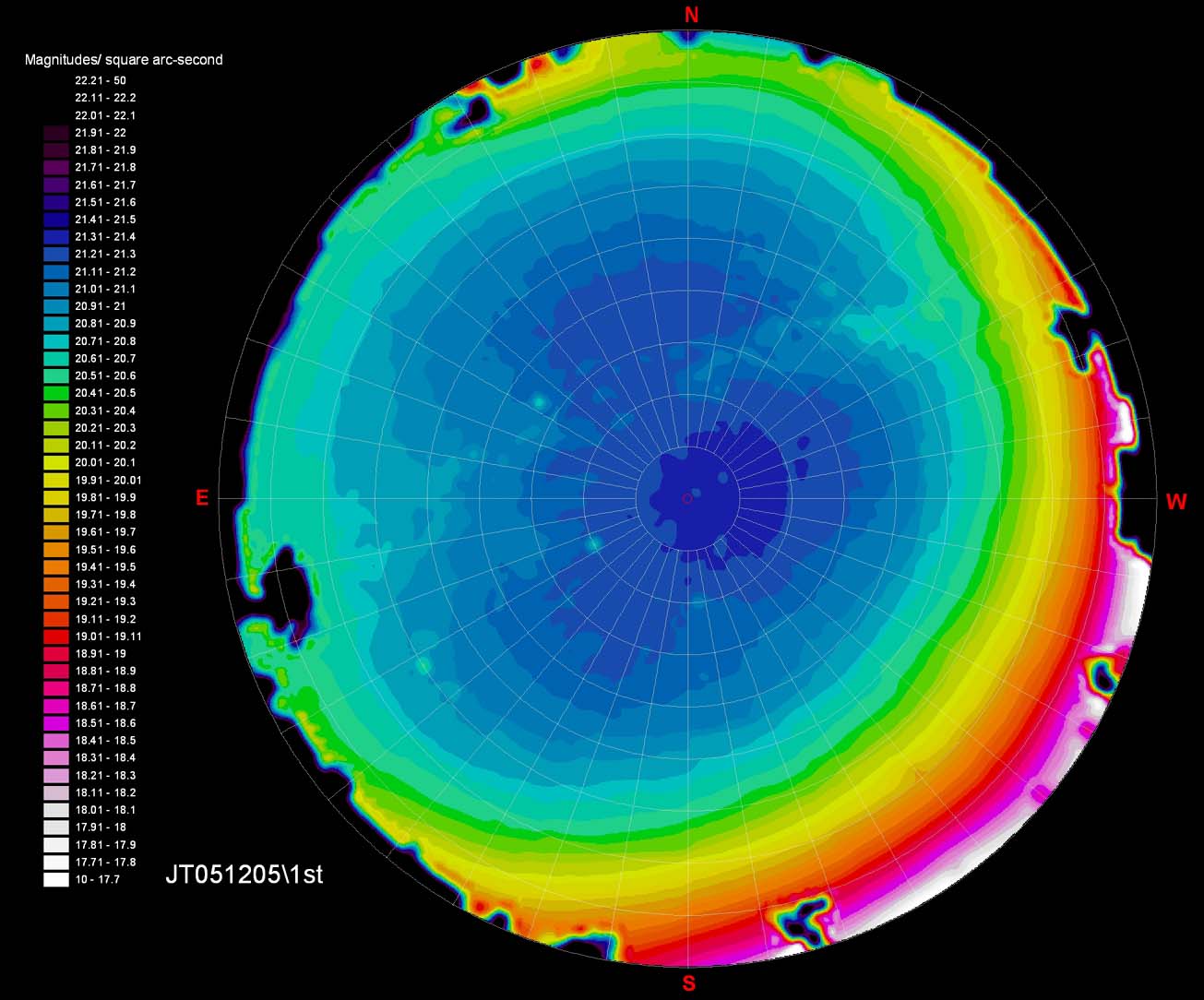
Dan Duriscoe, NPS
The light-polluted sky over Joshua Tree National Park
An all-sky image of the sky over Joshua Tree National Park. Brightnesses per square arcsecond increase from blue to white. Notice the faint light-blue structure of the Milky Way overhead almost lost in the glare of southern California lights.Protect Our Shared Future
You help us defend humanity and prevent asteroid impacts. Donate now to become a Planetary Defender!
Donate